
Introduction to
FFPE Blocks for Pharma Clinical Trials

AI Pathology Dataset for Scalable Digital Pathology and AI Development
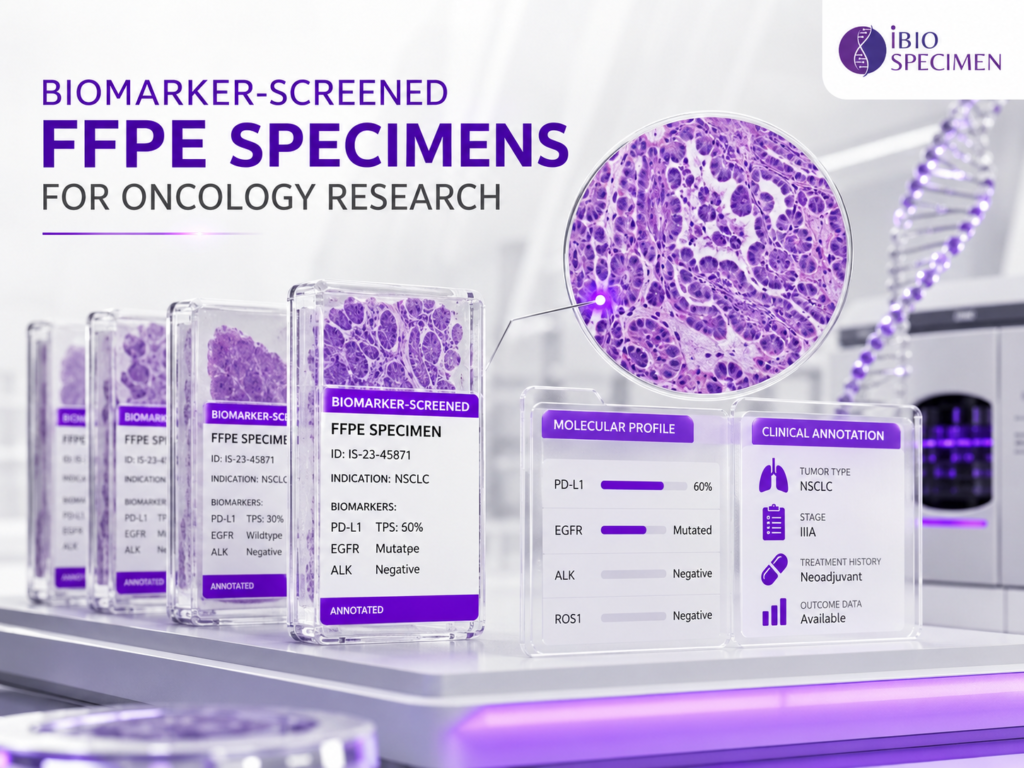
AI Pathology Dataset can serve as a practical bridge between archived clinical material and modern oncology research when the data are curated around a clearly defined use case. In practice, the resource may combine H&E whole-slide images, digital pathology, expert pathology review, tissue morphology, depending on the study objective. The design should reflect whether the priority is broad discovery, disease-specific analysis, model pretraining, biomarker enrichment or independent validation. A useful starting point is to define the biological question first and then decide which images, specimens and metadata are required to answer it.
Where appropriate, pathology review can confirm diagnosis, tumor content, necrosis, tissue adequacy and the relationship between the specimen and the corresponding digital image. Potential applications include tumor classification, tissue segmentation, biomarker discovery, molecular prediction, patient stratification and model benchmarking. Pharmaceutical teams can use the resource for retrospective translational studies, exploratory biomarker work, cohort enrichment and hypothesis generation around drug response. For this type of project, tissue morphology should be captured in a standardized form so it can be filtered, audited and reused consistently across the study.
Pathologist Review, Annotation and Quality Control for AI Pathology Dataset
A high-value research dataset is useful only when the underlying cases are scientifically coherent, traceable and structured for the intended research question. Quality is created through consistent linkage between H&E whole-slide images, digital pathology, expert pathology review and a structured case record. Each case should have a clear provenance trail showing how the diagnosis, specimen, digital asset and derived measurements relate to one another. Pathology and metadata review are particularly important before model training or downstream statistical analysis begins. Cases can be organized by indication, histologic subtype, stage, grade, specimen type, collection period and other protocol-defined variables.
The resulting resource can support reproducible analysis because the biological material, digital assets and metadata are assembled under one auditable case structure. Clinical variables can include age, sex, stage, treatment exposure, response, recurrence or survival where these data are available and ethically permitted for the study. For this type of project, tissue morphology should be captured in a standardized form so it can be filtered, audited and reused consistently across the study. Diversity across scanners, institutions, disease subtypes and patient populations can be intentionally introduced when the goal is to improve model generalizability.
Retrospective FFPE Cohorts Supporting Clinical Trial Research
Archived FFPE collections can provide pharmaceutical companies with an efficient route to investigate clinical hypotheses without waiting for lengthy prospective recruitment. Retrospective cohorts may be assembled from previously collected diagnostic or surgical specimens, subject to ethical approval, consent status, applicable regulations, and data availability. These cohorts can support trial feasibility assessment, prevalence studies, biomarker validation, assay optimization, and retrospective outcome analysis.
Sponsors may define selection criteria based on indication, stage, histology, treatment-naive status, prior therapy, biomarker status, response category, survival data, or date of collection. Supporting records may include pathology reports, diagnosis, stage, grade, specimen site, procedure type, treatment information, and follow-up data where permitted. Tissue qualification can include H&E review, tumor-content estimation, necrosis assessment, and confirmation of available material. Retrospective FFPE sourcing allows sponsors to evaluate research questions rapidly while preserving the option to expand into prospective or longitudinal collection.
Custom FFPE Block Sourcing for Global Pharma Programs
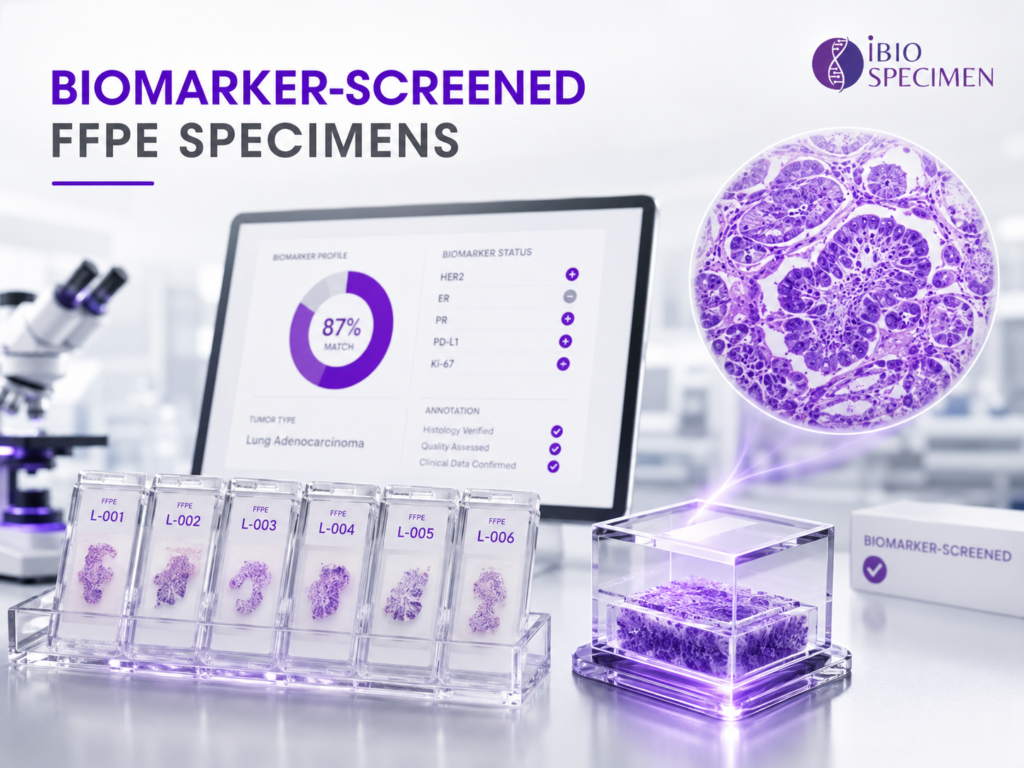
Every pharmaceutical clinical trial has different tissue, data, regulatory, and logistical requirements. Our custom FFPE sourcing process begins with a detailed review of the study protocol, target indication, number of donors, required specimen format, clinical variables, molecular criteria, and delivery schedule. A feasibility assessment is then performed to determine available cases, anticipated screening requirements, testing gaps, and potential collection timelines. FFPE cohorts can be structured for discovery research, exploratory biomarker analysis, clinical assay development, translational endpoints, and post-trial investigations.
Services may include pathology confirmation, H&E slide preparation, block qualification, tissue sectioning, biomarker testing coordination, de-identification, data harmonization, and shipment planning. Specimens are handled according to approved procedures and applicable ethical and regulatory requirements. Whether a sponsor needs a small pilot cohort or a multi-site collection program, the objective is to provide consistent, traceable, and study-aligned FFPE material.
General Questions
Frequent Asked Questions!!
FFPE blocks for genomics are formalin-fixed, paraffin-embedded tissue samples used for DNA, RNA, and biomarker analysis. They are widely used in cancer genomics, molecular pathology, translational research, and retrospective studies.
FFPE tissue blocks are valuable because they preserve tissue architecture and molecular material for long-term storage. Researchers can use them for sequencing, mutation analysis, biomarker discovery, and validation studies.
Yes. DNA can be extracted from FFPE blocks using validated extraction kits and optimized laboratory protocols. DNA quality depends on fixation time, block age, tissue type, tumor content, and storage conditions.
Yes. RNA can be extracted from FFPE tissue, although it is often fragmented because of formalin fixation. Specialized FFPE RNA extraction methods can provide material suitable for targeted RNA sequencing, gene expression studies, and fusion analysis.
Yes. High-quality FFPE blocks are commonly used for next-generation sequencing, including targeted sequencing panels, whole-exome sequencing, RNA sequencing, and selected whole-genome applications.
Tumor content requirements depend on the study design and testing method. Many molecular and NGS studies require at least 20% tumor content, while some projects may require 30%, 50%, or higher tumor percentage. Pathologist review can be performed to confirm tumor content before shipment
FFPE blocks can support mutation testing, copy number analysis, gene fusion detection, microsatellite instability testing, tumor mutational burden analysis, methylation studies, and targeted DNA or RNA sequencing.
Yes. FFPE cancer tissue blocks are extensively used to study genomic alterations in lung, breast, colorectal, prostate, ovarian, pancreatic, liver, kidney, and other tumor types.
Researchers can purchase FFPE blocks from qualified biospecimen suppliers, biobanks, pathology laboratories, hospitals, and research networks that provide ethically sourced and clinically annotated human tissue samples.
Researchers should confirm diagnosis, tissue type, tumor percentage, necrosis percentage, fixation details, block age, specimen size, available clinical data, pathology review, consent status, and intended research-use permissions.
Yes. Clinically annotated FFPE blocks may include donor age, sex, diagnosis, grade, stage, TNM classification, treatment history, pathology report, mutation status, and clinical outcome data.