
Introduction to
Biomarker-Driven Trial Cohorts

Molecularly Selected Cohorts for Biomarker-Driven Trials
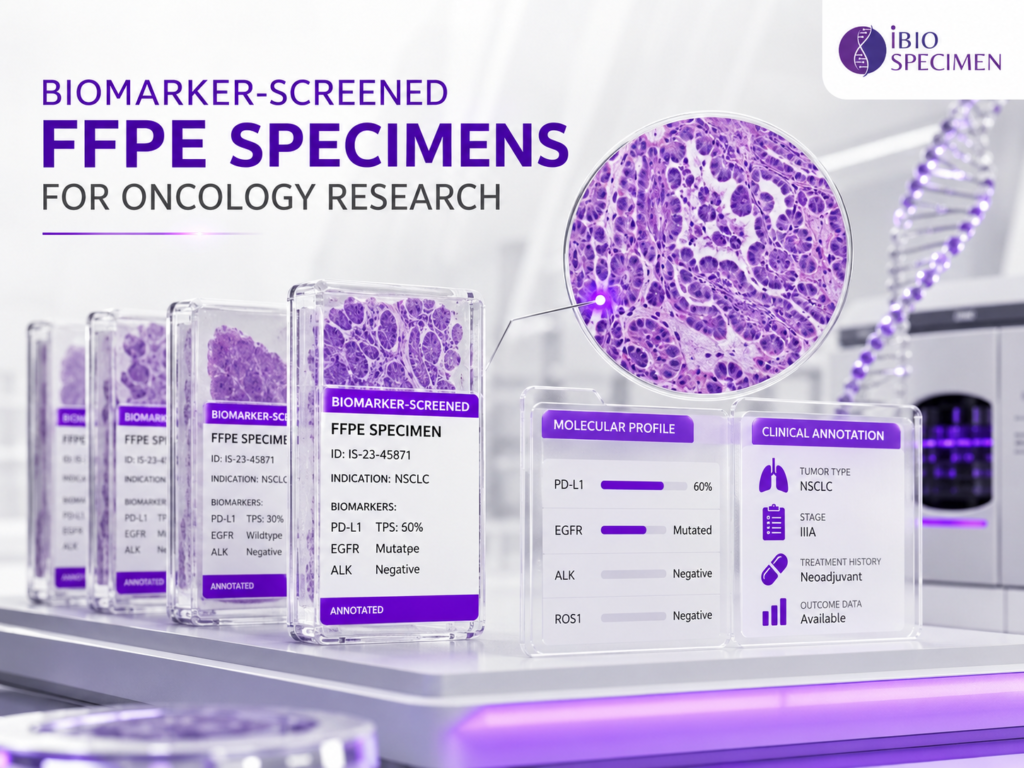
Biomarker-driven trials depend on accurate identification of patients whose tumors or biological profiles match a defined therapeutic hypothesis. We support clinically and molecularly characterized cohorts for precision oncology, targeted therapies, immunotherapies, and companion diagnostic studies.
Cohorts may be selected according to genomic alterations, gene fusions, protein-expression levels, immune markers, histological features, or combinations of multiple biomarkers. Relevant markers may include EGFR, KRAS, BRAF, ALK, ROS1, HER2, BRCA1, BRCA2, PIK3CA, MSI, PD-L1, and other protocol-defined targets. Available specimens may include FFPE tumor blocks, unstained slides, fresh frozen tissue, plasma, serum, whole blood, and matched sample sets. Biomarker-positive cases can be paired with negative controls or grouped according to mutation subtype, expression range, disease stage, or treatment history.
Positive, Negative, and Comparator Biomarker Cohorts|
Reliable biomarker studies require carefully balanced comparison groups rather than only biomarker-positive cases. We can support positive, negative, low-expression, high-expression, wild-type, mutant, responder, and non-responder cohorts depending on the scientific question.
Comparator groups can be matched by cancer indication, histological subtype, stage, specimen type, collection period, treatment status, and other relevant variables. For protein-expression studies, samples may be grouped across predetermined scoring ranges. For molecular studies, cohorts may be selected according to specific variants, amplifications, rearrangements, or wild-type status. Clinical outcome data may be incorporated where available to help distinguish predictive from prognostic associations. Pathology review and molecular-data verification can be performed before final qualification.
Biomarker Cohorts for Targeted Therapy and Companion Diagnostics
Targeted therapy development requires evidence that a treatment is effective in patients with a specific biological characteristic. Biomarker-driven cohorts can support analytical validation, clinical validation, assay bridging, cut-off development, and retrospective evaluation of treatment response. Samples may be selected from patients with actionable mutations, gene amplifications, rearrangements, protein overexpression, immune signatures, or other therapeutic targets.
Depending on the research plan, collections may include archived clinical tissue, samples from completed studies, prospectively collected specimens, or a combination. Specimen formats can be optimized for NGS, PCR, IHC, FISH, digital pathology, spatial biology, or liquid-biopsy assays. Associated information may include diagnosis, stage, treatment history, response, progression, and survival data where available.
Custom Precision-Medicine Cohorts Built to Protocol
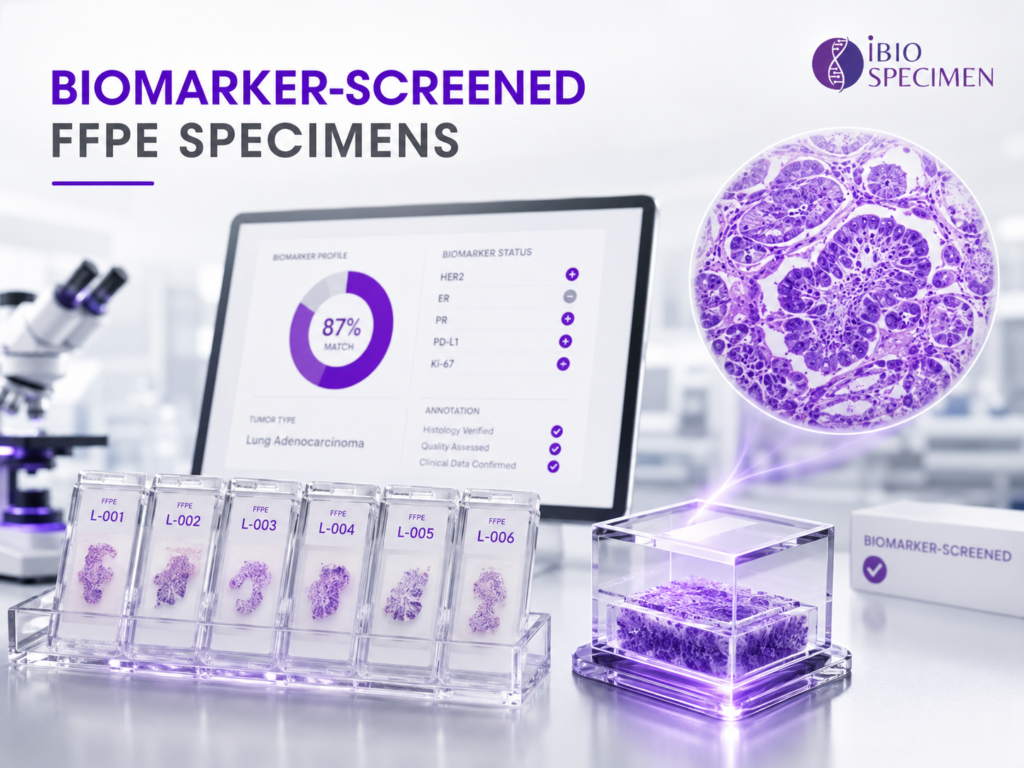
Precision-medicine programs often require rare and highly specific patient populations that are difficult to source through conventional specimen inventories. Our custom cohort-development process begins with a review of the clinical protocol, biomarker definition, testing methodology, disease indication, sample type, treatment criteria, and required clinical outcomes. Feasibility is assessed based on available archived material, molecular data, potential additional testing, prospective recruitment capacity, and anticipated screen-failure rates.
Cohorts can be developed for single biomarkers, combined genomic signatures, histological features, immune profiles, or integrated multi-omics criteria. Additional services may include pathology review, tissue qualification, confirmatory testing coordination, sample processing, data harmonization, and secure shipment.
General Questions
Frequent Asked Questions!!
FFPE blocks for genomics are formalin-fixed, paraffin-embedded tissue samples used for DNA, RNA, and biomarker analysis. They are widely used in cancer genomics, molecular pathology, translational research, and retrospective studies.
FFPE tissue blocks are valuable because they preserve tissue architecture and molecular material for long-term storage. Researchers can use them for sequencing, mutation analysis, biomarker discovery, and validation studies.
Yes. DNA can be extracted from FFPE blocks using validated extraction kits and optimized laboratory protocols. DNA quality depends on fixation time, block age, tissue type, tumor content, and storage conditions.
Yes. RNA can be extracted from FFPE tissue, although it is often fragmented because of formalin fixation. Specialized FFPE RNA extraction methods can provide material suitable for targeted RNA sequencing, gene expression studies, and fusion analysis.
Yes. High-quality FFPE blocks are commonly used for next-generation sequencing, including targeted sequencing panels, whole-exome sequencing, RNA sequencing, and selected whole-genome applications.
Tumor content requirements depend on the study design and testing method. Many molecular and NGS studies require at least 20% tumor content, while some projects may require 30%, 50%, or higher tumor percentage. Pathologist review can be performed to confirm tumor content before shipment
FFPE blocks can support mutation testing, copy number analysis, gene fusion detection, microsatellite instability testing, tumor mutational burden analysis, methylation studies, and targeted DNA or RNA sequencing.
Yes. FFPE cancer tissue blocks are extensively used to study genomic alterations in lung, breast, colorectal, prostate, ovarian, pancreatic, liver, kidney, and other tumor types.
Researchers can purchase FFPE blocks from qualified biospecimen suppliers, biobanks, pathology laboratories, hospitals, and research networks that provide ethically sourced and clinically annotated human tissue samples.
Researchers should confirm diagnosis, tissue type, tumor percentage, necrosis percentage, fixation details, block age, specimen size, available clinical data, pathology review, consent status, and intended research-use permissions.
Yes. Clinically annotated FFPE blocks may include donor age, sex, diagnosis, grade, stage, TNM classification, treatment history, pathology report, mutation status, and clinical outcome data.