
Introduction to
FFPE Blocks for Transcriptomics Research

High-Quality FFPE Blocks for Transcriptomics and RNA Sequencing Research
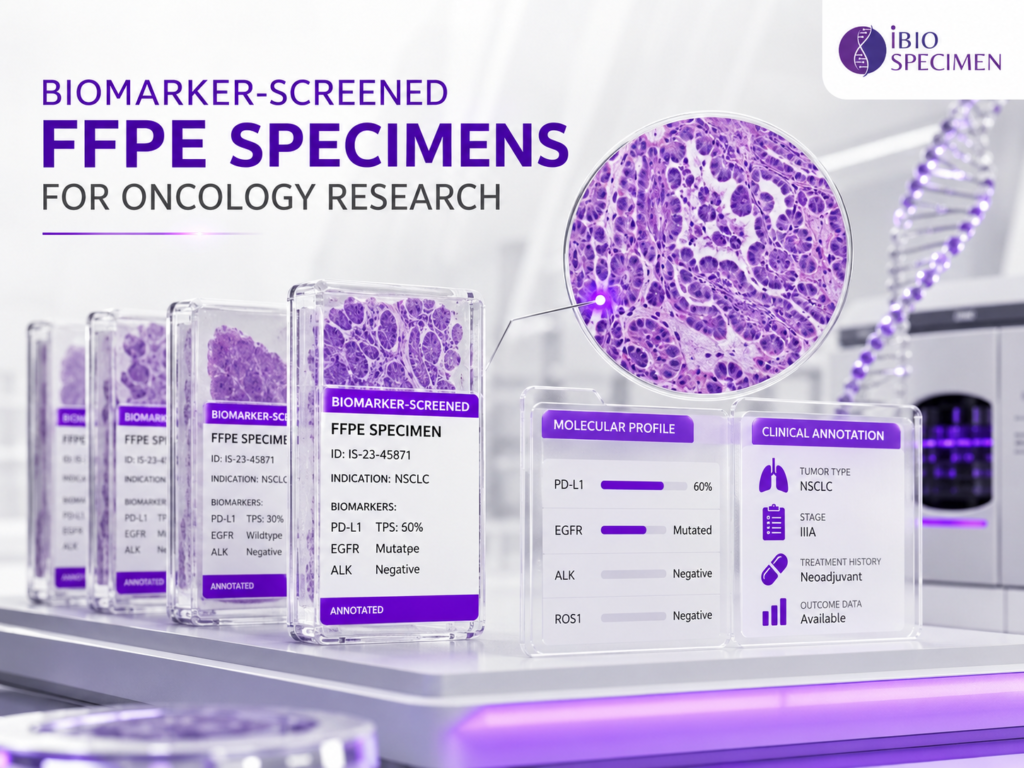
High-quality FFPE blocks provide researchers with access to preserved tissue specimens suitable for transcriptomics, RNA sequencing and gene-expression studies. Formalin-fixed, paraffin-embedded tissues are widely maintained by hospitals, pathology laboratories and biobanks, making them valuable for retrospective research involving different cancers, disease stages and histological subtypes. We supply research-use-only FFPE tissue blocks selected according to project-specific requirements, including diagnosis, tumour type, tissue site, specimen type, tumour percentage and available clinical annotations.
FFPE specimens can support targeted RNA sequencing, whole-transcriptome profiling, fusion detection, gene-expression analysis and biomarker discovery when pre-analytical quality is carefully assessed. Depending on availability and study design, samples may be accompanied by pathology reports, H&E images, tumour-content estimates, fixation information and relevant clinical or demographic data. Pathologist review can help identify representative tumour regions and exclude specimens with excessive necrosis or insufficient tissue.
Researchers may request individual specimens, matched cohorts or larger collections across multiple oncology indications. Our customized sourcing and screening process helps biotechnology companies, pharmaceutical developers, CROs and academic institutions obtain FFPE blocks aligned with their transcriptomics workflow, inclusion criteria and downstream validation objectives.
FFPE Blocks for Spatial Transcriptomics and Tumour Microenvironment Studies
FFPE blocks can support spatial transcriptomics research designed to examine gene expression within the morphological context of tumour tissue. These studies help researchers investigate how tumour cells, immune populations, stromal structures and surrounding tissue compartments are organized within the tumour microenvironment. We provide research-use-only FFPE specimens for spatial gene-expression profiling, immune-oncology research and exploratory biomarker development.
Samples can be selected by cancer type, histological subtype, stage, grade, tissue site, primary or metastatic status and minimum tumour-content requirements. Where available, supporting materials may include pathology reports, H&E slides or images, tumour annotations, biomarker results and selected clinical information. Pathologist review can identify representative tissue regions, evaluate morphology and help assess whether the available tissue area is compatible with the intended spatial workflow.
Researchers may request consecutive sections for H&E, immunohistochemistry and spatial transcriptomics, subject to block size and tissue availability. This approach can facilitate comparison of morphology, protein-expression patterns and spatially resolved RNA signals from closely related tissue regions. Platform compatibility, RNA quality and section requirements should be confirmed before processing because spatial assays have workflow-specific specifications. We support customized FFPE cohort development for biotechnology companies, pharmaceutical teams, CROs and academic laboratories studying tumour heterogeneity and spatial immune architecture.
Custom FFPE Sample Cohorts for Targeted and Whole-Transcriptome Analysis
Custom FFPE sample cohorts allow transcriptomics researchers to obtain tissue collections tailored to a defined scientific question instead of relying on broadly categorized specimens. We supply research-use-only FFPE blocks for targeted RNA panels, whole-transcriptome analysis, gene-expression signatures, fusion detection and exploratory molecular profiling. Every cohort can be screened against project-specific inclusion and exclusion criteria.
Clients may define diagnosis, tumour type, histological subtype, stage, grade, anatomical site, primary or metastatic status, specimen format, tumour percentage and maximum acceptable necrosis. Additional requirements may include collection period, patient demographics, previous biomarker testing, treatment status or matched normal tissue. The availability and completeness of these variables are reviewed before the cohort is finalized. Pathologist assessment and H&E review may be used to confirm tissue identity, tumour adequacy and representative areas for molecular testing.
We can support small feasibility studies as well as larger discovery and validation programs involving multiple cancer indications. Consecutive sections, unstained slides, tissue curls or whole blocks may be supplied when ethically permitted, operationally feasible and agreed within the project scope. Since FFPE RNA performance depends on fixation, storage and extraction conditions, researchers should apply platform-appropriate quality-control procedures. Our customized procurement model helps reduce unsuitable samples and creates better-aligned cohorts for transcriptomic research.
Buy Research-Use-Only FFPE Blocks for Transcriptomic Assay Development
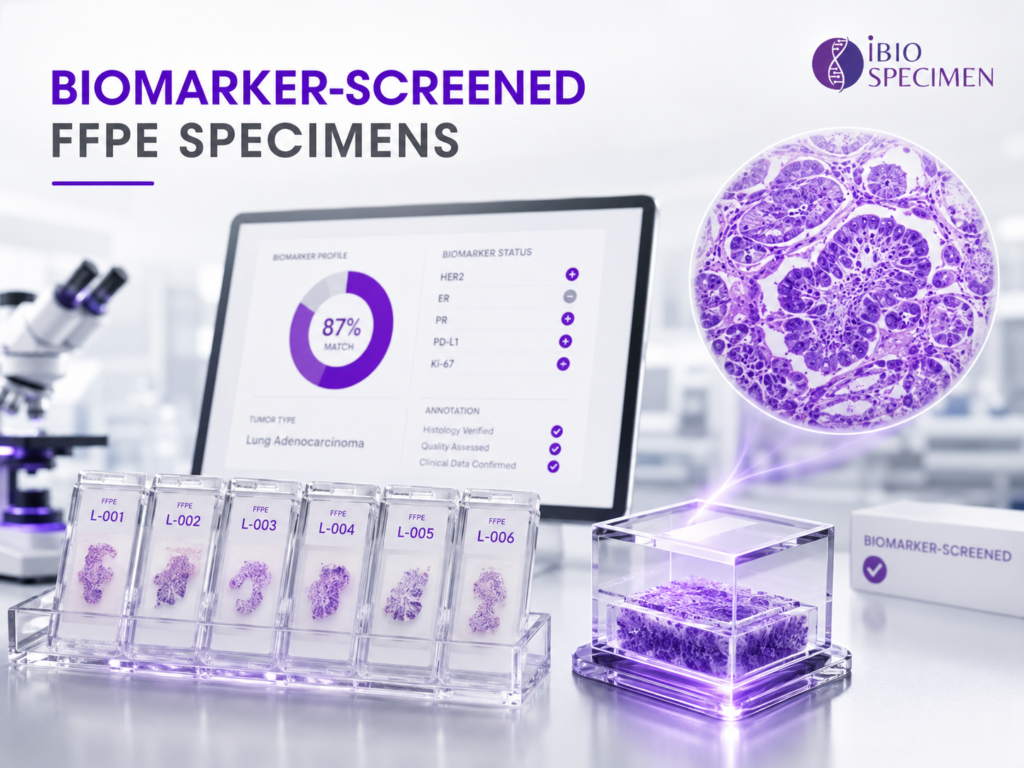
Researchers developing transcriptomic assays require FFPE specimens that reflect the intended sample population and analytical challenges of real-world archived tissue. We provide research-use-only FFPE blocks for RNA assay development, sequencing workflow optimization, gene-expression analysis, biomarker verification and analytical performance studies. Specimens are sourced and screened according to the client’s protocol, ethical requirements and defined tissue criteria.
Available cancer tissues may include breast, lung, colorectal, prostate, ovarian, endometrial, pancreatic, gastric, liver, kidney, melanoma and other solid-tumour indications. Sample availability varies by diagnosis and requested annotation depth. Clients can specify histology, stage, grade, tumour content, necrosis limits, specimen type, collection period and required clinical or biomarker information. Supporting documentation may include pathology findings, H&E images, tissue measurements and relevant de-identified data, where available.
FFPE blocks may support feasibility testing across different RNA extraction methods, library-preparation protocols and sequencing platforms. They can also be used to examine assay reproducibility, sensitivity, sample failure patterns and the influence of tissue quality on transcriptomic results. Appropriate independent quality assessment remains necessary before downstream analysis. We work with diagnostic companies, pharmaceutical developers, CROs, biotechnology firms and academic laboratories to build customized FFPE collections for transcriptomic assay development and validation.
General Questions
Frequent Asked Questions!!
FFPE blocks for genomics are formalin-fixed, paraffin-embedded tissue samples used for DNA, RNA, and biomarker analysis. They are widely used in cancer genomics, molecular pathology, translational research, and retrospective studies.
FFPE tissue blocks are valuable because they preserve tissue architecture and molecular material for long-term storage. Researchers can use them for sequencing, mutation analysis, biomarker discovery, and validation studies.
Yes. DNA can be extracted from FFPE blocks using validated extraction kits and optimized laboratory protocols. DNA quality depends on fixation time, block age, tissue type, tumor content, and storage conditions.
Yes. RNA can be extracted from FFPE tissue, although it is often fragmented because of formalin fixation. Specialized FFPE RNA extraction methods can provide material suitable for targeted RNA sequencing, gene expression studies, and fusion analysis.
Yes. High-quality FFPE blocks are commonly used for next-generation sequencing, including targeted sequencing panels, whole-exome sequencing, RNA sequencing, and selected whole-genome applications.
Tumor content requirements depend on the study design and testing method. Many molecular and NGS studies require at least 20% tumor content, while some projects may require 30%, 50%, or higher tumor percentage. Pathologist review can be performed to confirm tumor content before shipment
FFPE blocks can support mutation testing, copy number analysis, gene fusion detection, microsatellite instability testing, tumor mutational burden analysis, methylation studies, and targeted DNA or RNA sequencing.
Yes. FFPE cancer tissue blocks are extensively used to study genomic alterations in lung, breast, colorectal, prostate, ovarian, pancreatic, liver, kidney, and other tumor types.
Researchers can purchase FFPE blocks from qualified biospecimen suppliers, biobanks, pathology laboratories, hospitals, and research networks that provide ethically sourced and clinically annotated human tissue samples.
Researchers should confirm diagnosis, tissue type, tumor percentage, necrosis percentage, fixation details, block age, specimen size, available clinical data, pathology review, consent status, and intended research-use permissions.
Yes. Clinically annotated FFPE blocks may include donor age, sex, diagnosis, grade, stage, TNM classification, treatment history, pathology report, mutation status, and clinical outcome data.