
Introduction to
Phase I Clinical Trial Samples
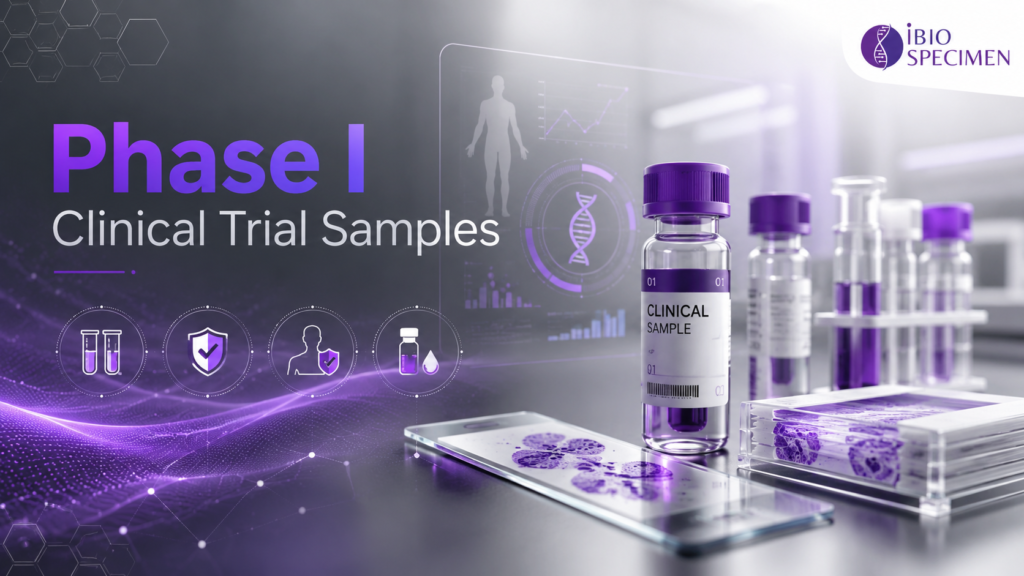
Biospecimens for Early-Phase and First-in-Human Clinical Studies
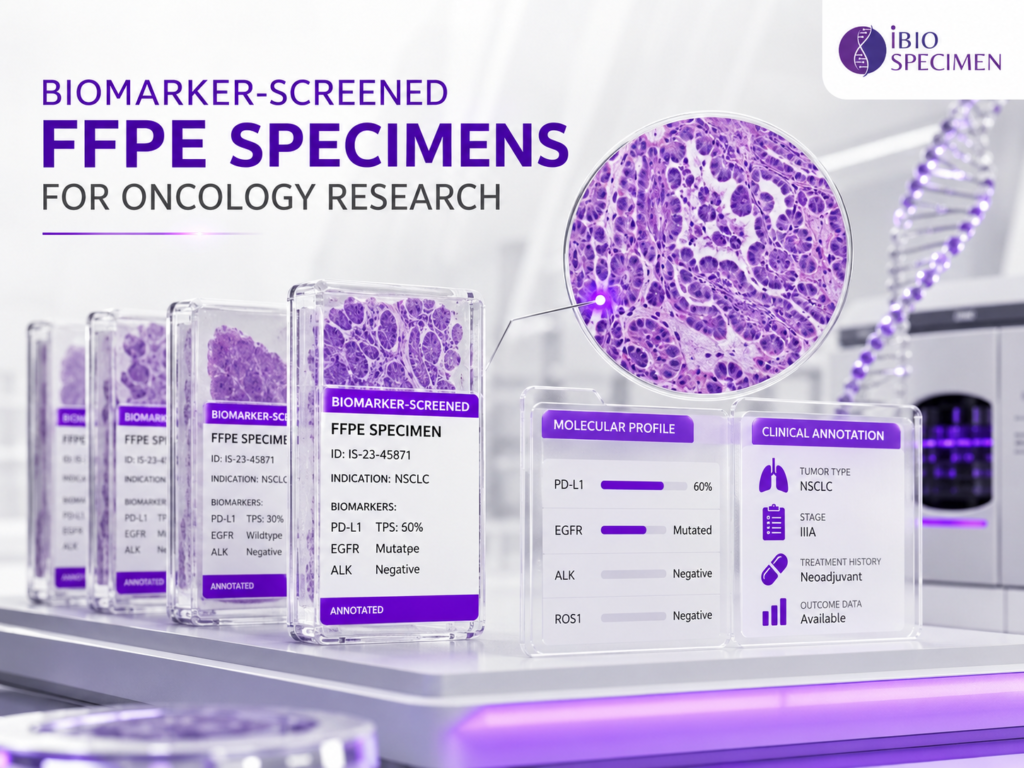
Phase I clinical trials evaluate safety, tolerability, dose range, pharmacokinetics, and early pharmacodynamic effects. We support pharmaceutical, biotechnology, diagnostic, CRO, and academic organizations with protocol-specific biospecimen sourcing. Available materials may include FFPE blocks, unstained slides, fresh or frozen tissue, whole blood, plasma, serum, buffy coat, PBMCs, and matched specimen sets, depending on the study. Collections can be organized around dose-escalation cohorts, dose-expansion arms, baseline assessments, on-treatment timepoints, and post-treatment follow-up.
Clinical annotations may include diagnosis, stage, grade, treatment history, response, progression, pathology findings, molecular results, and collection timing where available and ethically permitted. Every request is reviewed for scientific fit, tissue adequacy, data completeness, consent status, and logistical feasibility. This structured approach provides clinically relevant samples for target engagement, early safety signals, and dose selection, while helping reduce avoidable screening failures and pre-analytical variation.
Phase I Samples for Pharmacodynamic and Target-Engagement Studies
This research area benefits from carefully defined comparison groups and consistent sample handling. Cohorts may include positive and negative controls, responders and non-responders, treatment-naive and previously treated patients, or matched specimens obtained from the same donor. Samples can be selected by molecular alteration, protein-expression range, immune phenotype, histological subtype, clinical outcome, or protocol-defined threshold. Pathology review can confirm diagnosis, tumor percentage, necrosis, tissue quality, and suitability for the intended platform.
Specimens may be prepared for NGS, PCR, IHC, FISH, digital pathology, spatial biology, proteomics, transcriptomics, flow cytometry, or liquid-biopsy workflows. Where existing characterization is incomplete, additional testing may be coordinated before final qualification. Linking biospecimens with structured clinical and laboratory data strengthens comparative analyses and supports target engagement, early safety signals, and dose selection.
Early Safety Biomarker and Dose-Escalation Sample Support
Longitudinal and treatment-linked sample sets can reveal how disease biology evolves over time. Baseline samples may identify predictive features present before therapy, while on-treatment specimens can demonstrate target engagement or pharmacodynamic effects. Post-treatment and progression material may help uncover resistance pathways, clonal evolution, immune escape, recurrence, or other clinically relevant changes. Depending on feasibility, matched tissue and blood can be collected from the same patient at multiple timepoints and standardized for fixation, processing, storage, labeling, and shipment.
Clinical data may include therapy, dose, treatment cycle, response category, progression interval, adverse events, and follow-up information where permitted. These collections create a practical foundation for target engagement, early safety signals, and dose selection and can support both exploratory discovery and independent validation.
Custom Phase I Clinical Trial Sample Collection Programs
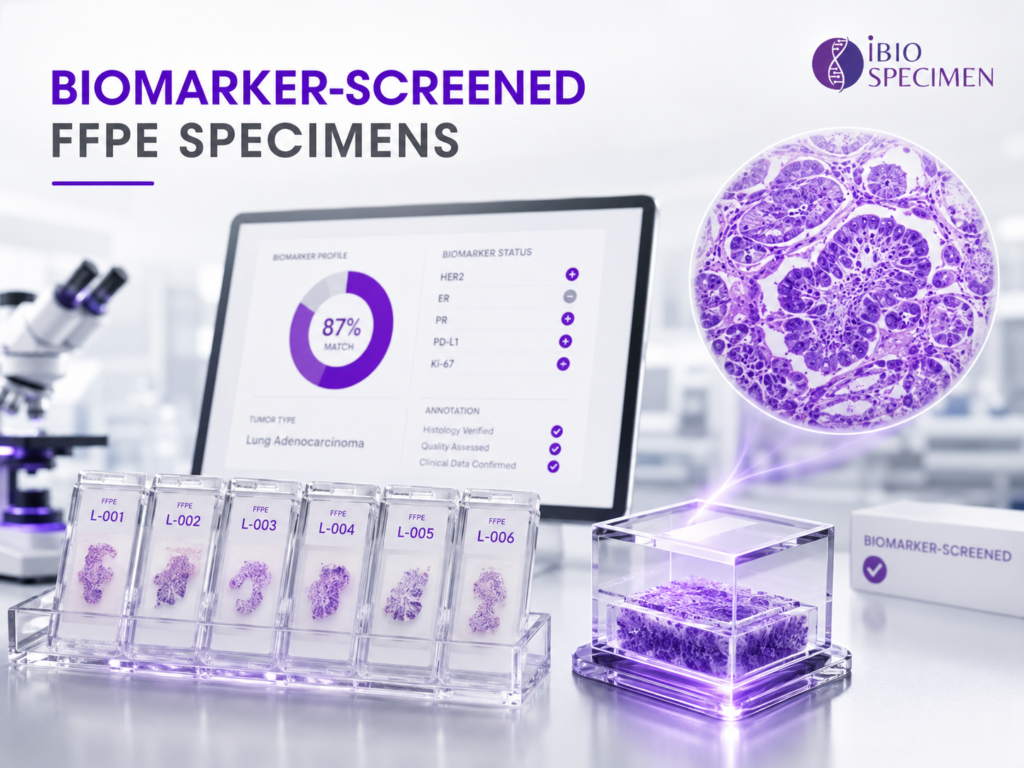
Our custom sourcing process begins with a detailed review of the protocol, target population, specimen format, minimum quantity, assay requirements, clinical variables, and delivery schedule. A feasibility assessment identifies available archived cases, prospective recruitment opportunities, likely screen-failure factors, testing gaps, and realistic collection milestones.
Services may include case screening, site coordination, pathology confirmation, slide preparation, tissue sectioning, biomarker testing coordination, de-identification, data harmonization, chain-of-custody documentation, and temperature-controlled logistics. Multi-source or multi-site strategies can be considered for rare subgroups or highly specific inclusion criteria. Progress can be tracked across screened, qualified, collected, and shipped cases. The objective is to deliver consistent, traceable, study-aligned material that supports target engagement, early safety signals, and dose selection.
General Questions
Frequent Asked Questions!!
FFPE blocks for genomics are formalin-fixed, paraffin-embedded tissue samples used for DNA, RNA, and biomarker analysis. They are widely used in cancer genomics, molecular pathology, translational research, and retrospective studies.
FFPE tissue blocks are valuable because they preserve tissue architecture and molecular material for long-term storage. Researchers can use them for sequencing, mutation analysis, biomarker discovery, and validation studies.
Yes. DNA can be extracted from FFPE blocks using validated extraction kits and optimized laboratory protocols. DNA quality depends on fixation time, block age, tissue type, tumor content, and storage conditions.
Yes. RNA can be extracted from FFPE tissue, although it is often fragmented because of formalin fixation. Specialized FFPE RNA extraction methods can provide material suitable for targeted RNA sequencing, gene expression studies, and fusion analysis.
Yes. High-quality FFPE blocks are commonly used for next-generation sequencing, including targeted sequencing panels, whole-exome sequencing, RNA sequencing, and selected whole-genome applications.
Tumor content requirements depend on the study design and testing method. Many molecular and NGS studies require at least 20% tumor content, while some projects may require 30%, 50%, or higher tumor percentage. Pathologist review can be performed to confirm tumor content before shipment
FFPE blocks can support mutation testing, copy number analysis, gene fusion detection, microsatellite instability testing, tumor mutational burden analysis, methylation studies, and targeted DNA or RNA sequencing.
Yes. FFPE cancer tissue blocks are extensively used to study genomic alterations in lung, breast, colorectal, prostate, ovarian, pancreatic, liver, kidney, and other tumor types.
Researchers can purchase FFPE blocks from qualified biospecimen suppliers, biobanks, pathology laboratories, hospitals, and research networks that provide ethically sourced and clinically annotated human tissue samples.
Researchers should confirm diagnosis, tissue type, tumor percentage, necrosis percentage, fixation details, block age, specimen size, available clinical data, pathology review, consent status, and intended research-use permissions.
Yes. Clinically annotated FFPE blocks may include donor age, sex, diagnosis, grade, stage, TNM classification, treatment history, pathology report, mutation status, and clinical outcome data.