
Introduction to
Oncology Trial Samples

Oncology Trial Samples Across Multiple Cancer Indications
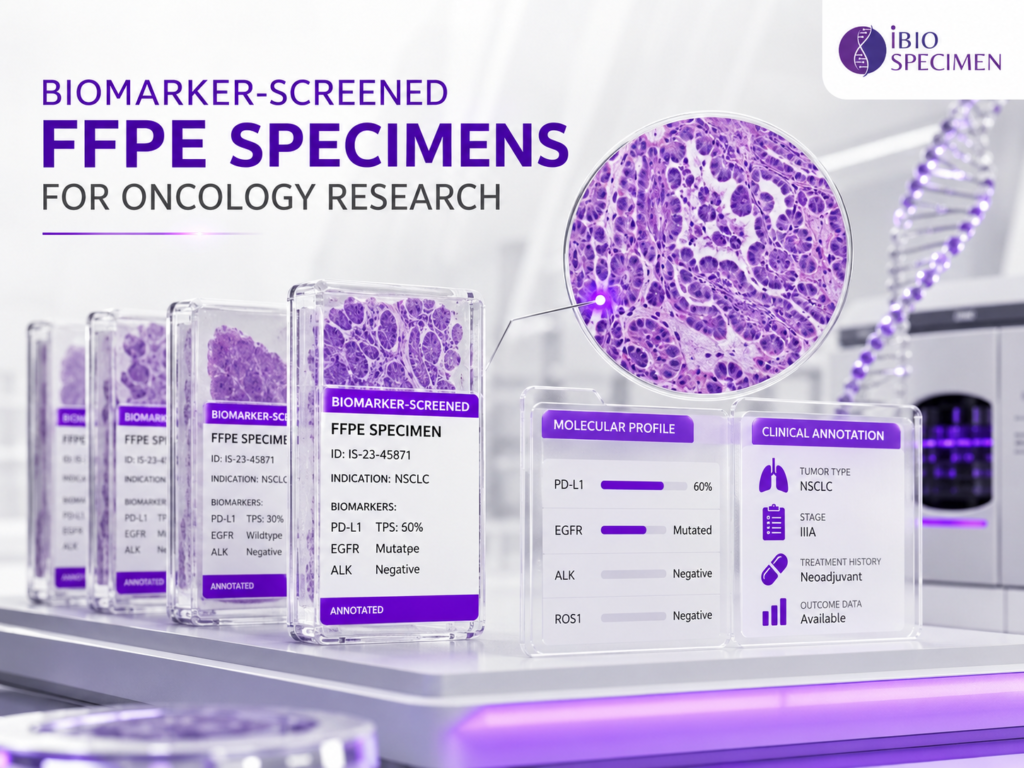
Oncology trials require well-characterized biological samples that reflect the diversity of tumor types, molecular subgroups, treatment histories, and clinical outcomes found in real-world patient populations. We provide access to oncology trial samples across a broad range of solid tumors and hematological malignancies, depending on feasibility and protocol requirements. Sample types may include FFPE blocks, fresh frozen tissue, unstained slides, tissue curls, plasma, serum, whole blood, buffy coat, PBMCs, and other relevant materials.
Collections may be developed for lung, breast, colorectal, gastric, ovarian, pancreatic, prostate, liver, kidney, bladder, melanoma, head and neck, and other cancer indications. Cases can be selected according to histology, stage, grade, primary or metastatic status, treatment exposure, specimen site, and biomarker profile. Available supporting information may include pathology reports, molecular results, treatment history, response data, and survival information where permitted.
Pre-Treatment, On-Treatment, and Post-Treatment Cancer Samples
The biological effects of cancer therapy can be better understood when samples are collected at clinically meaningful timepoints. We support oncology studies requiring pre-treatment baseline specimens, on-treatment collections, post-treatment surgical tissue, progression samples, and longitudinal blood draws. Baseline samples may identify predictive biomarkers or characterize the tumor before exposure to therapy.
On-treatment specimens can support pharmacodynamic studies by showing how tumor cells, immune populations, or circulating biomarkers change during treatment. Post-treatment and progression samples may help explain resistance mechanisms, clonal evolution, and disease recurrence. Depending on the study design, sponsors may request matched tissue and blood, paired primary and metastatic tumors, or longitudinal plasma from the same patient. Collection timing, processing, preservation, and data capture can be standardized according to the clinical protocol.
Biomarker-Characterized Tumor and Blood Samples
Modern oncology trials increasingly rely on biomarkers to identify eligible patients, define treatment subgroups, and evaluate clinical response. We can support sourcing of tumor tissue and blood samples characterized by study-relevant genomic, protein, or immune markers where testing data are available. Common selection criteria may include EGFR, KRAS, BRAF, ALK, ROS1, HER2, BRCA1, BRCA2, PIK3CA, MSI, PD-L1, and other tumor-specific targets.
Cohorts may include biomarker-positive and negative controls, varying expression ranges, specific mutation classes, or defined treatment-response groups. Samples may be used for NGS, PCR, FISH, IHC, digital pathology, circulating tumor DNA, and other translational assays. Pathology review can confirm tumor type, tumor content, necrosis, and suitability for the intended analysis
Custom Oncology Cohorts for Pharmaceutical Trial Programs
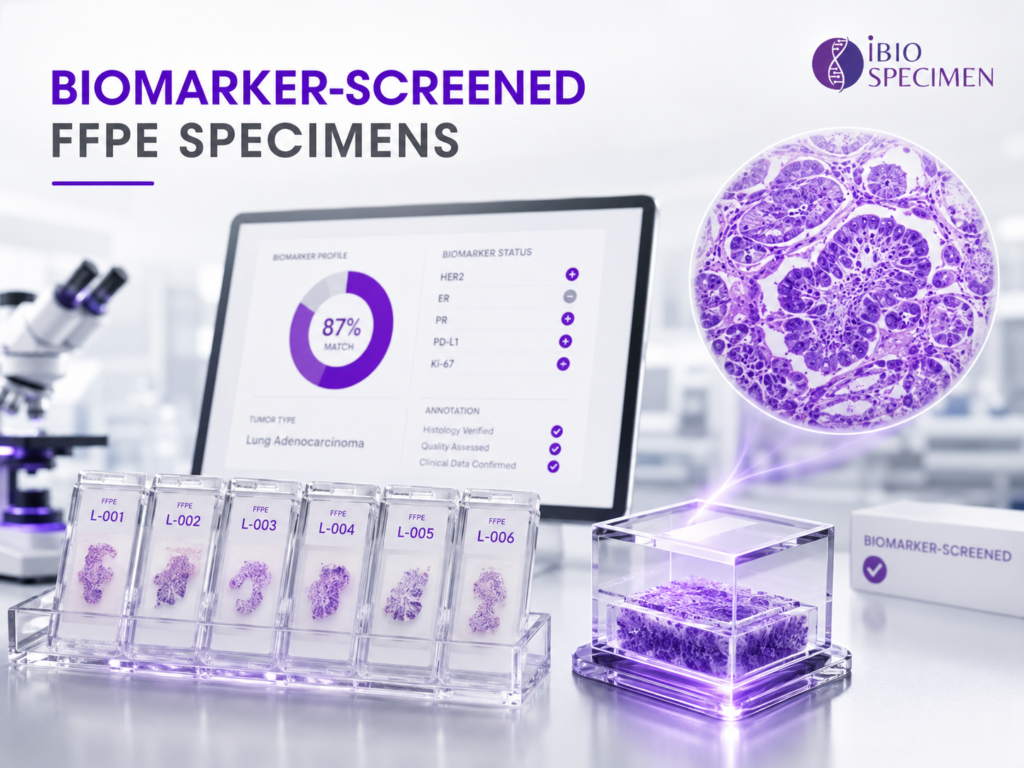
Oncology studies often involve complex inclusion criteria that cannot be met through generic sample catalogs. We create customized oncology cohorts based on the sponsor’s protocol, target cancer type, biomarker requirements, specimen format, treatment status, data fields, and desired number of donors. The process begins with a structured feasibility review to identify suitable archived cases, prospective recruitment options, anticipated screen-failure rates, and any additional testing required.
Cohorts can include treatment-naive patients, advanced-stage disease, metastatic cases, rare histological subtypes, specific therapy exposures, responders, non-responders, or patients with documented progression. Support services may include pathology confirmation, tissue qualification, sectioning, biomarker testing coordination, de-identification, and clinical data standardization.
General Questions
Frequent Asked Questions!!
FFPE blocks for genomics are formalin-fixed, paraffin-embedded tissue samples used for DNA, RNA, and biomarker analysis. They are widely used in cancer genomics, molecular pathology, translational research, and retrospective studies.
FFPE tissue blocks are valuable because they preserve tissue architecture and molecular material for long-term storage. Researchers can use them for sequencing, mutation analysis, biomarker discovery, and validation studies.
Yes. DNA can be extracted from FFPE blocks using validated extraction kits and optimized laboratory protocols. DNA quality depends on fixation time, block age, tissue type, tumor content, and storage conditions.
Yes. RNA can be extracted from FFPE tissue, although it is often fragmented because of formalin fixation. Specialized FFPE RNA extraction methods can provide material suitable for targeted RNA sequencing, gene expression studies, and fusion analysis.
Yes. High-quality FFPE blocks are commonly used for next-generation sequencing, including targeted sequencing panels, whole-exome sequencing, RNA sequencing, and selected whole-genome applications.
Tumor content requirements depend on the study design and testing method. Many molecular and NGS studies require at least 20% tumor content, while some projects may require 30%, 50%, or higher tumor percentage. Pathologist review can be performed to confirm tumor content before shipment
FFPE blocks can support mutation testing, copy number analysis, gene fusion detection, microsatellite instability testing, tumor mutational burden analysis, methylation studies, and targeted DNA or RNA sequencing.
Yes. FFPE cancer tissue blocks are extensively used to study genomic alterations in lung, breast, colorectal, prostate, ovarian, pancreatic, liver, kidney, and other tumor types.
Researchers can purchase FFPE blocks from qualified biospecimen suppliers, biobanks, pathology laboratories, hospitals, and research networks that provide ethically sourced and clinically annotated human tissue samples.
Researchers should confirm diagnosis, tissue type, tumor percentage, necrosis percentage, fixation details, block age, specimen size, available clinical data, pathology review, consent status, and intended research-use permissions.
Yes. Clinically annotated FFPE blocks may include donor age, sex, diagnosis, grade, stage, TNM classification, treatment history, pathology report, mutation status, and clinical outcome data.