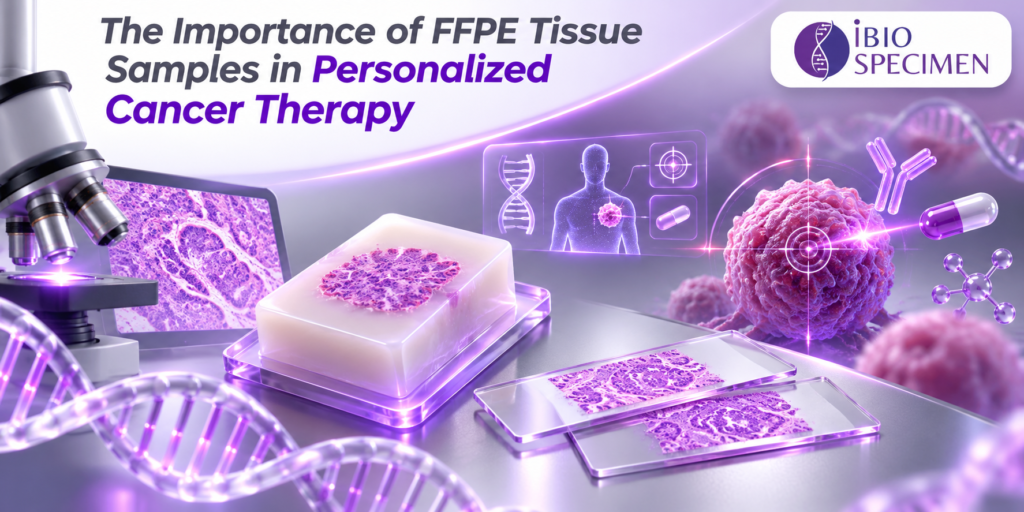
Personalized cancer therapy has transformed oncology by moving treatment decisions away from a one-size-fits-all approach and toward strategies tailored to the molecular profile of each patient’s tumor. Among the many tools that make this shift possible, FFPE tissue samples for personalized cancer therapy have become indispensable. Formalin-fixed paraffin-embedded (FFPE) tissue samples preserve cellular architecture and molecular information, enabling researchers and clinicians to analyze tumors long after the original biopsy or surgery has occurred.
The importance of FFPE tissue samples in cancer therapy lies in their ability to bridge clinical pathology, molecular diagnostics, biomarker discovery, and translational research. Because FFPE samples are routinely collected in hospitals and pathology laboratories worldwide, they represent one of the largest and most accessible repositories of tumor material for cancer research and patient care. Their widespread availability makes them especially valuable for retrospective studies, biomarker validation, and the development of targeted therapies.
This article explores how FFPE tissue samples support precision oncology, molecular diagnostics, tumor profiling, genomic analysis, biomarker discovery, and cancer drug development. It also highlights their growing role in immunotherapy research and translational cancer research, demonstrating why these samples remain a cornerstone of personalized oncology treatment.
FFPE Tissue Samples for Personalized Cancer Therapy
The use of FFPE tissue samples for personalized cancer therapy has expanded significantly as oncology has become more dependent on molecular information. Personalized cancer therapy aims to identify the unique genetic, epigenetic, and protein expression patterns of a patient’s tumor and then match those findings with the most appropriate treatment options.
FFPE tissue samples are particularly valuable because they preserve tumor tissue in a stable form while maintaining histological detail. Pathologists can evaluate tissue morphology, identify tumor type and grade, and determine the presence of specific biomarkers. Molecular laboratories can then extract DNA, RNA, and proteins from the same sample for further analysis.
This dual utility allows FFPE samples to support comprehensive tumor assessment. By combining histopathology with molecular profiling, clinicians gain a more complete understanding of the tumor’s biology. This information can guide decisions regarding targeted therapies, immunotherapies, chemotherapy regimens, and clinical trial eligibility.
Importance of FFPE Tissue Samples in Cancer Therapy
The importance of FFPE tissue samples in cancer therapy extends beyond their role as a storage method. They serve as a critical link between diagnosis and treatment selection. Because FFPE samples are routinely archived, they provide a long-term resource for both clinical care and research.
One of the primary advantages of FFPE samples is their accessibility. Hospitals and pathology laboratories maintain extensive FFPE archives containing specimens from a wide range of cancer types. These archives allow researchers to study disease progression, treatment response, and survival outcomes across large patient populations.
FFPE samples also support the validation of diagnostic and predictive biomarkers. Biomarkers identified in research studies can be tested on archived FFPE specimens to determine their clinical relevance. This process is essential for translating laboratory discoveries into diagnostic tests and therapeutic strategies that benefit patients.
FFPE Tissue Samples for Precision Oncology
FFPE tissue samples for precision oncology are essential because they enable the detailed molecular characterization of tumors. Precision oncology relies on identifying actionable alterations within a tumor, such as mutations, gene amplifications, fusions, or protein expression patterns, and matching these alterations with targeted therapies.
For example, FFPE samples can be analyzed to detect EGFR mutations in lung cancer, HER2 amplification in breast cancer, and BRAF mutations in melanoma. Identifying these alterations allows clinicians to select therapies that specifically target the molecular drivers of the disease.
The use of FFPE samples in precision oncology has improved treatment outcomes by increasing the likelihood that patients receive therapies most likely to benefit them. It has also reduced exposure to ineffective treatments and unnecessary side effects, supporting a more efficient and patient-centered approach to cancer care.
FFPE Tissue Samples for Cancer Biomarker Analysis
FFPE tissue samples for cancer biomarker analysis play a central role in identifying and validating biomarkers that can predict disease behavior, treatment response, and prognosis. Biomarkers may include gene mutations, protein expression levels, epigenetic changes, or immune-related markers.
Immunohistochemistry (IHC) is commonly performed on FFPE tissue sections to evaluate protein expression. This technique is widely used to assess biomarkers such as HER2, estrogen receptor, progesterone receptor, and PD-L1. These biomarkers help determine whether patients are eligible for specific targeted therapies or immunotherapies.
In addition to protein-based biomarkers, FFPE samples can be used for nucleic acid-based assays, including polymerase chain reaction (PCR) and next-generation sequencing (NGS). These methods allow researchers to identify genetic alterations associated with cancer development and treatment response.
FFPE Tissue Samples for Molecular Cancer Diagnostics
FFPE tissue samples for molecular cancer diagnostics are fundamental to modern oncology because they provide the material needed for molecular testing. Molecular diagnostics help classify tumors, identify therapeutic targets, and monitor disease progression.
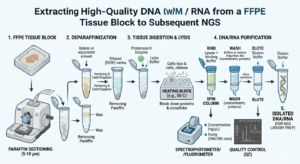
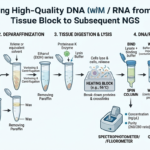
Advances in extraction techniques have improved the quality of DNA and RNA obtained from FFPE samples, making them suitable for a wide range of molecular assays. Although formalin fixation can cause nucleic acid fragmentation, optimized protocols and sensitive technologies have minimized these challenges.
Molecular diagnostic testing on FFPE samples is now routinely used in clinical practice. Patients with lung cancer, colorectal cancer, breast cancer, and many other malignancies may undergo molecular testing to identify actionable mutations and determine the most appropriate treatment strategy.
FFPE Tissue Samples for Targeted Cancer Therapy
FFPE tissue samples for targeted cancer therapy are critical because targeted therapies are designed to interfere with specific molecular abnormalities that drive tumor growth. Identifying these abnormalities requires accurate molecular testing, often performed on FFPE tissue.
Targeted therapies have transformed the treatment landscape for many cancers. Examples include tyrosine kinase inhibitors for EGFR-mutant lung cancer, HER2-targeted therapies for HER2-positive breast cancer, and BRAF inhibitors for melanoma. The success of these therapies depends on the accurate identification of the corresponding molecular target.
FFPE samples provide a reliable source of tumor material for this testing. By analyzing archived or newly collected FFPE specimens, clinicians can determine whether a patient’s tumor contains the targetable alteration and select the most appropriate therapy.
FFPE Tissue Samples for Oncology Research
FFPE tissue samples for oncology research are invaluable because they allow scientists to study tumor biology across diverse patient populations and cancer types. The extensive availability of FFPE archives enables large-scale studies that would be difficult to conduct using only fresh or frozen tissue samples.
Researchers use FFPE specimens to investigate mechanisms of carcinogenesis, tumor progression, metastasis, and treatment resistance. These studies contribute to a deeper understanding of cancer biology and help identify new therapeutic targets.
FFPE samples are also widely used in preclinical research, where they support the evaluation of candidate biomarkers and therapeutic strategies. Because these samples are often linked to clinical data, researchers can correlate molecular findings with patient outcomes, enhancing the translational value of their studies.
FFPE Tissue Samples for Tumor Profiling
FFPE tissue samples for tumor profiling enable comprehensive analysis of the molecular and histological characteristics of a tumor. Tumor profiling may include assessment of gene mutations, copy number variations, gene expression patterns, protein expression, and immune cell infiltration.
Comprehensive tumor profiling provides a detailed picture of the tumor’s biological behavior. This information can help identify aggressive disease features, predict treatment response, and reveal potential therapeutic vulnerabilities.
In personalized oncology, tumor profiling is essential for selecting the most effective treatment strategy. FFPE samples make this process feasible in routine clinical practice because they are readily available from diagnostic biopsies and surgical resections.
FFPE Tissue Samples for Personalized Oncology Treatment
FFPE tissue samples for personalized oncology treatment support individualized care by providing the molecular information needed to tailor therapy to each patient. Personalized oncology treatment seeks to maximize therapeutic benefit while minimizing unnecessary toxicity.
By analyzing FFPE samples, clinicians can identify biomarkers that indicate sensitivity or resistance to specific therapies. For example, patients with KRAS-mutant colorectal cancer may not benefit from certain EGFR-targeted therapies, while patients with BRCA mutations may be candidates for PARP inhibitors.
This approach allows treatment decisions to be based on the unique characteristics of the tumor rather than solely on its anatomical location or histological appearance. As a result, FFPE-based molecular testing has become a key component of precision medicine in oncology.
FFPE Tissue Samples for Genomic Analysis in Cancer
FFPE tissue samples for genomic analysis in cancer have become increasingly important as next-generation sequencing technologies have advanced. Genomic analysis can reveal mutations, gene fusions, copy number alterations, and other genomic changes that contribute to cancer development and progression.
Although FFPE-derived nucleic acids may be fragmented, modern sequencing platforms and optimized library preparation methods have improved the reliability of genomic analysis from these samples. This has expanded the use of FFPE specimens in both clinical and research settings.
Genomic analysis of FFPE samples can identify actionable alterations that guide targeted therapy selection. It can also uncover novel genomic patterns associated with treatment resistance, prognosis, or disease recurrence, contributing to a more comprehensive understanding of cancer biology.
FFPE Tissue Samples for Cancer Drug Development
FFPE tissue samples for cancer drug development play a vital role in the discovery and evaluation of new anticancer therapies. Drug developers use FFPE specimens to study target expression, validate biomarkers, and assess the molecular effects of investigational treatments.
During preclinical and clinical research, FFPE samples provide valuable insights into how tumors respond to therapy. Researchers can compare molecular profiles before and after treatment to identify mechanisms of response or resistance.
FFPE-based biomarker studies also help identify patient populations most likely to benefit from a new therapy. This information is critical for designing clinical trials and developing companion diagnostic tests that support regulatory approval and clinical implementation.
FFPE Tissue Samples for Immunotherapy Research
FFPE tissue samples for immunotherapy research are increasingly important as immunotherapies become a major component of cancer treatment. Immunotherapies, such as immune checkpoint inhibitors, rely on understanding the interaction between the tumor and the immune system.
FFPE samples can be analyzed to assess immune-related biomarkers, including PD-L1 expression, tumor-infiltrating lymphocytes, and other markers of immune activation. These biomarkers can help predict which patients are most likely to respond to immunotherapy.
In addition to biomarker assessment, FFPE samples support studies of the tumor microenvironment. Understanding the composition and spatial organization of immune cells within the tumor can provide insights into mechanisms of immune evasion and inform the development of new immunotherapeutic strategies.
FFPE Tissue Samples for Biomarker Discovery
FFPE tissue samples for biomarker discovery are a cornerstone of translational oncology research. Biomarker discovery involves identifying molecular features that can be used for diagnosis, prognosis, treatment selection, or monitoring disease progression.
The large number of archived FFPE specimens available in pathology repositories makes them particularly useful for biomarker discovery studies. Researchers can analyze samples from patients with known clinical outcomes, enabling the identification of biomarkers associated with survival, recurrence, or treatment response.
Once potential biomarkers are identified, FFPE samples can be used for validation studies across independent patient cohorts. This step is essential for establishing the clinical utility of a biomarker and supporting its adoption in routine practice.
FFPE Tissue Samples for Retrospective Cancer Studies
FFPE tissue samples for retrospective cancer studies provide a unique opportunity to investigate long-term clinical outcomes and disease patterns. Because FFPE samples are routinely archived, researchers can access specimens from patients treated many years earlier.
Retrospective studies using FFPE samples can reveal associations between molecular alterations and clinical outcomes, such as survival, recurrence, and treatment response. These studies are particularly valuable for rare cancers or uncommon molecular subtypes, where prospective sample collection may be challenging.
The ability to link archived FFPE specimens with clinical data enhances the power of retrospective research. Researchers can evaluate the prognostic and predictive significance of biomarkers and generate hypotheses for future prospective studies.
FFPE Tissue Samples for Translational Cancer Research
FFPE tissue samples for translational cancer research help bridge the gap between laboratory discoveries and clinical applications. Translational research aims to convert scientific findings into diagnostic tools, therapeutic strategies, and improved patient care.
FFPE samples are well suited for translational research because they are linked to real-world clinical outcomes. Researchers can use these specimens to validate biomarkers, assess therapeutic targets, and evaluate the molecular effects of treatment.
The integration of FFPE-based research with clinical data supports the development of precision medicine approaches. By understanding how molecular features influence treatment response and disease progression, researchers can design more effective therapies and improve patient outcomes.
Challenges and Future Directions of FFPE Tissue Samples in Personalized Cancer Therapy
Despite their many advantages, FFPE tissue samples present certain challenges. Formalin fixation can cause cross-linking and fragmentation of nucleic acids, which may affect the quality of molecular analyses. Variability in fixation time, tissue processing, and storage conditions can also influence sample quality.
However, ongoing technological advancements are addressing these limitations. Improved extraction methods, optimized sequencing protocols, and quality control measures have enhanced the reliability of FFPE-based molecular testing. As these technologies continue to evolve, the utility of FFPE samples in personalized cancer therapy is expected to grow further.
Future directions include the integration of FFPE-derived molecular data with other sources of patient information, such as liquid biopsy results, imaging data, and clinical records. This comprehensive approach may provide a more complete understanding of tumor biology and support even more precise treatment strategies.
The Lasting Importance of FFPE Tissue Samples in Personalized Cancer Therapy
The importance of FFPE tissue samples in cancer therapy cannot be overstated. These samples provide a stable, accessible, and information-rich resource that supports nearly every aspect of personalized oncology, from diagnosis and tumor profiling to biomarker discovery and targeted therapy selection.
FFPE tissue samples for personalized cancer therapy have become essential for precision oncology by enabling detailed molecular characterization of tumors. They support FFPE tissue samples for cancer biomarker analysis, FFPE tissue samples for molecular cancer diagnostics, and FFPE tissue samples for genomic analysis in cancer, all of which contribute to more informed treatment decisions.
In addition, FFPE specimens play a critical role in FFPE tissue samples for cancer drug development, FFPE tissue samples for immunotherapy research, and FFPE tissue samples for translational cancer research. Their extensive availability and connection to clinical outcomes make them invaluable for advancing cancer research and improving patient care.
As personalized oncology continues to evolve, FFPE tissue samples will remain a cornerstone of cancer diagnostics, research, and therapy development. Their ability to preserve both histological and molecular information ensures that they will continue to drive progress toward more precise, effective, and individualized cancer treatments.