
Introduction to
Regulatory Affairs Supporting Cohorts

Cohorts Designed Around Regulatory Strategy

Successful regulatory and diagnostic development programs depend on specimens selected against a clearly defined protocol rather than a general disease label. We support regulatory affairs supporting cohorts using FFPE tissue, fresh-frozen tissue, whole blood, plasma, serum, cytology material, extracted DNA, RNA and other clinically relevant matrices, subject to project feasibility. Each request is converted into a detailed specification covering diagnosis, disease stage, histological subtype, biomarker profile, specimen format, collection period, processing method, storage history, residual quantity and required clinical variables. Available records may include pathology reports, molecular or immunohistochemistry results, treatment history, demographic information and clinical outcomes where permitted.
Cases are screened against sponsor-defined inclusion and exclusion criteria before reservation. This approach helps analytical, clinical, regulatory, quality and biostatistical teams understand exactly how the proposed materials relate to the intended use of the assay. Specimens are not represented as independently approved by a regulator; their suitability depends on the complete study design, reference method, statistical plan, quality system and applicable requirements. The result is a fit-for-purpose resource designed to reduce avoidable exclusions, support reproducible testing and give the study team clear visibility into both the strengths and limitations of the available evidence.
Submission-Supporting Analytical Cohorts
A defensible validation cohort should represent the full range of results and conditions the assay is expected to encounter in routine use. For regulatory affairs supporting cohorts, cohorts may include strongly positive, moderately positive, low-positive, borderline, negative, wild-type, rare-variant and technically challenging cases. Depending on the technology, relevant variables can include tumor percentage, necrosis, fixation quality, block age, variant allele frequency, copy number, fusion status, expression level, analyte concentration, sample volume, processing interval, hemolysis, freeze-thaw history and nucleic-acid integrity. Positive and negative status should be supported by an appropriate reference method such as pathology review, PCR, sequencing, FISH, IHC, culture or another validated comparator.
Clinically relevant mimics, benign conditions, normal samples and related molecular targets can be incorporated to examine specificity, cross-reactivity and interference. Material allocation is planned for repeats, invalid results, adjudication and multi-run testing so the study is not disrupted by unexpected consumption. The final composition is aligned with the assay's claims, risk profile and predefined acceptance criteria. The result is a fit-for-purpose resource designed to reduce avoidable exclusions, support reproducible testing and give the study team clear visibility into both the strengths and limitations of the available evidence.
Clinical Cohorts Supporting Regulatory Claims
Documentation, traceability and data quality are as important as the physical specimen when evidence may support a regulatory submission. Every case can be assigned a unique coded identifier linking the parent specimen, prepared slides, curls, cores, aliquots or nucleic-acid derivatives with pathology information, testing results, processing history, storage conditions, shipment records and final study disposition. Sponsor-specific manifests and data dictionaries can record eligibility status, inclusion rationale, exclusion reason, quantity, reference-test method, laboratory source, testing date and available residual material.
Consent, waiver, ethics approval, de-identification, permitted research or commercial use and cross-border transfer documentation can be assessed according to the proposed project. Historical collections often contain variable levels of documentation, so limitations should be identified during feasibility rather than after testing. Data quality review can flag conflicting diagnoses, missing dates, inconsistent identifiers and comparator discrepancies before cohort lock. This transparent audit trail supports reconciliation, quality review and defensible interpretation of study results. The result is a fit-for-purpose resource designed to reduce avoidable exclusions, support reproducible testing and give the study team clear visibility into both the strengths and limitations of the available evidence.
Regulatory Documentation and Cohort Traceability
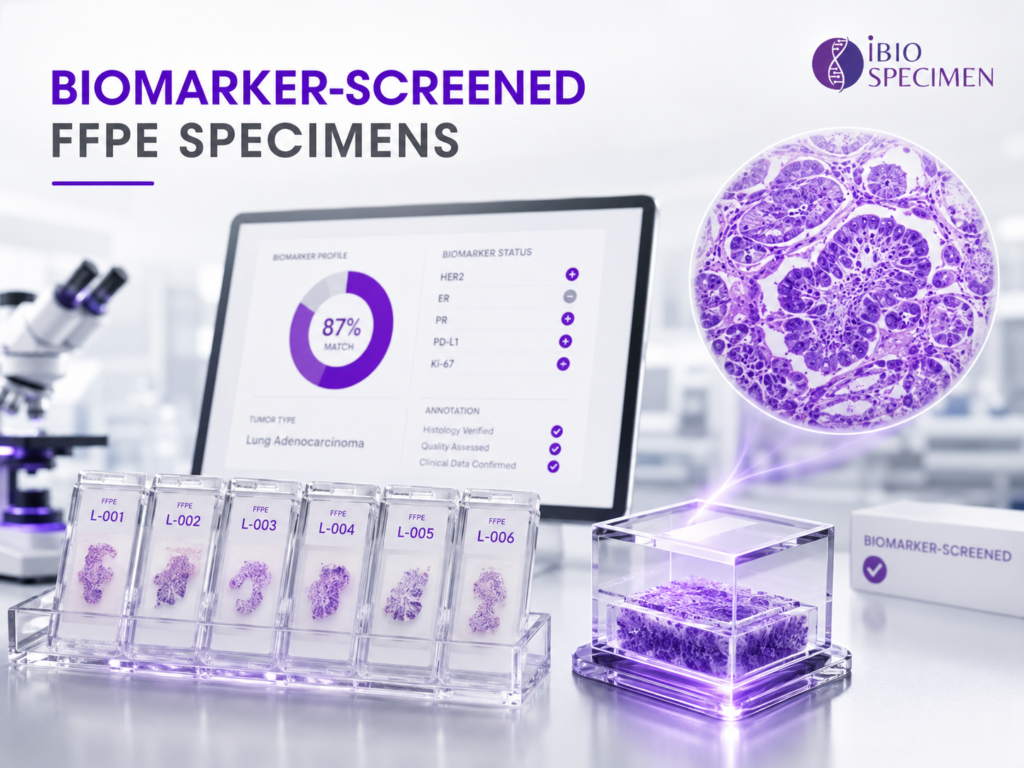
Complex programs frequently require targeted, multi-site or prospective procurement when suitable materials are not available in a single archive. A custom sourcing plan for regulatory affairs supporting cohorts can combine archive screening, pathology database review, biobank inventory searches, qualified laboratory testing and prospective site recruitment. Feasibility can estimate prevalence, expected screening volume, attrition, documentation gaps, confirmatory-testing needs, residual material and delivery timing. Multi-site projects can use harmonised eligibility criteria, collection instructions, labelling rules, data templates, storage requirements and shipping procedures.
Central pathology review, H&E preparation, macrodissection guidance, molecular confirmation, IHC scoring, aliquoting or nucleic-acid extraction may be added where appropriate. Cohorts can be delivered in phases, beginning with a pilot set that allows the sponsor to evaluate sample quality and workflow compatibility before the locked validation population is assembled. This staged model is particularly valuable for rare biomarkers, matched tissue and liquid samples, longitudinal collections, treatment-naive cases and studies requiring clinically important subgroups. The result is a fit-for-purpose resource designed to reduce avoidable exclusions, support reproducible testing and give the study team clear visibility into both the strengths and limitations of the available evidence.
General Questions
Frequent Asked Questions!!
FFPE blocks for genomics are formalin-fixed, paraffin-embedded tissue samples used for DNA, RNA, and biomarker analysis. They are widely used in cancer genomics, molecular pathology, translational research, and retrospective studies.
FFPE tissue blocks are valuable because they preserve tissue architecture and molecular material for long-term storage. Researchers can use them for sequencing, mutation analysis, biomarker discovery, and validation studies.
Yes. DNA can be extracted from FFPE blocks using validated extraction kits and optimized laboratory protocols. DNA quality depends on fixation time, block age, tissue type, tumor content, and storage conditions.
Yes. RNA can be extracted from FFPE tissue, although it is often fragmented because of formalin fixation. Specialized FFPE RNA extraction methods can provide material suitable for targeted RNA sequencing, gene expression studies, and fusion analysis.
Yes. High-quality FFPE blocks are commonly used for next-generation sequencing, including targeted sequencing panels, whole-exome sequencing, RNA sequencing, and selected whole-genome applications.
Tumor content requirements depend on the study design and testing method. Many molecular and NGS studies require at least 20% tumor content, while some projects may require 30%, 50%, or higher tumor percentage. Pathologist review can be performed to confirm tumor content before shipment
FFPE blocks can support mutation testing, copy number analysis, gene fusion detection, microsatellite instability testing, tumor mutational burden analysis, methylation studies, and targeted DNA or RNA sequencing.
Yes. FFPE cancer tissue blocks are extensively used to study genomic alterations in lung, breast, colorectal, prostate, ovarian, pancreatic, liver, kidney, and other tumor types.
Researchers can purchase FFPE blocks from qualified biospecimen suppliers, biobanks, pathology laboratories, hospitals, and research networks that provide ethically sourced and clinically annotated human tissue samples.
Researchers should confirm diagnosis, tissue type, tumor percentage, necrosis percentage, fixation details, block age, specimen size, available clinical data, pathology review, consent status, and intended research-use permissions.
Yes. Clinically annotated FFPE blocks may include donor age, sex, diagnosis, grade, stage, TNM classification, treatment history, pathology report, mutation status, and clinical outcome data.