


Introduction to
Molecularly Characterized FFPE Tumor Samples
FFPE Molecularly Characterized Tumors With Clinical Data
FFPE molecularly characterized tumours with clinical data combine physical tissue, biomarker findings and relevant patient-level annotations. Available information may include age, sex, diagnosis, histological subtype, stage, grade, specimen site, treatment history, response, progression and follow-up. These integrated specimens can support retrospective studies examining relationships between molecular alterations and clinical characteristics. Researchers should distinguish between basic clinical annotation and longitudinal datasets containing verified treatment and outcome information.
Molecular results should identify the assay, platform, panel or antibody, interpretation criteria and quality-control details. The exact relationship between the characterized tissue and supplied FFPE block should be documented, particularly when testing was conducted on another specimen from the same patient. Pathology review should confirm diagnosis, tumour percentage, necrosis and remaining material. All clinical and molecular data must be de-identified and supplied under appropriate consent and ethical permissions. Carefully harmonised samples can support translational oncology, biomarker validation and treatment-response research.
FFPE Molecularly Characterized Tumors With Clinical Data
FFPE molecularly characterized tumours with clinical data combine physical tissue, biomarker findings and relevant patient-level annotations. Available information may include age, sex, diagnosis, histological subtype, stage, grade, specimen site, treatment history, response, progression and follow-up. These integrated specimens can support retrospective studies examining relationships between molecular alterations and clinical characteristics. Researchers should distinguish between basic clinical annotation and longitudinal datasets containing verified treatment and outcome information.
Optimized for DNA Sequencing
NGS-Ready FFPE Tissue Blocks
Reliable RNA Profiling Samples
Source Genomically Profiled FFPE Tumors for Oncology Studies
Genomically profiled FFPE tumours can be sourced according to cancer indication, histological subtype, stage, specimen site and molecular eligibility. Researchers may request tumours containing particular mutations, copy-number alterations, gene fusions or genomic signatures. The procurement criteria should identify acceptable profiling platforms, minimum gene coverage, required alteration classes and the level of supporting documentation.

Clinically Annotated Tissue Samples
FFPE blocks supplied with relevant clinical details for reliable genomic research.

Comprehensive Pathology Data Included
Each sample includes diagnosis, grade, stage, tumor content, and pathology information.

Optimized for Genomic Analysis
Samples are suitable for DNA, RNA, NGS, mutation analysis, and molecular profiling.

Reliable Samples for NGS
Quality-controlled FFPE blocks support accurate sequencing and reproducible genomic results.
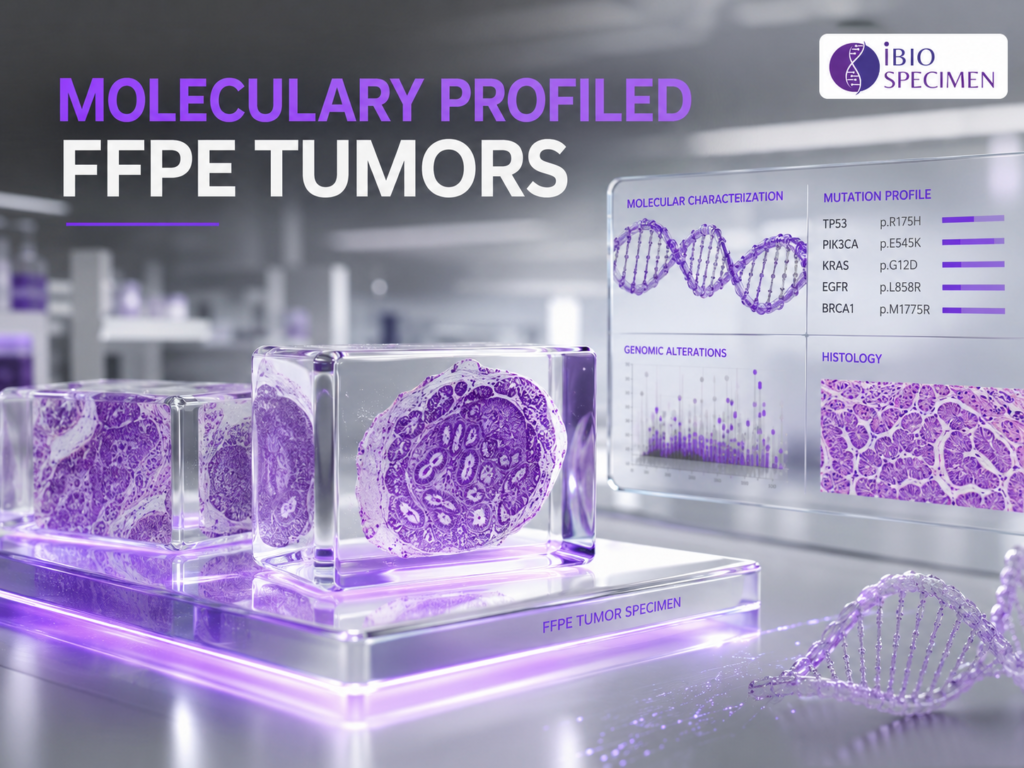
Molecularly Characterized FFPE Tumors for Biomarker Discovery
Molecularly characterized FFPE tumours can accelerate biomarker discovery by enabling researchers to compare genomic and protein-level findings with morphology, immune features and clinical characteristics. The tissue can be analysed using IHC, multiplex imaging, FISH, PCR, sequencing, transcriptomics or spatial technologies. Existing molecular results help identify suitable positive and negative cohorts and reduce the need for broad prescreening. Researchers should design cohorts carefully to control for cancer type, histological subtype, stage, treatment exposure and collection site.
Â
Molecular results must be interpreted according to the original assay’s coverage, analytical sensitivity and validation status. Pathologist review can confirm tumour content and identify areas appropriate for macrodissection or image analysis. When clinical outcomes are included, endpoints and follow-up durations should be consistently defined. Candidate biomarkers discovered through these specimens should subsequently be evaluated in independent cohorts. Carefully curated molecularly characterized FFPE tumours provide a practical bridge between molecular discovery and tissue-based validation.
Quality-Controlled FFPE Tumor Blocks With Molecular Results
Quality-controlled FFPE tumour blocks with molecular results undergo structured assessment of tissue suitability, pathology and supporting biomarker data. Pathology review should confirm diagnosis, histological subtype, tumour percentage, necrosis and remaining block material. The molecular report should identify the assay, platform, target genes or biomarkers, result interpretation and available analytical metrics. Researchers should confirm whether the molecular testing was conducted on the supplied block and consider tumour heterogeneity when only a matched specimen was tested.
Preanalytical factors such as cold ischemia, fixation duration, fixative type, block age and storage conditions may also influence downstream assay performance. When a particular biomarker is essential, confirmatory testing may be requested before shipment. Supporting materials can include H&E images, pathology summaries, de-identified laboratory reports and clinical annotations. A documented quality-control process helps reduce the likelihood of depleted, misclassified or poorly preserved specimens entering research studies.
Order Clinically Annotated Molecularly Profiled FFPE Tumors
Clinically annotated, molecularly profiled FFPE tumours can be ordered using customised pathological, genomic and clinical criteria. A project request should specify the required cancer type, histology, stage, collection site, treatment status, molecular alteration and tissue quantity. Researchers should identify mandatory clinical fields, such as therapy, response, progression or survival follow-up, rather than assuming that every sample contains longitudinal data. Acceptable molecular methods may include targeted NGS, comprehensive genomic profiling, WES, WGS, PCR, FISH or IHC. Before procurement, researchers can review a de-identified manifest containing pathology, biomarker and clinical information.
Supporting documents may include molecular reports, H&E images and quality-control records. All specimens and associated data should be transferred under appropriate consent, ethics, privacy and contractual terms. A customised ordering process enables researchers to assemble precisely defined cohorts for translational oncology, drug development, biomarker research and multimodal data analysis.
General Questions
Frequent Asked Questions!!
FFPE blocks for genomics are formalin-fixed, paraffin-embedded tissue samples used for DNA, RNA, and biomarker analysis. They are widely used in cancer genomics, molecular pathology, translational research, and retrospective studies.
FFPE tissue blocks are valuable because they preserve tissue architecture and molecular material for long-term storage. Researchers can use them for sequencing, mutation analysis, biomarker discovery, and validation studies.
Yes. DNA can be extracted from FFPE blocks using validated extraction kits and optimized laboratory protocols. DNA quality depends on fixation time, block age, tissue type, tumor content, and storage conditions.
Yes. RNA can be extracted from FFPE tissue, although it is often fragmented because of formalin fixation. Specialized FFPE RNA extraction methods can provide material suitable for targeted RNA sequencing, gene expression studies, and fusion analysis.
Yes. High-quality FFPE blocks are commonly used for next-generation sequencing, including targeted sequencing panels, whole-exome sequencing, RNA sequencing, and selected whole-genome applications.
Tumor content requirements depend on the study design and testing method. Many molecular and NGS studies require at least 20% tumor content, while some projects may require 30%, 50%, or higher tumor percentage. Pathologist review can be performed to confirm tumor content before shipment
FFPE blocks can support mutation testing, copy number analysis, gene fusion detection, microsatellite instability testing, tumor mutational burden analysis, methylation studies, and targeted DNA or RNA sequencing.
Yes. FFPE cancer tissue blocks are extensively used to study genomic alterations in lung, breast, colorectal, prostate, ovarian, pancreatic, liver, kidney, and other tumor types.
Researchers can purchase FFPE blocks from qualified biospecimen suppliers, biobanks, pathology laboratories, hospitals, and research networks that provide ethically sourced and clinically annotated human tissue samples.
Researchers should confirm diagnosis, tissue type, tumor percentage, necrosis percentage, fixation details, block age, specimen size, available clinical data, pathology review, consent status, and intended research-use permissions.
Yes. Clinically annotated FFPE blocks may include donor age, sex, diagnosis, grade, stage, TNM classification, treatment history, pathology report, mutation status, and clinical outcome data.