
Introduction to
Genomically Characterized FFPE Samples
Buy Genomically Characterized FFPE Samples for Research
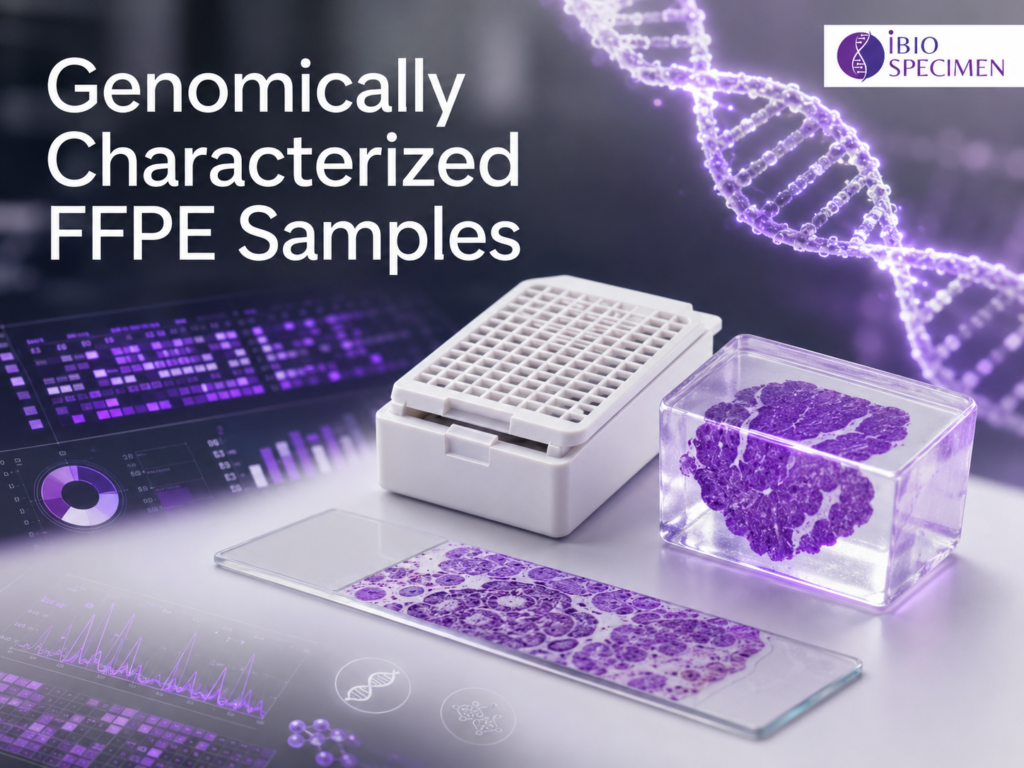
Genomically characterized FFPE samples are preserved tissue specimens accompanied by molecular information generated through validated or research-grade testing methods. Depending on the cohort, characterization may include targeted sequencing, whole-exome sequencing, whole-genome sequencing, copy-number analysis, fusion detection or selected single-gene assays. These samples can support oncology research, assay development, biomarker verification, drug discovery and artificial-intelligence model development. Researchers should review the scope of genomic testing carefully because a negative result is meaningful only when the relevant gene and alteration type were adequately assessed.
Supporting information may include the sequencing platform, panel version, variant allele frequency, coverage and classification of detected variants. Pathological quality is equally important, and samples should be assessed for diagnosis, tumour percentage, necrosis and remaining tissue. Clinical annotations may be supplied where consent and data availability permit. Purchasing genomically characterized FFPE samples through a criteria-based procurement process helps researchers obtain suitable molecularly defined cohorts while reducing unnecessary screening and repeat testing.
Genomically Characterized FFPE Samples for Oncology Studies
Genomically characterized FFPE samples allow oncology researchers to investigate the molecular features that influence tumour development, progression and potential treatment response. These specimens may represent common or rare cancer types and can be selected according to mutations, gene fusions, amplification status, microsatellite instability or other genomic characteristics. Researchers can perform new tissue-based assays and compare their findings with the existing molecular profile. This makes the samples useful for validating antibodies, developing companion-diagnostic concepts, studying tumour heterogeneity and evaluating emerging biomarkers.

Optimized for DNA Sequencing
NGS-Ready FFPE Tissue Blocks
Reliable RNA Profiling Samples
Source Clinically Annotated Genomically Characterized FFPE Samples
Clinically annotated, genomically characterized FFPE samples provide three connected elements: preserved tissue, molecular testing results and relevant clinical information. This combination allows researchers to explore associations between genomic alterations, pathological characteristics and patient outcomes. Available annotations may include age, sex, diagnosis, stage, grade, collection date, treatment history, response and follow-up. However, data completeness can vary substantially, so the required fields should be specified before sourcing begins. Genomic characterization may involve targeted panels, WES, WGS, FISH, PCR or other molecular techniques.
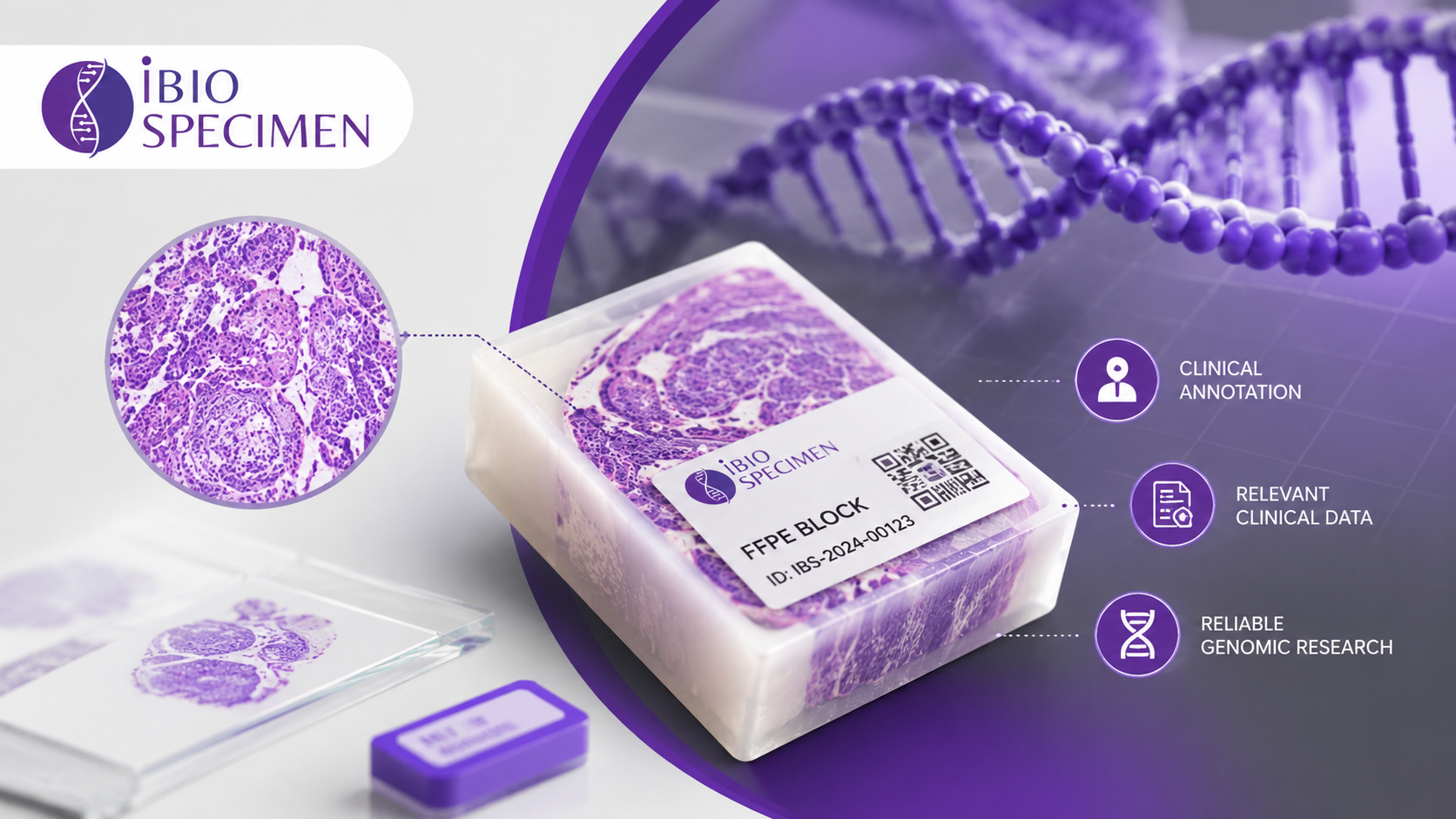
Clinically Annotated Tissue Samples
FFPE blocks supplied with relevant clinical details for reliable genomic research.

Comprehensive Pathology Data Included
Each sample includes diagnosis, grade, stage, tumor content, and pathology information.

Optimized for Genomic Analysis
Samples are suitable for DNA, RNA, NGS, mutation analysis, and molecular profiling.

Reliable Samples for NGS
Quality-controlled FFPE blocks support accurate sequencing and reproducible genomic results.
Quality-Controlled Genomically Characterized FFPE Tumor Samples
Quality-controlled, genomically characterized FFPE tumour samples undergo both pathological assessment and molecular data review before inclusion in a research cohort. Pathology quality control typically confirms tumour diagnosis, histological subtype, tumour-cell percentage, necrosis and tissue sufficiency. A recent H&E section may be examined to determine whether the remaining block is appropriate for sectioning, extraction or other downstream procedures. Molecular review should verify the assay used, genes or genomic regions analysed, detected alterations and available quality metrics.
It is also important to distinguish pathogenic or likely pathogenic variants from variants of uncertain significance. If a particular alteration is essential to the study, researchers may request confirmatory testing or an orthogonal method. Preanalytical information such as cold ischemia time, fixation duration and storage history may be available for selected cohorts. Combining pathology and genomic quality control reduces the risk of receiving depleted, poorly preserved or inaccurately classified samples and supports more consistent results across biomarker, sequencing and drug-development studies.
Genomically Characterized FFPE Samples for Biomarker Discovery
Genomically characterized FFPE samples can support biomarker discovery by allowing researchers to compare molecular alterations with tissue morphology, protein expression and clinical characteristics. Candidate biomarkers may be identified by analysing mutation-positive and mutation-negative cohorts or by examining tumours with different genomic signatures. Researchers can use the FFPE material for IHC, multiplex IHC, ISH, nucleic-acid extraction, spatial profiling or other laboratory methods. Existing genomic data help guide sample selection and may reduce the cost and time required for initial molecular screening.
Nevertheless, discovery studies require careful cohort design to avoid bias related to cancer stage, treatment exposure, collection site or specimen quality. Genomic reports should include enough methodological detail to support accurate interpretation, and pathology review should confirm that sufficient representative tumour remains in the block. Where clinical outcome data are included, clearly defined endpoints and follow-up periods are essential. Well-curated genomically characterized FFPE samples can bridge molecular findings and tissue-based evidence during early biomarker-development programmes.
Order Molecularly Profiled FFPE Samples for Precision Oncology
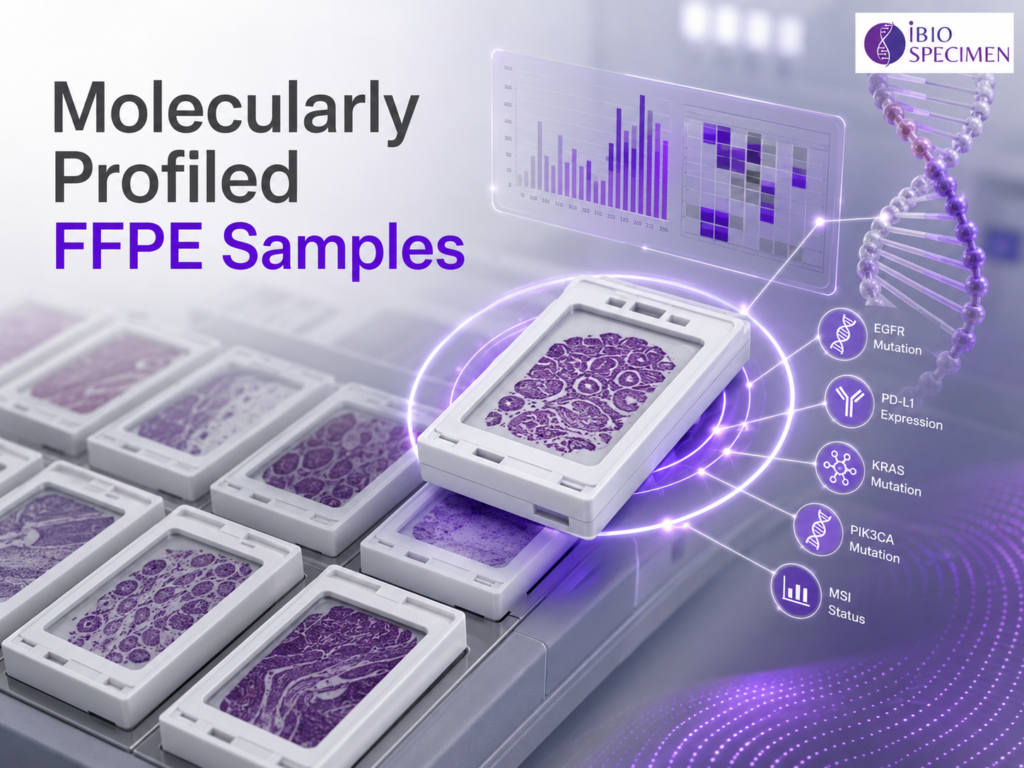
Molecularly profiled FFPE samples for precision-oncology research can be ordered using disease-specific and biomarker-specific eligibility criteria. A project may require samples containing actionable mutations, resistance-associated alterations, gene amplifications, fusions or particular genomic signatures. The request should define the cancer indication, histological subtype, primary or metastatic status, treatment setting, tissue quantity and acceptable testing methods. Researchers should specify whether molecular results must come from targeted NGS, comprehensive genomic profiling or an orthogonal assay.
The specimen manifest can include pathology findings, genomic results and available clinical annotations for review before shipment. De-identified reports may be supplied where permitted, helping researchers verify the detected alteration and methodology. Additional services may include H&E preparation, unstained slide sectioning, macrodissection, nucleic-acid extraction or confirmatory testing. All samples should be collected and transferred in accordance with informed consent, ethical approval and applicable regulations. A customised ordering process helps build precisely defined cohorts for translational and precision-oncology programmes.
General Questions
Frequent Asked Questions!!
FFPE blocks for genomics are formalin-fixed, paraffin-embedded tissue samples used for DNA, RNA, and biomarker analysis. They are widely used in cancer genomics, molecular pathology, translational research, and retrospective studies.
FFPE tissue blocks are valuable because they preserve tissue architecture and molecular material for long-term storage. Researchers can use them for sequencing, mutation analysis, biomarker discovery, and validation studies.
Yes. DNA can be extracted from FFPE blocks using validated extraction kits and optimized laboratory protocols. DNA quality depends on fixation time, block age, tissue type, tumor content, and storage conditions.
Yes. RNA can be extracted from FFPE tissue, although it is often fragmented because of formalin fixation. Specialized FFPE RNA extraction methods can provide material suitable for targeted RNA sequencing, gene expression studies, and fusion analysis.
Yes. High-quality FFPE blocks are commonly used for next-generation sequencing, including targeted sequencing panels, whole-exome sequencing, RNA sequencing, and selected whole-genome applications.
Tumor content requirements depend on the study design and testing method. Many molecular and NGS studies require at least 20% tumor content, while some projects may require 30%, 50%, or higher tumor percentage. Pathologist review can be performed to confirm tumor content before shipment
FFPE blocks can support mutation testing, copy number analysis, gene fusion detection, microsatellite instability testing, tumor mutational burden analysis, methylation studies, and targeted DNA or RNA sequencing.
Yes. FFPE cancer tissue blocks are extensively used to study genomic alterations in lung, breast, colorectal, prostate, ovarian, pancreatic, liver, kidney, and other tumor types.
Researchers can purchase FFPE blocks from qualified biospecimen suppliers, biobanks, pathology laboratories, hospitals, and research networks that provide ethically sourced and clinically annotated human tissue samples.
Researchers should confirm diagnosis, tissue type, tumor percentage, necrosis percentage, fixation details, block age, specimen size, available clinical data, pathology review, consent status, and intended research-use permissions.
Yes. Clinically annotated FFPE blocks may include donor age, sex, diagnosis, grade, stage, TNM classification, treatment history, pathology report, mutation status, and clinical outcome data.