
Introduction to
Foundation Model Training Data

Foundation Model Training Data for Large-Scale Oncology Model Development
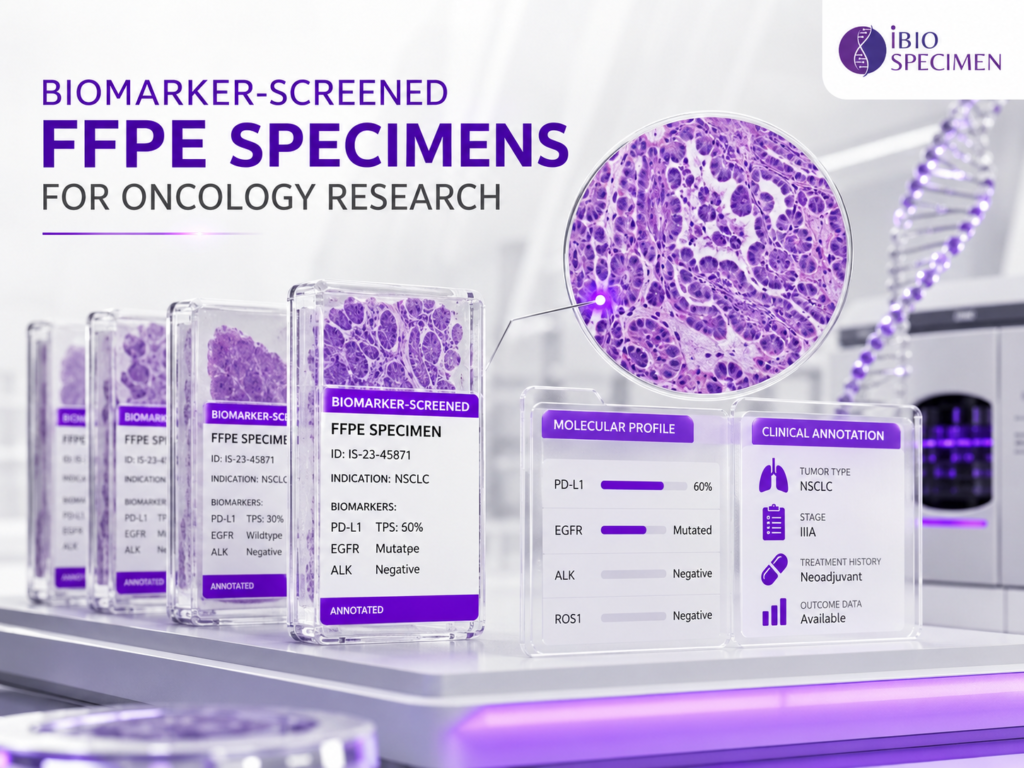
Modern oncology programs increasingly rely on Foundation Model Training Data to connect tissue phenotype with molecular biology, biomarker status and clinically meaningful research variables. In practice, the resource may combine model training, external validation, representation learning, AI-ready structuring, depending on the study objective.
The design should reflect whether the priority is broad discovery, disease-specific analysis, model pretraining, biomarker enrichment or independent validation. A useful starting point is to define the biological question first and then decide which images, specimens and metadata are required to answer it. Potential applications include tumor classification, tissue segmentation, biomarker discovery, molecular prediction, patient stratification and model benchmarking. Clinical variables can include age, sex, stage, treatment exposure, response, recurrence or survival where these data are available and ethically permitted for the study. For molecularly focused studies, cases may be selected by mutation, copy-number alteration, expression profile, immunohistochemistry result or another pre-specified biomarker. Quality control should address missing fields, conflicting biomarker values, duplicated cases, poor image quality and any mismatch between pathology reports and structured metadata.
Connecting Pathology, Genomics and Clinical Metadata in Foundation Model Training Data
Foundation Model Training Data can serve as a practical bridge between archived clinical material and modern oncology research when the data are curated around a clearly defined use case. Quality is created through consistent linkage between model training, external validation, representation learning and a structured case record. Each case should have a clear provenance trail showing how the diagnosis, specimen, digital asset and derived measurements relate to one another.
Pathology and metadata review are particularly important before model training or downstream statistical analysis begins. For image-centric programs, high-resolution whole-slide scans can be accompanied by slide-level labels, region annotations, tissue masks or cell-level measurements depending on the model objective. Clinical variables can include age, sex, stage, treatment exposure, response, recurrence or survival where these data are available and ethically permitted for the study. Structured identifiers are important because images, blocks, molecular results and clinical variables must remain linked to the correct donor and specimen without ambiguity. Where appropriate, pathology review can confirm diagnosis, tumor content, necrosis, tissue adequacy and the relationship between the specimen and the corresponding digital image.
Research Applications of Foundation Model Training Data Across Precision Oncology
A high-value research dataset is useful only when the underlying cases are scientifically coherent, traceable and structured for the intended research question. Foundation Model Training Data can support research questions that are difficult to address with a single data modality. By combining model training, external validation, representation learning, AI-ready structuring, investigators can study relationships that would otherwise remain hidden in separate data silos. The most valuable applications are those in which the cohort definition and analytical endpoint are specified before large-scale data generation begins.
Potential applications include tumor classification, tissue segmentation, biomarker discovery, molecular prediction, patient stratification and model benchmarking. A consistent data dictionary reduces downstream engineering work by defining units, permissible values, missing-data conventions and relationships between case-level and specimen-level fields. Clinical variables can include age, sex, stage, treatment exposure, response, recurrence or survival where these data are available and ethically permitted for the study. A carefully designed resource can also reduce repeated sample procurement by enabling several related analyses to be performed on a consistent, well-documented patient set.
Building Custom Foundation Model Training Data for Commercial AI and Pharma Programs
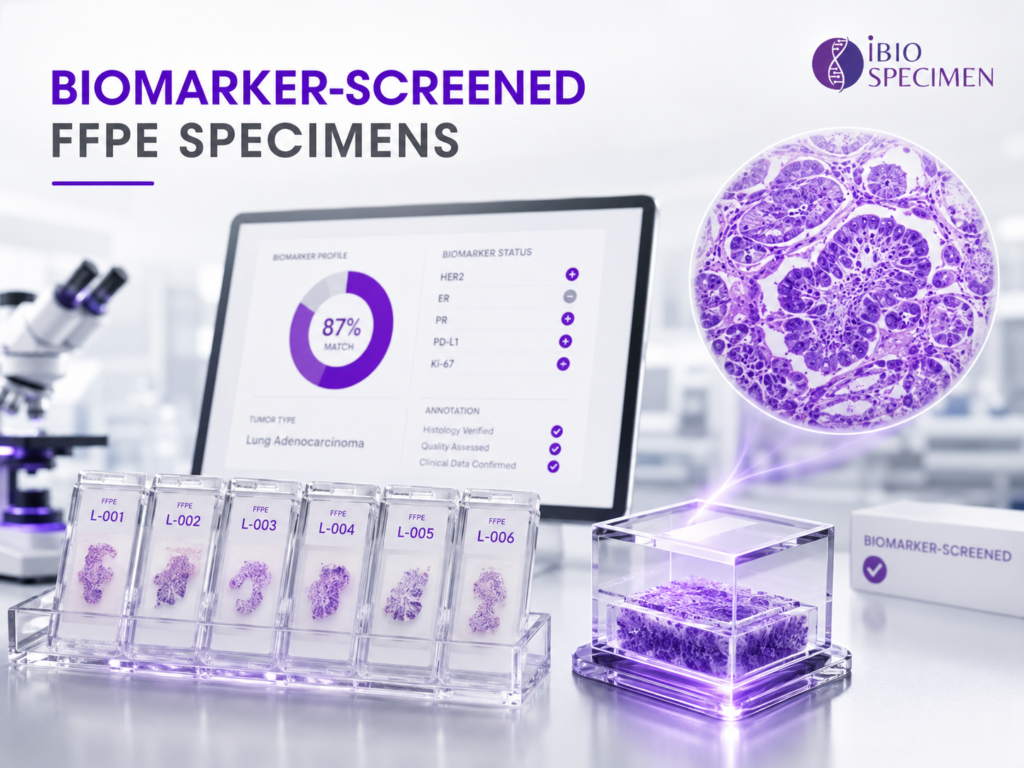
Foundation Model Training Data can serve as a practical bridge between archived clinical material and modern oncology research when the data are curated around a clearly defined use case. Commercial development of Foundation Model Training Data should be approached as a controlled sourcing and data-engineering program rather than a one-time file transfer. The specification can define target indications, sample counts, biomarker groups, slide requirements, metadata fields and acceptance criteria before case identification starts. A pilot batch is often useful for checking the practical fit between the source material and the receiving team’s analytical pipeline.
Commercial projects may also require clear documentation of permitted research use, data handling expectations, de-identification approach and any limitations on redistribution. For this type of project, external validation should be captured in a standardized form so it can be filtered, audited and reused consistently across the study. Deliverables can be organized in a secure folder hierarchy or structured manifest so that scientific teams can ingest the resource into internal pipelines with minimal manual reconciliation. Where appropriate, pathology review can confirm diagnosis, tumor content, necrosis, tissue adequacy and the relationship between the specimen and the corresponding digital image.
General Questions
Frequent Asked Questions!!
FFPE blocks for genomics are formalin-fixed, paraffin-embedded tissue samples used for DNA, RNA, and biomarker analysis. They are widely used in cancer genomics, molecular pathology, translational research, and retrospective studies.
FFPE tissue blocks are valuable because they preserve tissue architecture and molecular material for long-term storage. Researchers can use them for sequencing, mutation analysis, biomarker discovery, and validation studies.
Yes. DNA can be extracted from FFPE blocks using validated extraction kits and optimized laboratory protocols. DNA quality depends on fixation time, block age, tissue type, tumor content, and storage conditions.
Yes. RNA can be extracted from FFPE tissue, although it is often fragmented because of formalin fixation. Specialized FFPE RNA extraction methods can provide material suitable for targeted RNA sequencing, gene expression studies, and fusion analysis.
Yes. High-quality FFPE blocks are commonly used for next-generation sequencing, including targeted sequencing panels, whole-exome sequencing, RNA sequencing, and selected whole-genome applications.
Tumor content requirements depend on the study design and testing method. Many molecular and NGS studies require at least 20% tumor content, while some projects may require 30%, 50%, or higher tumor percentage. Pathologist review can be performed to confirm tumor content before shipment
FFPE blocks can support mutation testing, copy number analysis, gene fusion detection, microsatellite instability testing, tumor mutational burden analysis, methylation studies, and targeted DNA or RNA sequencing.
Yes. FFPE cancer tissue blocks are extensively used to study genomic alterations in lung, breast, colorectal, prostate, ovarian, pancreatic, liver, kidney, and other tumor types.
Researchers can purchase FFPE blocks from qualified biospecimen suppliers, biobanks, pathology laboratories, hospitals, and research networks that provide ethically sourced and clinically annotated human tissue samples.
Researchers should confirm diagnosis, tissue type, tumor percentage, necrosis percentage, fixation details, block age, specimen size, available clinical data, pathology review, consent status, and intended research-use permissions.
Yes. Clinically annotated FFPE blocks may include donor age, sex, diagnosis, grade, stage, TNM classification, treatment history, pathology report, mutation status, and clinical outcome data.