
Introduction to
FFPE Samples with Whole Exome Sequencing Data
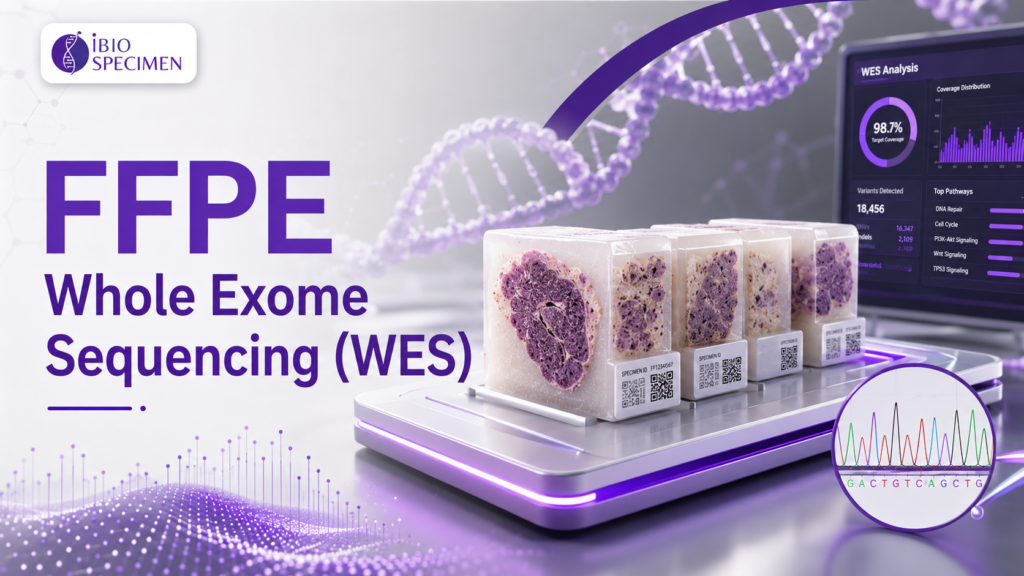
FFPE Whole Exome Sequencing Samples for Cancer Research

FFPE whole-exome sequencing samples provide preserved tumour tissue accompanied by sequencing information covering the protein-coding regions of the genome. Although the exome represents only a limited portion of the entire genome, it contains many variants relevant to cancer biology and therapeutic research. WES data may help identify somatic mutations, small insertions and deletions, selected copy-number changes and broader patterns of genomic alteration. Researchers can use the corresponding FFPE tissue for additional sequencing, IHC, spatial profiling or orthogonal confirmation.
The usefulness of FFPE WES data depends on sequencing depth, DNA quality, tumour purity, bioinformatics methods and whether matched normal DNA was analysed. Formalin fixation can introduce DNA fragmentation and artefacts, making quality-control information especially important. Pathologist assessment should confirm diagnosis, tumour percentage and remaining tissue. Properly curated FFPE samples with WES data can support biomarker discovery, retrospective genomic studies, neoantigen research and the development of molecularly informed oncology hypotheses.
Buy FFPE Tumor Samples With Whole Exome Sequencing Data
FFPE tumour samples with whole-exome sequencing data can be purchased for research projects requiring broad investigation of coding-region alterations. These samples may be selected according to cancer indication, histological subtype, mutation profile, tumour stage or other clinical and pathological characteristics. The accompanying WES dataset may include variant calls, allele frequencies, sequencing coverage and annotations concerning the predicted significance of detected alterations. Researchers should determine whether raw sequencing files, processed files or only a summary report are available, as these formats support different levels of analysis.

Optimized for DNA Sequencing
NGS-Ready FFPE Tissue Blocks
Reliable RNA Profiling Samples
FFPE Whole Exome Sequencing for Biomarker Discovery
FFPE whole-exome sequencing can support biomarker discovery by revealing coding-region alterations that may be associated with tumour behaviour, drug sensitivity or resistance. Researchers can compare WES findings across responder and non-responder groups, molecular subtypes or different stages of disease. Candidate biomarkers identified through genomic analysis can then be investigated using the corresponding FFPE material through PCR, IHC, FISH or other tissue-based methods.
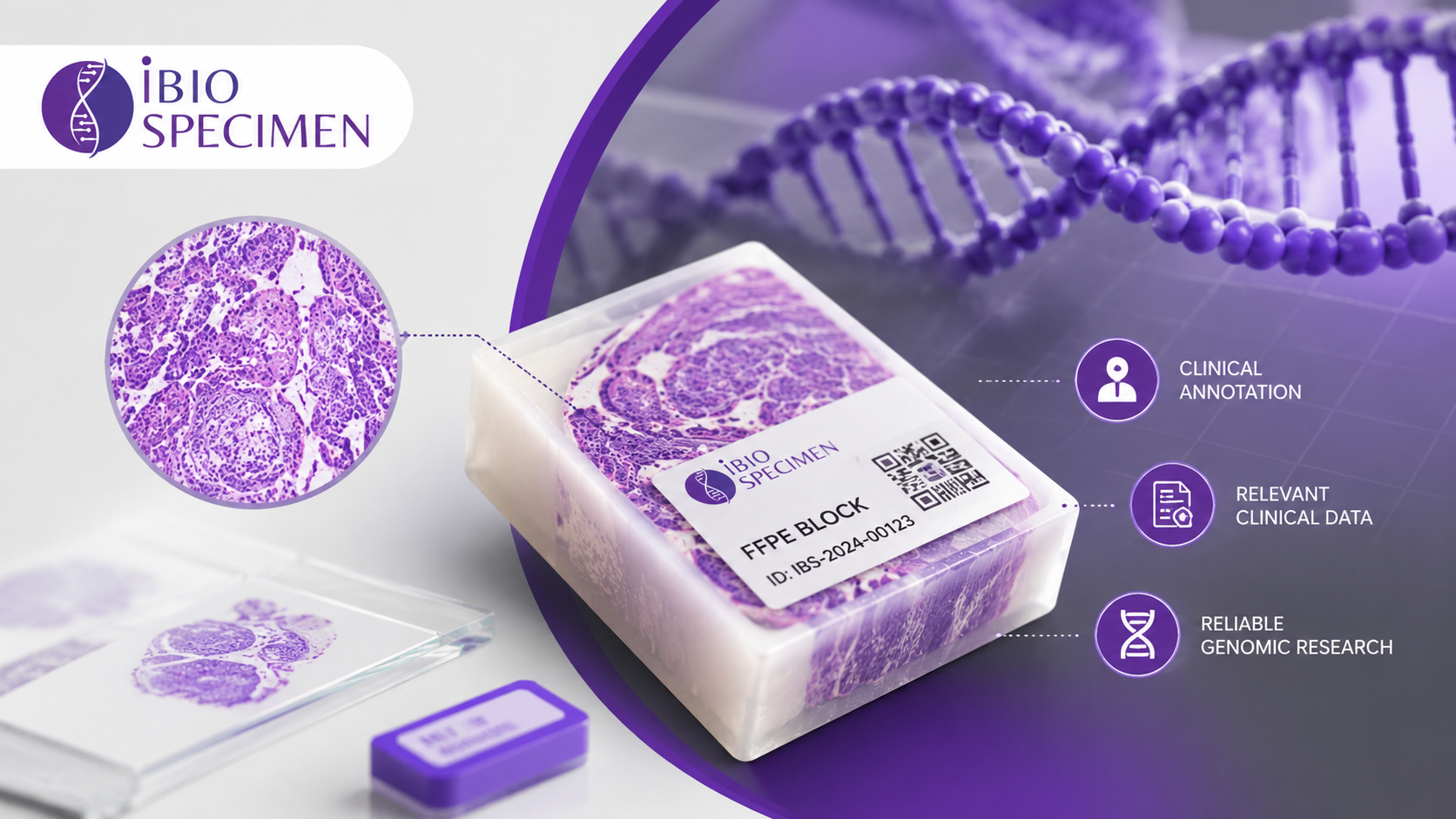
Clinically Annotated Tissue Samples
FFPE blocks supplied with relevant clinical details for reliable genomic research.

Comprehensive Pathology Data Included
Each sample includes diagnosis, grade, stage, tumor content, and pathology information.

Optimized for Genomic Analysis
Samples are suitable for DNA, RNA, NGS, mutation analysis, and molecular profiling.

Reliable Samples for NGS
Quality-controlled FFPE blocks support accurate sequencing and reproducible genomic results.
Source WES-Profiled FFPE Blocks for Oncology Studies
WES-profiled FFPE blocks can be sourced according to tumour type, stage, histology, molecular alteration and available clinical information. Researchers should provide a detailed specification describing required tissue quantity, minimum tumour percentage, maximum necrosis and whether matched normal material is necessary. WES data availability should also be defined, including whether the project requires raw FASTQ files, aligned BAM or CRAM files, processed VCF files or a summarised genomic report. The sequencing laboratory, platform, mean coverage, variant-calling pipeline and quality metrics should be recorded whenever possible.
Because FFPE-derived DNA can be fragmented, researchers should evaluate extraction quality and the measures used to control formalin-associated artefacts. A recent H&E review can confirm that representative tumour remains in the supplied block. Clinical data may include diagnosis, stage, treatment and outcomes, depending on consent and availability. A structured sourcing workflow enables researchers to obtain suitable WES-profiled tissue while maintaining clear quality, ethical and data-transfer requirements.
Clinically Annotated FFPE Samples With WES Data
Clinically annotated FFPE samples with WES data enable researchers to examine genomic findings within the context of a patient’s disease characteristics and clinical course. Relevant annotations may include age, sex, diagnosis, histological subtype, stage, grade, treatment regimen, response assessment, progression and survival follow-up. The presence of longitudinal information can support studies of prognostic and predictive biomarkers, although data completeness and endpoint definitions must be carefully reviewed. WES data may be supplied as raw files, processed variant calls or an interpreted report.
Researchers should confirm whether sequencing included matched normal DNA and how germline and somatic variants were distinguished. Tissue quality control should document tumour percentage, necrosis, fixation and remaining usable material. Ethical permissions should cover the use and transfer of both de-identified clinical information and genomic data. When harmonised and quality controlled, clinically annotated FFPE samples with WES data can support translational oncology, computational research and multimodal AI model development.
Order FFPE Whole Exome Sequencing Datasets and Samples
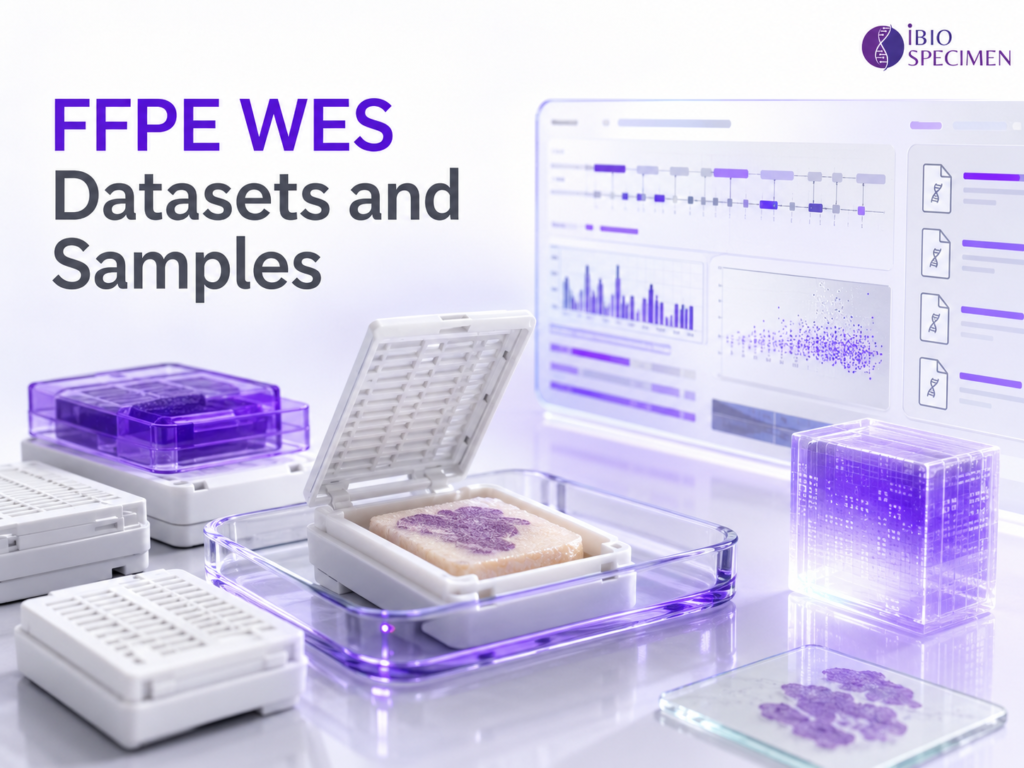
Researchers can order FFPE tissue together with matched whole-exome sequencing datasets for projects requiring both physical samples and computational genomic information. The request should define tumour indication, number of cases, specimen type, clinical annotations and required WES file formats. Available deliverables may include FFPE blocks or slides, H&E images, pathology summaries, FASTQ files, alignment files, VCF files and annotated variant reports. Data availability varies by cohort, so mandatory and optional deliverables should be agreed upon before sample selection. Quality-control information may include DNA concentration, library metrics, sequencing coverage, tumour purity and variant-calling criteria. Researchers should also confirm whether the genomic data correspond to the exact FFPE block being supplied and whether matched normal sequencing is available. Appropriate consent, ethics approval, privacy safeguards and data-transfer agreements are essential. A combined sample-and-data package can help pharmaceutical, biotechnology and academic researchers conduct genomic discovery while retaining tissue for validation and additional laboratory analyses.
General Questions
Frequent Asked Questions!!
FFPE blocks for genomics are formalin-fixed, paraffin-embedded tissue samples used for DNA, RNA, and biomarker analysis. They are widely used in cancer genomics, molecular pathology, translational research, and retrospective studies.
FFPE tissue blocks are valuable because they preserve tissue architecture and molecular material for long-term storage. Researchers can use them for sequencing, mutation analysis, biomarker discovery, and validation studies.
Yes. DNA can be extracted from FFPE blocks using validated extraction kits and optimized laboratory protocols. DNA quality depends on fixation time, block age, tissue type, tumor content, and storage conditions.
Yes. RNA can be extracted from FFPE tissue, although it is often fragmented because of formalin fixation. Specialized FFPE RNA extraction methods can provide material suitable for targeted RNA sequencing, gene expression studies, and fusion analysis.
Yes. High-quality FFPE blocks are commonly used for next-generation sequencing, including targeted sequencing panels, whole-exome sequencing, RNA sequencing, and selected whole-genome applications.
Tumor content requirements depend on the study design and testing method. Many molecular and NGS studies require at least 20% tumor content, while some projects may require 30%, 50%, or higher tumor percentage. Pathologist review can be performed to confirm tumor content before shipment
FFPE blocks can support mutation testing, copy number analysis, gene fusion detection, microsatellite instability testing, tumor mutational burden analysis, methylation studies, and targeted DNA or RNA sequencing.
Yes. FFPE cancer tissue blocks are extensively used to study genomic alterations in lung, breast, colorectal, prostate, ovarian, pancreatic, liver, kidney, and other tumor types.
Researchers can purchase FFPE blocks from qualified biospecimen suppliers, biobanks, pathology laboratories, hospitals, and research networks that provide ethically sourced and clinically annotated human tissue samples.
Researchers should confirm diagnosis, tissue type, tumor percentage, necrosis percentage, fixation details, block age, specimen size, available clinical data, pathology review, consent status, and intended research-use permissions.
Yes. Clinically annotated FFPE blocks may include donor age, sex, diagnosis, grade, stage, TNM classification, treatment history, pathology report, mutation status, and clinical outcome data.