
Introduction to
FFPE Samples with Genomics, Transcriptomics and Proteomics Data
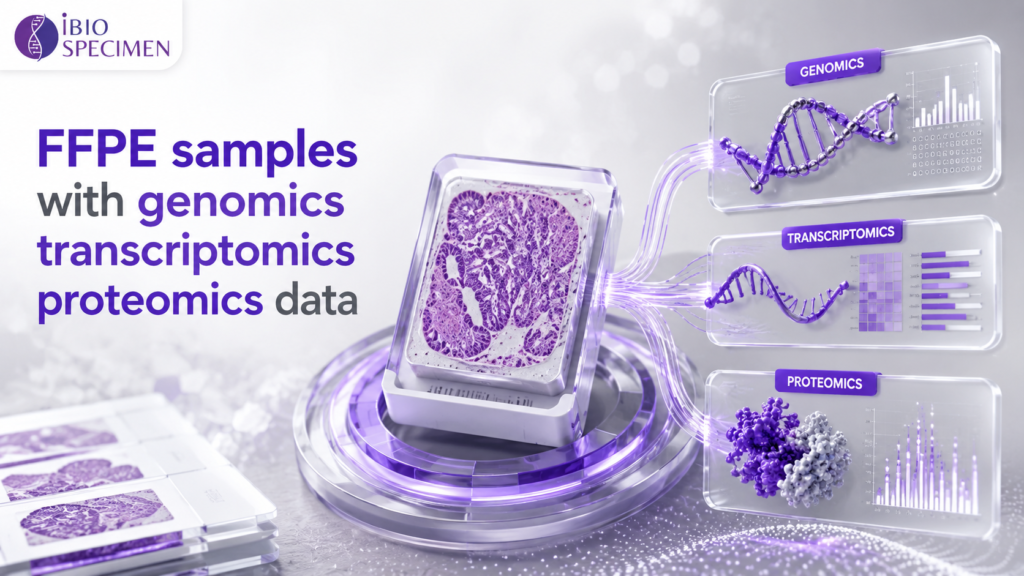
FFPE Samples with Genomics, Transcriptomics and Proteomics Data: Integrated Tissue Resources for Modern Oncology Research
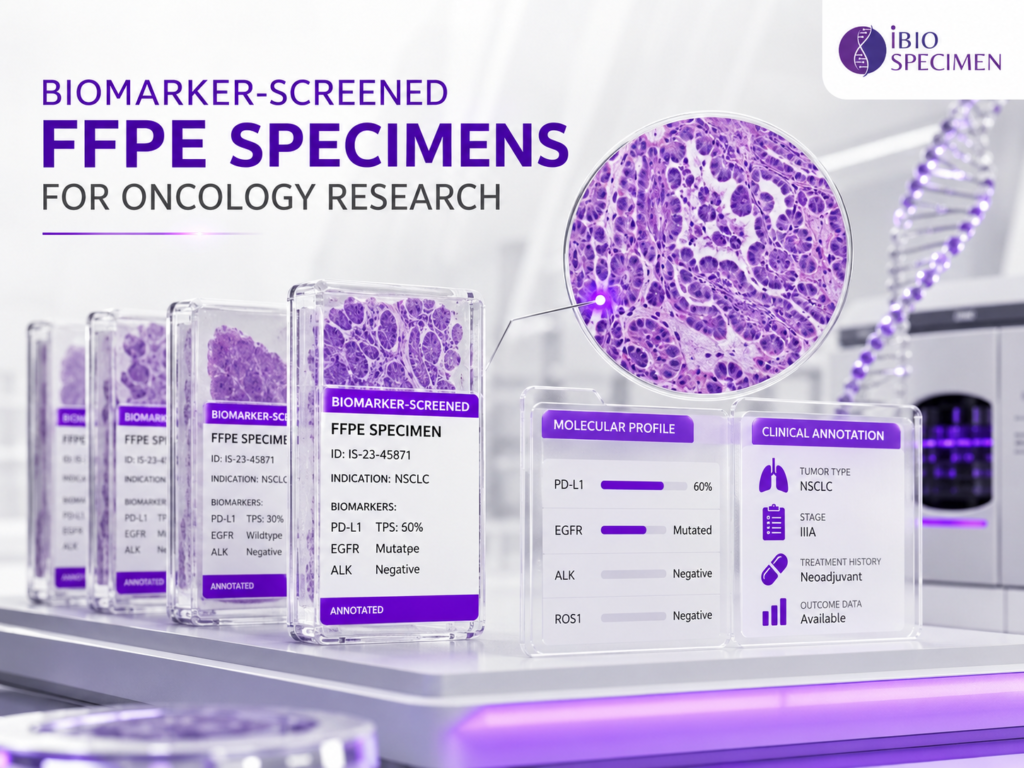
Modern oncology research increasingly depends on connecting tissue morphology with several molecular layers rather than evaluating one assay in isolation. FFPE samples with genomics transcriptomics proteomics data can support cross-platform biomarker validation, pathway analysis, molecular subtype discovery and integrated response modeling when the study is built around DNA variants, RNA expression and protein-level measurements linked to each eligible case. The scientific value lies in three complementary molecular layers that can be compared against the same pathology context.
This matters because the intended users are multi-omics scientists, biomarker teams, bioinformaticians and precision oncology researchers and each group needs evidence that is scientifically interpretable, traceable and suitable for the planned analysis. Key review fields include assay platform, sequencing depth, coverage, RNA quality, protein extraction method, pathology concordance and data completeness. A strong page should explain how the specimen, pathology image and molecular outputs fit together within one research workflow. It should also distinguish between available historical data and new testing that may need to be performed on selected sections. This framing helps scientific buyers compare feasibility, expected data density and the likely value of each case before committing resources.
How to Source FFPE samples with genomics transcriptomics proteomics data for Biomarker and Translational Studies
Successful specimen sourcing begins with a precise research question, a realistic eligibility framework and a clear definition of the data required for every case. FFPE samples with genomics transcriptomics proteomics data can support cross-platform biomarker validation, pathway analysis, molecular subtype discovery and integrated response modeling when the study is built around DNA variants, RNA expression and protein-level measurements linked to each eligible case. The strongest evidence comes from three complementary molecular layers that can be compared against the same pathology context. This reduces risk when the intended users are multi-omics scientists, biomarker teams, bioinformaticians and precision oncology researchers and each group needs evidence that is scientifically interpretable, traceable and suitable for the planned analysis.
Key review fields include assay platform, sequencing depth, coverage, RNA quality, protein extraction method, pathology concordance and data completeness. Before procurement, define diagnosis, histologic subtype, stage, biomarker criteria, treatment variables, minimum tumor area and acceptable block age. The request should state whether whole blocks, curls, unstained slides or matched digital images are needed and whether destructive testing is permitted.
Using FFPE samples with genomics transcriptomics proteomics data for AI, Precision Oncology and Biomarker Discovery
Artificial intelligence and precision oncology programs need more than large sample counts; they need consistent labels, representative cohorts and evidence that links images to molecular biology. FFPE samples with genomics transcriptomics proteomics data can support cross-platform biomarker validation, pathway analysis, molecular subtype discovery and integrated response modeling when the study is built around DNA variants, RNA expression and protein-level measurements linked to each eligible case. The scientific value lies in three complementary molecular layers that can be compared against the same pathology context.
This matters because the intended users are multi-omics scientists, biomarker teams, bioinformaticians and precision oncology researchers and each group needs evidence that is scientifically interpretable, traceable and suitable for the planned analysis. Key review fields include assay platform, sequencing depth, coverage, RNA quality, protein extraction method, pathology concordance and data completeness. For model development, cases should be divided at the patient level to prevent leakage between training, validation and test sets. Labels need documented provenance, and uncertain or borderline cases should be handled explicitly rather than forced into overly simple categories.
Build a Custom FFPE samples with genomics transcriptomics proteomics data Cohort for Your Research Program
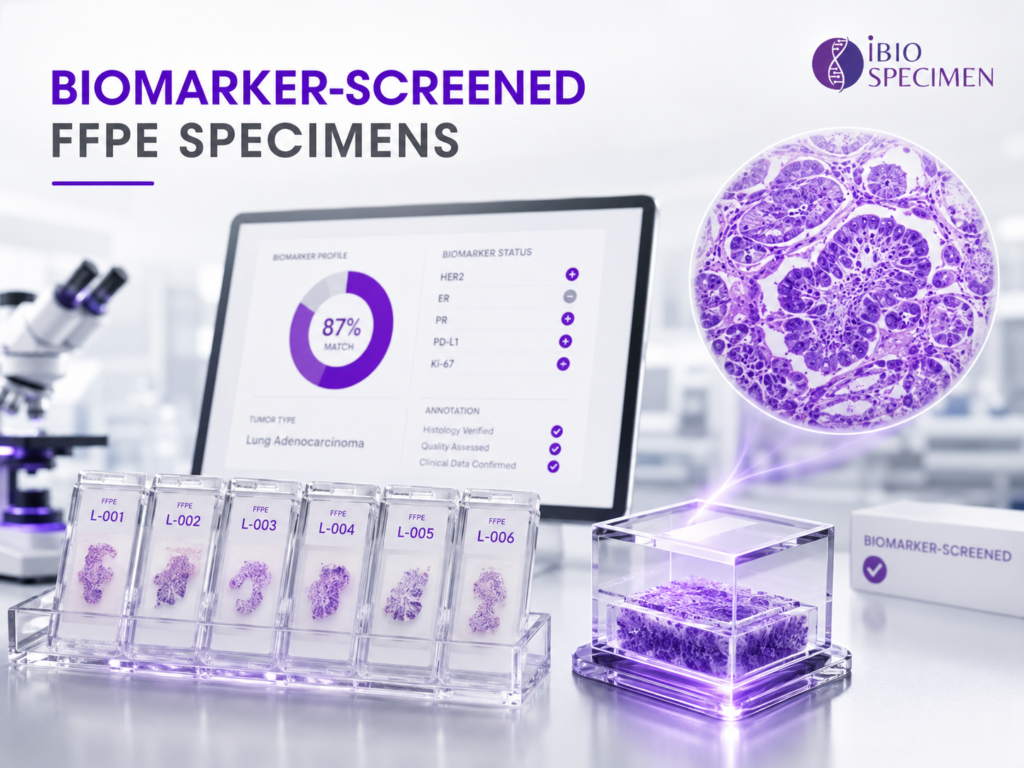
A custom cohort should be designed around the scientific endpoint, analytical method, disease population and evidence needed to make the final result credible. FFPE samples with genomics transcriptomics proteomics data can support cross-platform biomarker validation, pathway analysis, molecular subtype discovery and integrated response modeling when the study is built around DNA variants, RNA expression and protein-level measurements linked to each eligible case. The strongest evidence comes from three complementary molecular layers that can be compared against the same pathology context.
This reduces risk when the intended users are multi-omics scientists, biomarker teams, bioinformaticians and precision oncology researchers and each group needs evidence that is scientifically interpretable, traceable and suitable for the planned analysis. Key review fields include assay platform, sequencing depth, coverage, RNA quality, protein extraction method, pathology concordance and data completeness. The design process should begin with a feasibility matrix that maps each requested variable to its source, completeness and verification method. Pilot cases can be used to confirm extraction, assay performance, image compatibility and data transfer before scaling the full cohort.
General Questions
Frequent Asked Questions!!
FFPE blocks for genomics are formalin-fixed, paraffin-embedded tissue samples used for DNA, RNA, and biomarker analysis. They are widely used in cancer genomics, molecular pathology, translational research, and retrospective studies.
FFPE tissue blocks are valuable because they preserve tissue architecture and molecular material for long-term storage. Researchers can use them for sequencing, mutation analysis, biomarker discovery, and validation studies.
Yes. DNA can be extracted from FFPE blocks using validated extraction kits and optimized laboratory protocols. DNA quality depends on fixation time, block age, tissue type, tumor content, and storage conditions.
Yes. RNA can be extracted from FFPE tissue, although it is often fragmented because of formalin fixation. Specialized FFPE RNA extraction methods can provide material suitable for targeted RNA sequencing, gene expression studies, and fusion analysis.
Yes. High-quality FFPE blocks are commonly used for next-generation sequencing, including targeted sequencing panels, whole-exome sequencing, RNA sequencing, and selected whole-genome applications.
Tumor content requirements depend on the study design and testing method. Many molecular and NGS studies require at least 20% tumor content, while some projects may require 30%, 50%, or higher tumor percentage. Pathologist review can be performed to confirm tumor content before shipment
FFPE blocks can support mutation testing, copy number analysis, gene fusion detection, microsatellite instability testing, tumor mutational burden analysis, methylation studies, and targeted DNA or RNA sequencing.
Yes. FFPE cancer tissue blocks are extensively used to study genomic alterations in lung, breast, colorectal, prostate, ovarian, pancreatic, liver, kidney, and other tumor types.
Researchers can purchase FFPE blocks from qualified biospecimen suppliers, biobanks, pathology laboratories, hospitals, and research networks that provide ethically sourced and clinically annotated human tissue samples.
Researchers should confirm diagnosis, tissue type, tumor percentage, necrosis percentage, fixation details, block age, specimen size, available clinical data, pathology review, consent status, and intended research-use permissions.
Yes. Clinically annotated FFPE blocks may include donor age, sex, diagnosis, grade, stage, TNM classification, treatment history, pathology report, mutation status, and clinical outcome data.