
Introduction to
FFPE Quantitative Proteomics Cohort
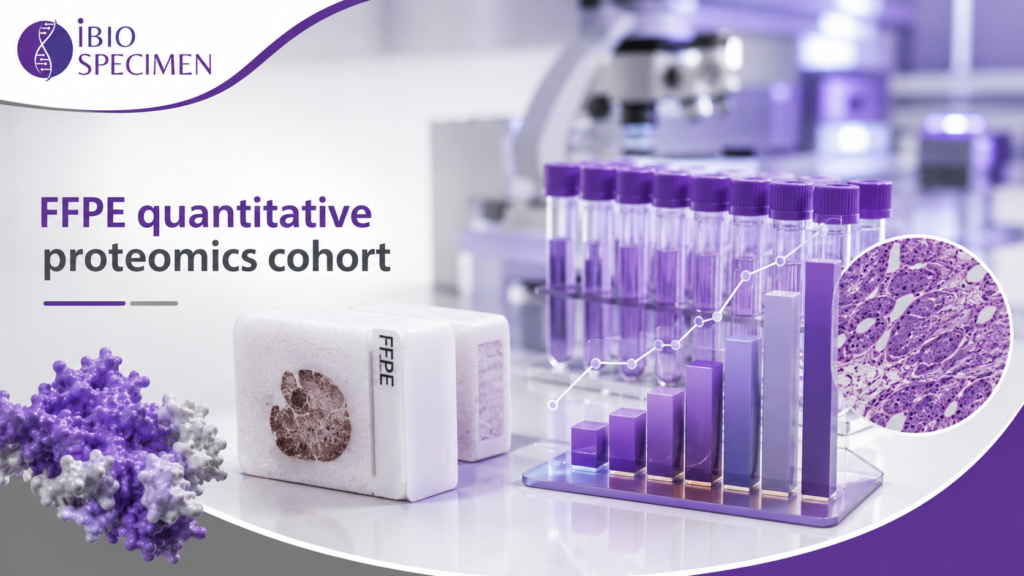
Planning an FFPE Quantitative Proteomics Cohort
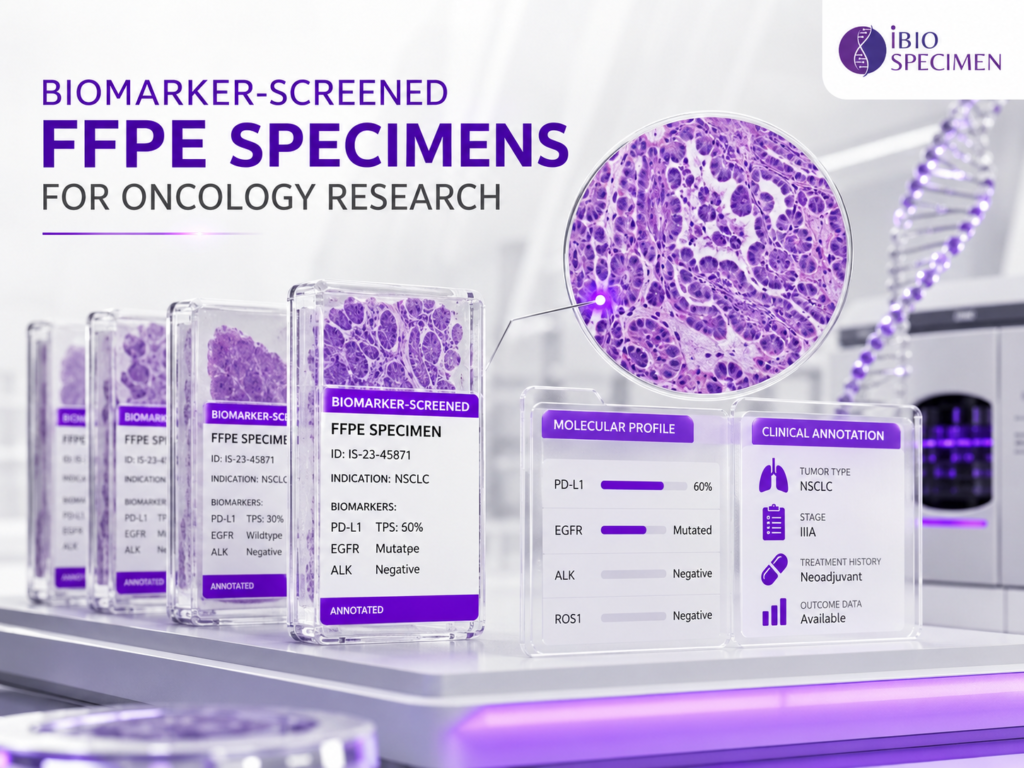
FFPE quantitative proteomics cohort are a defined collection of FFPE cases assembled for comparative measurement of protein abundance across biological or clinical groups. They allow researchers to use well-preserved archived material while connecting molecular findings to the morphology visible on the corresponding hematoxylin and eosin slide. This is especially useful when fresh-frozen tissue is limited, when retrospective follow-up is important, or when the study requires cases collected across several years. A strong sourcing strategy begins with the scientific question, the minimum tissue area, the desired tumor percentage, and the analytical platform that will be used.
The material should be selected by pathology rather than by diagnosis code alone, because tumor composition, fibrosis, necrosis, inflammation, and normal-tissue admixture can materially influence protein results. For research programs that require sufficiently balanced, annotated, and analytically comparable tissue groups, the main benefit is access to research material that can be assembled around predefined biological and clinical variables instead of relying on an uncharacterized inventory. The resulting specimens can support case-control comparison, subtype discovery, outcome association, treatment-response analysis, biomarker ranking, and statistical validation.
Controlling Tissue and Pre-Analytical Variability
Reliable work with FFPE quantitative proteomics cohort depends on controlling pre-analytical variation before any analytical run begins. Important review points include tissue type, fixation history when available, block age, storage conditions, section thickness, exposed block-face time, tumor content, necrosis, and the presence of blood, mucin, fat, or dense stroma. A recent pathology review should verify that the remaining block still contains the tissue represented in older records or images. Where macrodissection is planned, the tumor or region of interest should be clearly marked and the expected recoverable area should be estimated.

Optimized for DNA Sequencing
NGS-Ready FFPE Tissue Blocks
Reliable RNA Profiling Samples
Clinical Annotation and Quantitative Data Requirements
A useful FFPE quantitative proteomics cohort package is more than tissue alone; it should include a traceable set of pathology, clinical, and analytical records. At minimum, each case should have a unique de-identified identifier, diagnosis, anatomic site, specimen type, collection or block year, and an indication of the available tissue format. Pathology data can include histologic subtype, grade, stage where available, tumor percentage, necrosis estimate, and relevant morphology notes. Clinical fields may include age range, sex, treatment exposure, response category, recurrence, survival interval, or other protocol-specific variables, subject to consent and source availability.
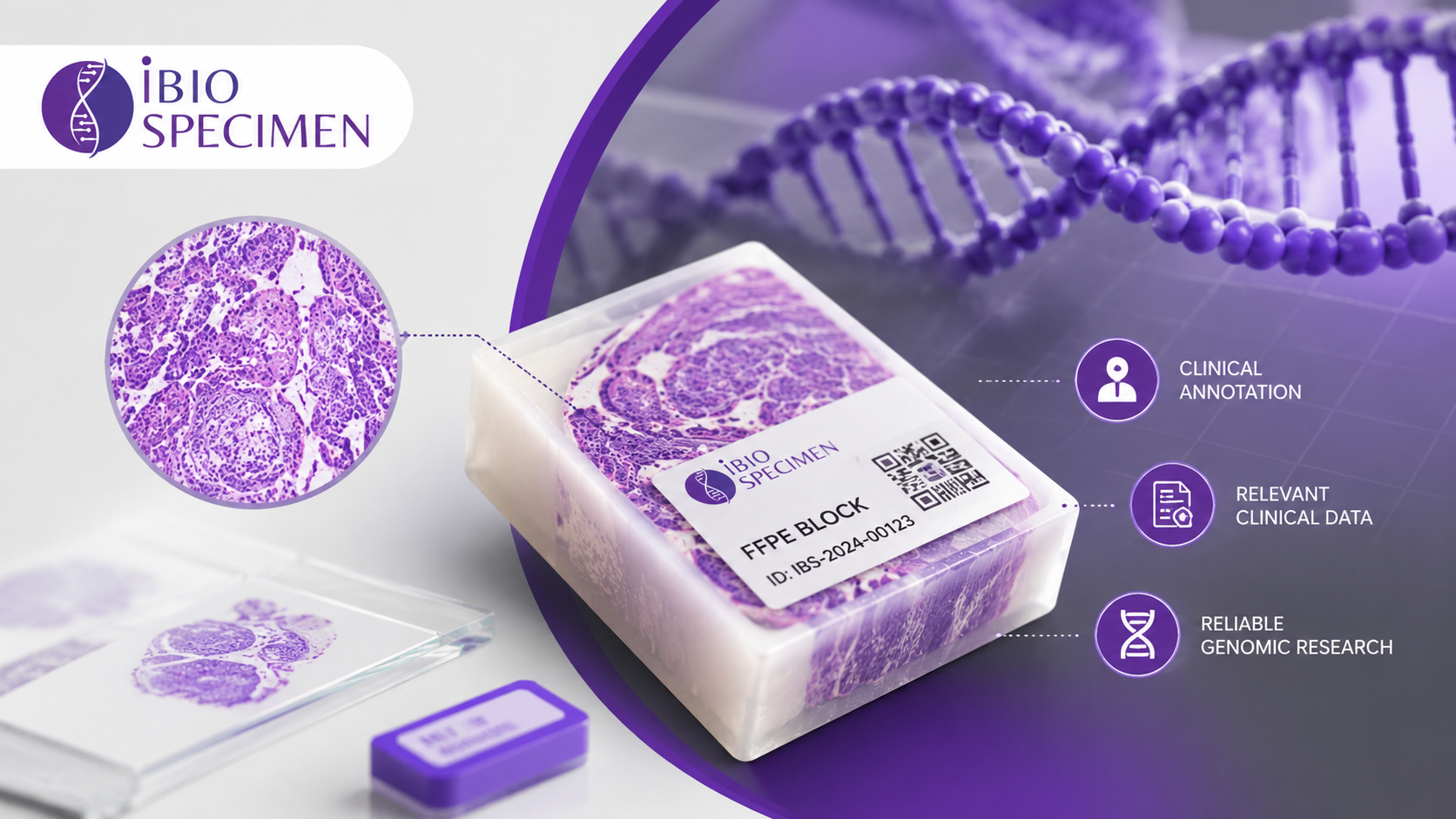
Clinically Annotated Tissue Samples
FFPE blocks supplied with relevant clinical details for reliable genomic research.

Comprehensive Pathology Data Included
Each sample includes diagnosis, grade, stage, tumor content, and pathology information.

Optimized for Genomic Analysis
Samples are suitable for DNA, RNA, NGS, mutation analysis, and molecular profiling.

Reliable Samples for NGS
Quality-controlled FFPE blocks support accurate sequencing and reproducible genomic results.
Applications for Comparative Protein Abundance Studies
The scientific value of FFPE quantitative proteomics cohort comes from the range of questions that can be addressed in real-world archived tissues. Common applications include case-control comparison, subtype discovery, outcome association, treatment-response analysis, biomarker ranking, and statistical validation. In oncology, researchers can compare protein abundance across histologic subtypes, stages, molecular groups, treatment exposures, or clinical outcomes. The material can also be used to evaluate whether a candidate target is present in the intended cell compartment and whether expression is homogeneous or restricted to specific regions. When paired with immunohistochemistry, RNA, DNA, imaging, or outcome data, proteomic findings can be interpreted in a richer biological context.
Small pilot sets are useful for extraction optimization and feasibility, whereas larger balanced cohorts are more appropriate for statistical discovery or validation. Positive and negative controls should be included whenever the study involves a defined marker, pathway, or assay threshold. Investigators should avoid treating all FFPE tissues as analytically equivalent and should model known variables such as block age, site, batch, and tissue composition. With appropriate design, FFPE quantitative proteomics cohort can support both hypothesis-generating studies and focused confirmation programs without.
Cohort Balancing, Matching, and Batch-Aware Selection
Custom cohort design is central to obtaining meaningful results from FFPE quantitative proteomics cohort. The proposed collection may include balanced disease and control sets, responder and non-responder groups, longitudinal or stage-based collections, and biomarker-stratified subcohorts. Each inclusion criterion should be translated into a field that can be screened objectively, and every critical field should have an acceptable missing-data rule. Matching can be performed by age band, sex, stage, specimen year, tissue site, treatment status, or other variables that could influence the comparison.
For rare biomarkers or uncommon clinical subgroups, feasibility may improve by using a staged approach: database screening, preliminary evidence review, pathology re-review, and final material confirmation. A pilot phase can establish expected protein yield, assay success rate, and between-case variability before the full cohort is released. Where samples will be processed across several analytical batches, case allocation should be balanced so that biological groups are not confounded with run order or site. The intended cohort for research programs that require sufficiently balanced, annotated, and analytically comparable tissue groups should be documented in a case manifest that distinguishes required, preferred, and optional variables.
Commissioning a Custom Quantitative Proteomics Cohort
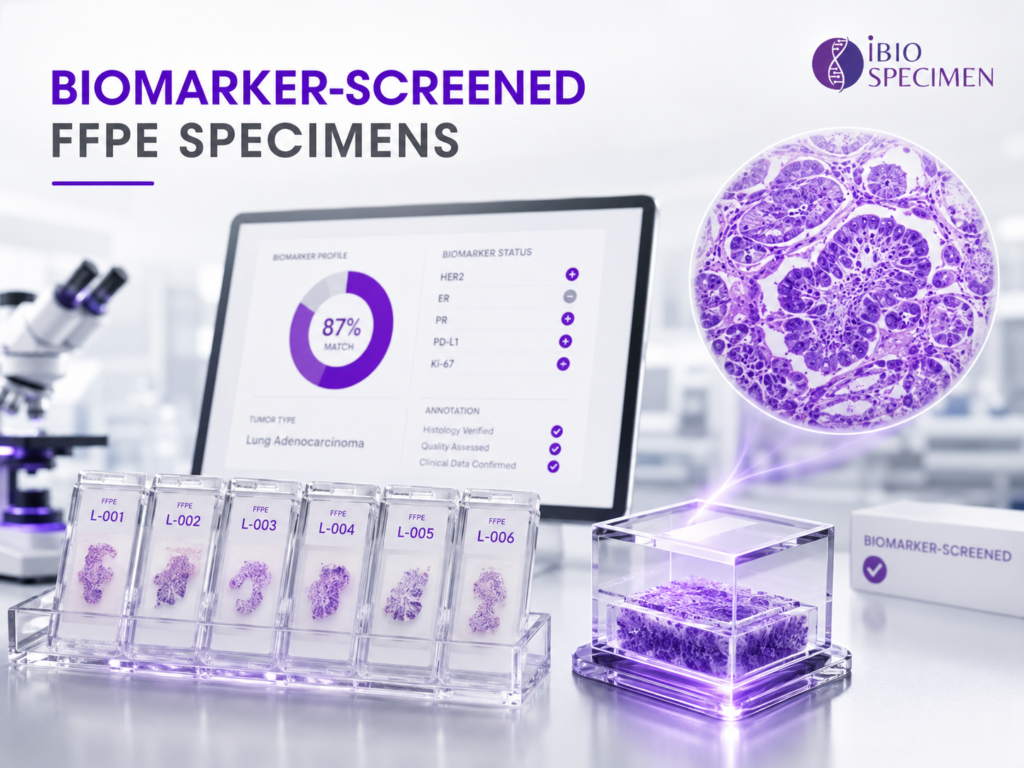
Sourcing FFPE quantitative proteomics cohort should begin with a concise protocol summary that states the disease area, number of cases, tissue format, minimum analyzable area, required annotations, and planned analytical method. The operational workflow can include statistical design discussion, feasibility estimation, variable harmonization, case selection, batch-aware allocation, and sample release. Buyers should request a feasibility estimate that separates immediately available cases from cases requiring additional pathology review, testing, or data abstraction.
The quotation should clarify whether pricing covers whole blocks, unstained sections, tissue curls, pathology review, assay data, clinical annotation, or special preparation. Material transfer terms, permitted research use, publication language, data-use restrictions, export requirements, and replacement policy should be agreed before shipment. For multi-center or high-volume projects, a pilot shipment can verify packaging, section integrity, labeling, and laboratory compatibility. A final manifest should match every physical item to its de-identified data record and clearly identify unavailable or pending variables. Researchers should also confirm whether residual material can be reserved for repeat work or orthogonal validation.
General Questions
Frequent Asked Questions!!
FFPE blocks for genomics are formalin-fixed, paraffin-embedded tissue samples used for DNA, RNA, and biomarker analysis. They are widely used in cancer genomics, molecular pathology, translational research, and retrospective studies.
FFPE tissue blocks are valuable because they preserve tissue architecture and molecular material for long-term storage. Researchers can use them for sequencing, mutation analysis, biomarker discovery, and validation studies.
Yes. DNA can be extracted from FFPE blocks using validated extraction kits and optimized laboratory protocols. DNA quality depends on fixation time, block age, tissue type, tumor content, and storage conditions.
Yes. RNA can be extracted from FFPE tissue, although it is often fragmented because of formalin fixation. Specialized FFPE RNA extraction methods can provide material suitable for targeted RNA sequencing, gene expression studies, and fusion analysis.
Yes. High-quality FFPE blocks are commonly used for next-generation sequencing, including targeted sequencing panels, whole-exome sequencing, RNA sequencing, and selected whole-genome applications.
Tumor content requirements depend on the study design and testing method. Many molecular and NGS studies require at least 20% tumor content, while some projects may require 30%, 50%, or higher tumor percentage. Pathologist review can be performed to confirm tumor content before shipment
FFPE blocks can support mutation testing, copy number analysis, gene fusion detection, microsatellite instability testing, tumor mutational burden analysis, methylation studies, and targeted DNA or RNA sequencing.
Yes. FFPE cancer tissue blocks are extensively used to study genomic alterations in lung, breast, colorectal, prostate, ovarian, pancreatic, liver, kidney, and other tumor types.
Researchers can purchase FFPE blocks from qualified biospecimen suppliers, biobanks, pathology laboratories, hospitals, and research networks that provide ethically sourced and clinically annotated human tissue samples.
Researchers should confirm diagnosis, tissue type, tumor percentage, necrosis percentage, fixation details, block age, specimen size, available clinical data, pathology review, consent status, and intended research-use permissions.
Yes. Clinically annotated FFPE blocks may include donor age, sex, diagnosis, grade, stage, TNM classification, treatment history, pathology report, mutation status, and clinical outcome data.