
Introduction to
FFPE Samples with Comprehensive Genomic Profiling
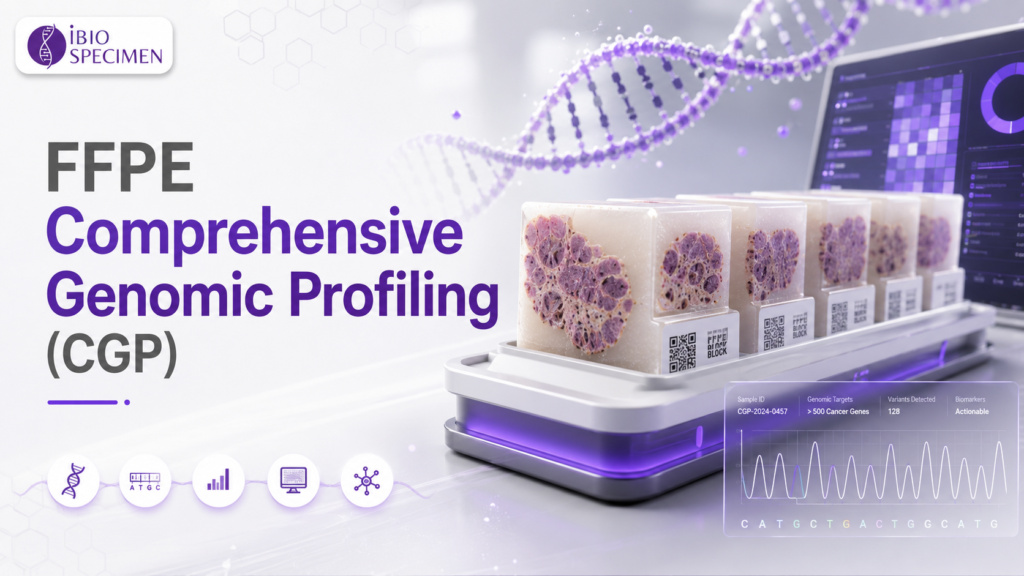
FFPE Comprehensive Genomic Profiling Samples for Research

FFPE comprehensive genomic profiling samples provide tumour tissue accompanied by broad molecular analysis across numerous cancer-related genes and alteration classes. Depending on the assay, CGP may evaluate substitutions, insertions, deletions, copy-number changes, gene rearrangements and genomic signatures such as microsatellite instability or tumour mutational burden. These samples can support translational oncology, biomarker research, drug discovery, assay development and precision-medicine programmes. Researchers should examine the exact genes and alteration types covered because the meaning of “comprehensive” varies across platforms.
Important information includes sequencing depth, tumour percentage, assay sensitivity, reportable range and variant-classification methodology. The physical FFPE sample should undergo pathology review to confirm diagnosis, tumour content, necrosis and remaining material. Where required, selected genomic findings may be verified through IHC, FISH, PCR or repeat sequencing. Ethically sourced and carefully documented FFPE CGP samples can reduce prescreening requirements and support the construction of diverse, molecularly characterized research cohorts.
Buy FFPE Blocks With Comprehensive Genomic Profiling Data
FFPE blocks with comprehensive genomic profiling data allow researchers to obtain physical tumour tissue linked to broad molecular findings. These blocks may be selected according to cancer type, histological subtype, actionable alteration, resistance marker or genomic signature. The remaining tissue can support IHC, FISH, PCR, spatial analysis, nucleic-acid extraction or orthogonal confirmation of selected results. Before purchasing, researchers should review the profiling platform, panel version, genes assessed, alteration classes detected and available quality metrics.

Optimized for DNA Sequencing
NGS-Ready FFPE Tissue Blocks
Reliable RNA Profiling Samples
CGP-Characterized FFPE Tumor Samples for Oncology Studies
CGP-characterized FFPE tumour samples can support oncology studies examining multiple genomic alteration types within a single cohort. Researchers may use these specimens to investigate oncogenic pathways, co-occurring mutations, mechanisms of resistance and potential predictors of response. Broad profiling can help identify rare alterations that might not have been captured through individual gene tests. The corresponding tissue allows researchers to compare genomic findings with morphology, protein expression and the tumour microenvironment.
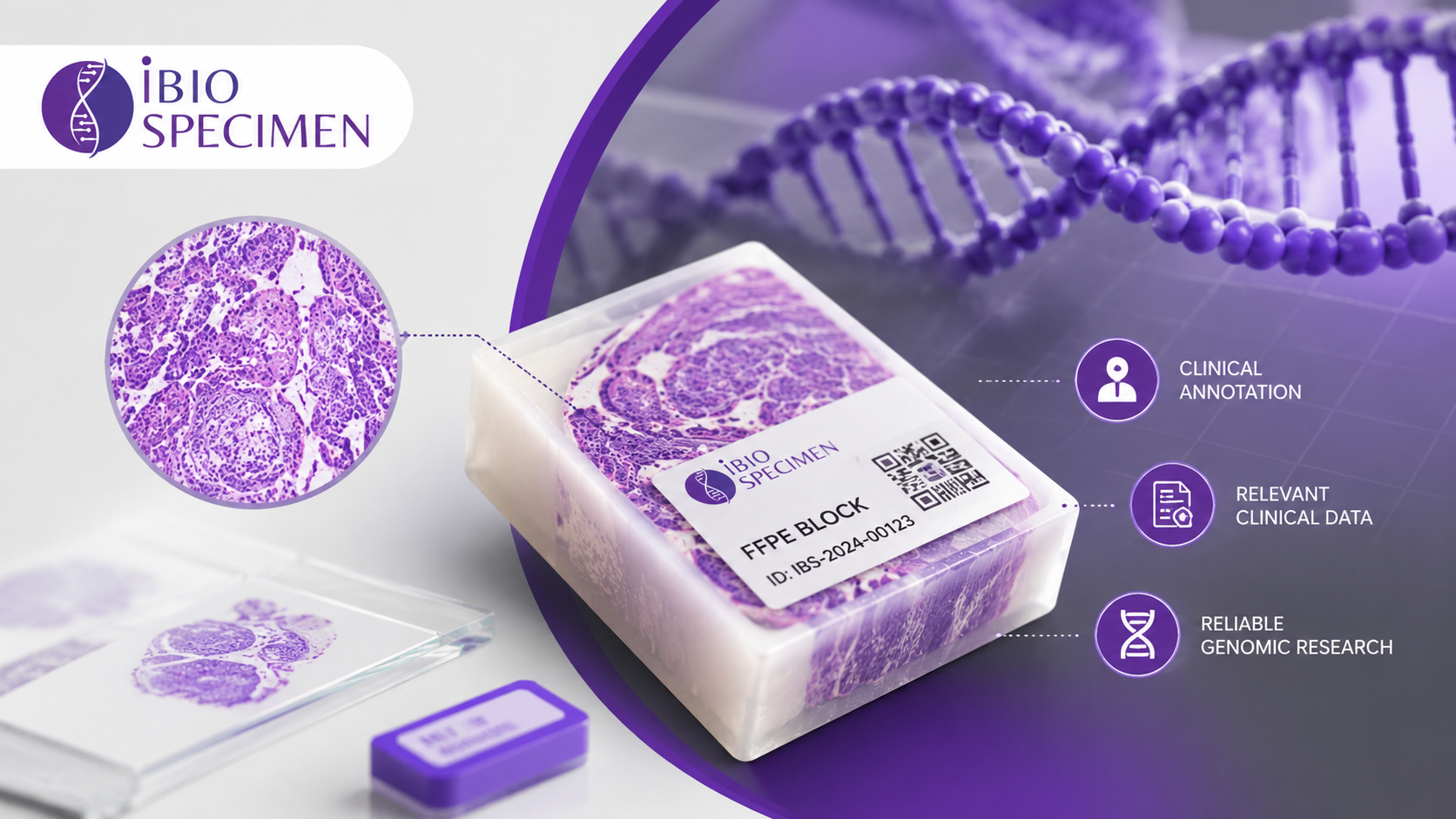
Clinically Annotated Tissue Samples
FFPE blocks supplied with relevant clinical details for reliable genomic research.

Comprehensive Pathology Data Included
Each sample includes diagnosis, grade, stage, tumor content, and pathology information.

Optimized for Genomic Analysis
Samples are suitable for DNA, RNA, NGS, mutation analysis, and molecular profiling.

Reliable Samples for NGS
Quality-controlled FFPE blocks support accurate sequencing and reproducible genomic results.
FFPE Comprehensive Genomic Profiling for Biomarker Discovery
FFPE comprehensive genomic profiling can help identify candidate biomarkers by assessing a broad range of molecular alterations across tumour samples. Researchers may investigate associations between individual variants, co-mutation patterns, copy-number changes, gene fusions, genomic signatures and clinical or pathological characteristics. The matched FFPE tissue can then be used to validate candidate findings through IHC, FISH, PCR, digital pathology or spatial methods. Biomarker discovery requires carefully constructed cohorts and appropriate controls because tumour type, disease stage, treatment exposure and tissue quality can create confounding effects. CGP reports should provide adequate information about the assay, panel version, sequencing quality and variant interpretation.
Researchers should also distinguish exploratory associations from clinically validated biomarkers. When treatment-response or survival information is included, endpoints and follow-up periods should be consistently defined. A combined resource of CGP data, pathology-reviewed tissue and harmonised annotations can accelerate hypothesis generation and guide subsequent biomarker-validation studies.
Source Clinically Annotated FFPE Samples With CGP Results
Clinically annotated FFPE samples with CGP results combine preserved tumour tissue, broad genomic findings and relevant patient-level information. Researchers can source these samples according to disease indication, stage, histological subtype, treatment status or specific molecular alteration. Available annotations may include diagnosis, grade, collection site, therapy, response, progression and survival follow-up. Data completeness should be reviewed before selection because some cohorts provide only basic demographics and pathology, while others include longitudinal outcomes.
CGP documentation should identify the testing platform, panel version, specimen tested, quality metrics and detected alterations. Researchers should verify that the physical FFPE sample corresponds to the genomic result and determine whether sufficient tissue remains for downstream analysis. All clinical and genomic information should be appropriately de-identified and transferred under suitable ethical and contractual permissions. A harmonised sample manifest can improve consistency when sourcing specimens from multiple institutions or geographic regions.
Order FFPE Tumor Blocks With Validated CGP Data
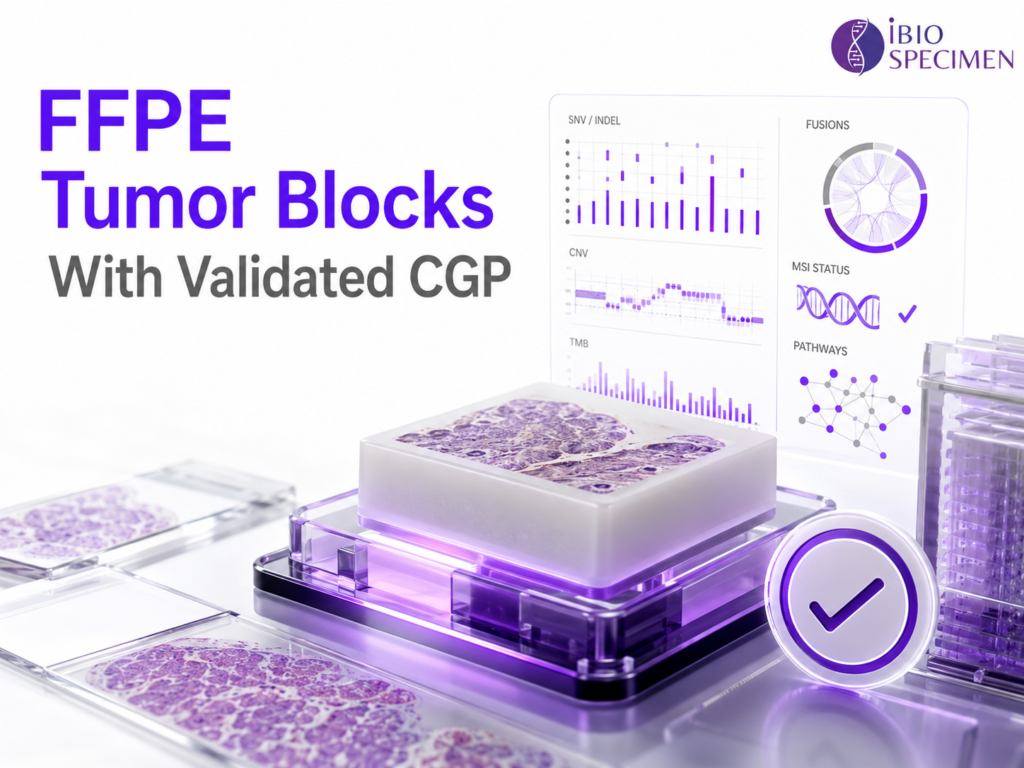
FFPE tumour blocks with validated CGP data can be ordered according to customised research requirements. The order specification should define cancer type, histology, specimen site, tumour percentage, maximum necrosis, tissue quantity and required genomic findings. Researchers should indicate which CGP platforms or panel characteristics are acceptable and whether orthogonal confirmation of selected alterations is necessary. Supporting documentation may include a pathology report, recent H&E image, de-identified CGP report and available clinical annotations.
Validation can involve review of the original clinical or research report, repeat NGS or confirmation through PCR, FISH or IHC, depending on the alteration. Researchers should also confirm whether tumour mutational burden, microsatellite instability or other genomic signatures were calculated using suitable methods. Clearly defined acceptance criteria and replacement provisions can address tissue insufficiency or molecular discordance. This structured ordering process helps produce reliable, research-ready CGP cohorts for pharmaceutical, biotechnology and academic studies.
General Questions
Frequent Asked Questions!!
FFPE blocks for genomics are formalin-fixed, paraffin-embedded tissue samples used for DNA, RNA, and biomarker analysis. They are widely used in cancer genomics, molecular pathology, translational research, and retrospective studies.
FFPE tissue blocks are valuable because they preserve tissue architecture and molecular material for long-term storage. Researchers can use them for sequencing, mutation analysis, biomarker discovery, and validation studies.
Yes. DNA can be extracted from FFPE blocks using validated extraction kits and optimized laboratory protocols. DNA quality depends on fixation time, block age, tissue type, tumor content, and storage conditions.
Yes. RNA can be extracted from FFPE tissue, although it is often fragmented because of formalin fixation. Specialized FFPE RNA extraction methods can provide material suitable for targeted RNA sequencing, gene expression studies, and fusion analysis.
Yes. High-quality FFPE blocks are commonly used for next-generation sequencing, including targeted sequencing panels, whole-exome sequencing, RNA sequencing, and selected whole-genome applications.
Tumor content requirements depend on the study design and testing method. Many molecular and NGS studies require at least 20% tumor content, while some projects may require 30%, 50%, or higher tumor percentage. Pathologist review can be performed to confirm tumor content before shipment
FFPE blocks can support mutation testing, copy number analysis, gene fusion detection, microsatellite instability testing, tumor mutational burden analysis, methylation studies, and targeted DNA or RNA sequencing.
Yes. FFPE cancer tissue blocks are extensively used to study genomic alterations in lung, breast, colorectal, prostate, ovarian, pancreatic, liver, kidney, and other tumor types.
Researchers can purchase FFPE blocks from qualified biospecimen suppliers, biobanks, pathology laboratories, hospitals, and research networks that provide ethically sourced and clinically annotated human tissue samples.
Researchers should confirm diagnosis, tissue type, tumor percentage, necrosis percentage, fixation details, block age, specimen size, available clinical data, pathology review, consent status, and intended research-use permissions.
Yes. Clinically annotated FFPE blocks may include donor age, sex, diagnosis, grade, stage, TNM classification, treatment history, pathology report, mutation status, and clinical outcome data.