
Introduction to
FFPE Clinically Annotated Oncology Biospecimens
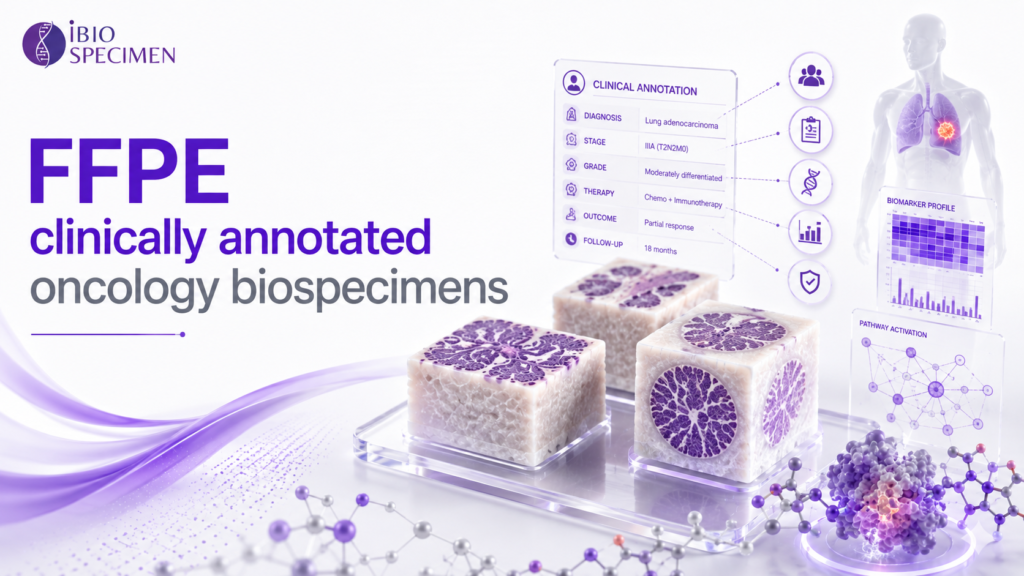
Clinically Annotated FFPE Biospecimens for Oncology Research
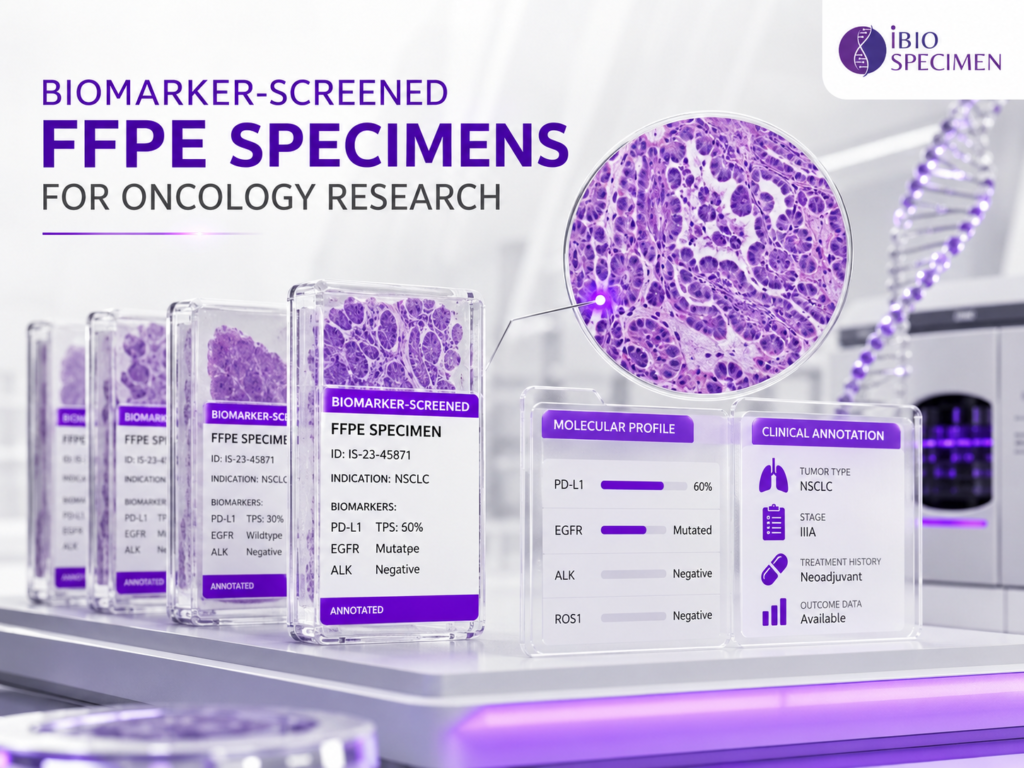
Clinical context significantly enhances the scientific utility of FFPE tumor material. Clinically annotated oncology biospecimens can provide researchers with information such as patient demographics, diagnosis, histological subtype, disease stage, grade, treatment history and selected outcome variables where available. These annotations allow investigators to move beyond purely tissue-based analysis and study how biological characteristics relate to disease progression and therapeutic exposure. Clinically annotated FFPE samples can support retrospective biomarker research, drug-development programs, diagnostic studies and translational oncology.
Researchers can define inclusion criteria around specific patient characteristics and select cohorts that more closely resemble the target population for their study. This structured approach can improve the relevance of experimental findings and help connect laboratory observations with clinically meaningful disease characteristics.
FFPE Tumor Samples with Treatment and Disease Information
Treatment history can be an essential consideration when selecting oncology specimens. Tumors collected before systemic therapy may have different molecular and morphological characteristics from specimens obtained after neoadjuvant treatment or at progression. Clinically annotated FFPE samples allow researchers to distinguish these categories and design cohorts according to therapeutic exposure. Where available, annotations may include chemotherapy, targeted therapy, immunotherapy, endocrine therapy, surgery and radiotherapy history.
Disease information such as stage, metastatic status and recurrence can provide additional context. These variables are particularly important for drug-response studies, resistance research and biomarker development. By selecting FFPE tissue according to defined clinical histories, researchers can reduce confounding factors and generate more meaningful translational insights.
Clinical and Pathology Annotation for Translational Drug Development
Translational drug development seeks to connect laboratory discoveries with the biological characteristics of real patient tumors. FFPE biospecimens that combine pathology and clinical annotation can help researchers assess whether candidate biomarkers or therapeutic targets are associated with specific disease subgroups. Pathological information may include diagnosis, histological subtype, grade, tumor percentage and necrosis, while clinical annotation may include stage, treatment history and outcome variables.
When molecular information is also available, these datasets become even more valuable. Pharmaceutical teams can build retrospective cohorts around defined clinical and biological characteristics and use them to explore potential treatment-response markers or resistance mechanisms. Such biospecimens can therefore support early translational strategy and future companion diagnostic development.
Custom Clinically Annotated Oncology Cohorts for Pharma and Biotech
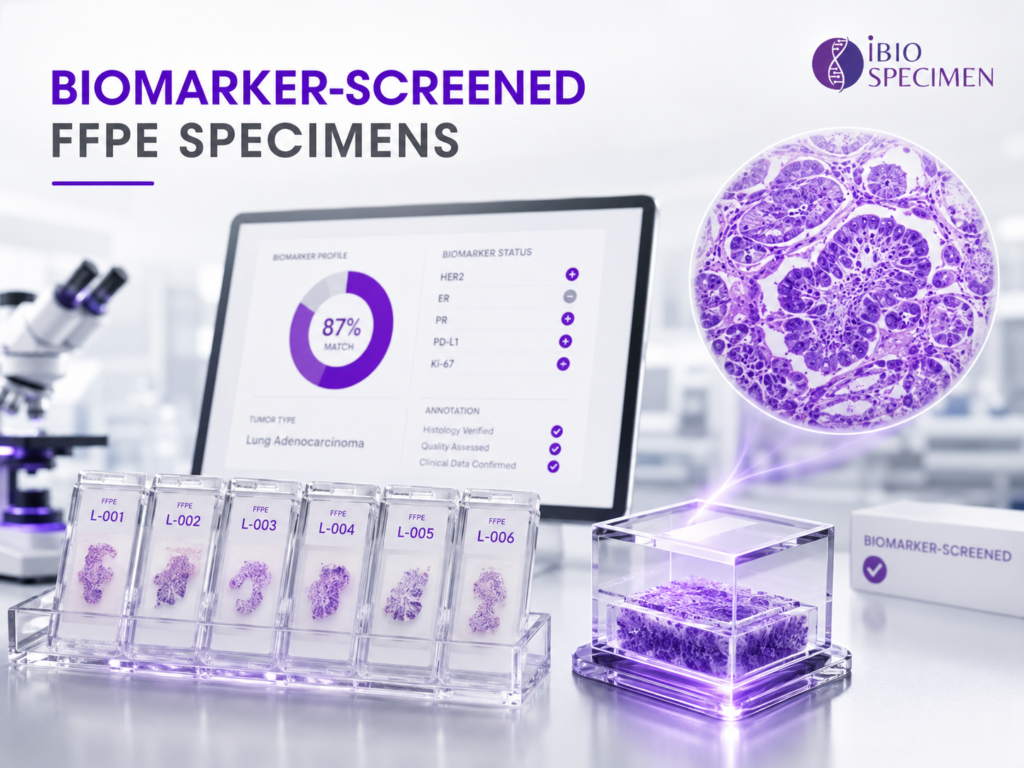
Pharmaceutical and biotechnology companies often require oncology cohorts built according to detailed protocol criteria. Customized clinically annotated FFPE collections can be developed around tumor type, histology, stage, grade, treatment status, age range, biomarker profile, molecular alteration and other available variables. Researchers may request treatment-naive samples, post-treatment specimens, primary tumors, metastases or other specifically defined categories.
Pathology review can confirm tissue suitability and tumor content before samples are selected. Depending on availability, cohorts may also include digital H&E images, immunohistochemistry findings or molecular data. This customized sourcing approach enables research teams to obtain biospecimens aligned with their study design rather than adapting experiments to generic tissue inventories.
General Questions
Frequent Asked Questions!!
FFPE blocks for genomics are formalin-fixed, paraffin-embedded tissue samples used for DNA, RNA, and biomarker analysis. They are widely used in cancer genomics, molecular pathology, translational research, and retrospective studies.
FFPE tissue blocks are valuable because they preserve tissue architecture and molecular material for long-term storage. Researchers can use them for sequencing, mutation analysis, biomarker discovery, and validation studies.
Yes. DNA can be extracted from FFPE blocks using validated extraction kits and optimized laboratory protocols. DNA quality depends on fixation time, block age, tissue type, tumor content, and storage conditions.
Yes. RNA can be extracted from FFPE tissue, although it is often fragmented because of formalin fixation. Specialized FFPE RNA extraction methods can provide material suitable for targeted RNA sequencing, gene expression studies, and fusion analysis.
Yes. High-quality FFPE blocks are commonly used for next-generation sequencing, including targeted sequencing panels, whole-exome sequencing, RNA sequencing, and selected whole-genome applications.
Tumor content requirements depend on the study design and testing method. Many molecular and NGS studies require at least 20% tumor content, while some projects may require 30%, 50%, or higher tumor percentage. Pathologist review can be performed to confirm tumor content before shipment
FFPE blocks can support mutation testing, copy number analysis, gene fusion detection, microsatellite instability testing, tumor mutational burden analysis, methylation studies, and targeted DNA or RNA sequencing.
Yes. FFPE cancer tissue blocks are extensively used to study genomic alterations in lung, breast, colorectal, prostate, ovarian, pancreatic, liver, kidney, and other tumor types.
Researchers can purchase FFPE blocks from qualified biospecimen suppliers, biobanks, pathology laboratories, hospitals, and research networks that provide ethically sourced and clinically annotated human tissue samples.
Researchers should confirm diagnosis, tissue type, tumor percentage, necrosis percentage, fixation details, block age, specimen size, available clinical data, pathology review, consent status, and intended research-use permissions.
Yes. Clinically annotated FFPE blocks may include donor age, sex, diagnosis, grade, stage, TNM classification, treatment history, pathology report, mutation status, and clinical outcome data.