
Introduction to
FFPE Blocks with Genomic Data
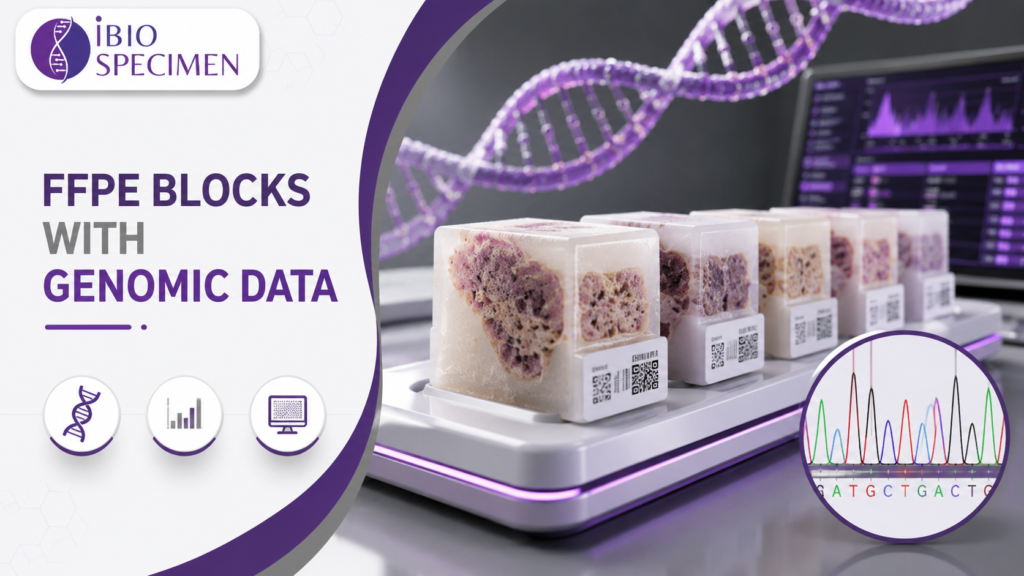
Buy FFPE Blocks With Genomic Data for Oncology Research

FFPE blocks with genomic data provide researchers with preserved human tumour tissue linked to molecular testing results. These specimens can support oncology research involving biomarker discovery, assay development, drug-target evaluation and patient stratification. Depending on project requirements, the genomic information may include targeted NGS results, somatic mutations, copy-number alterations, gene fusions, microsatellite instability or broader molecular profiling. Relevant clinical and pathological annotations, such as diagnosis, tumour subtype, stage, grade, collection site and treatment history, may also be available. Before procurement, researchers should confirm specimen provenance, consent status, tumour content, block age, fixation method and sequencing platform. Pathologist-reviewed H&E slides can help verify tissue quality and tumour percentage.
FFPE blocks with genomic data are especially useful when researchers need physical tissue for additional testing while retaining access to existing molecular findings. Availability and data completeness vary by cohort, so every project should begin with a clearly defined inclusion criteria and data-field request.
FFPE Blocks With Genomic Data for Biomarker Studies
FFPE blocks with genomic data can help researchers investigate relationships between tissue morphology, protein expression and genomic alterations. These specimens are valuable for exploratory biomarker studies, analytical validation, companion diagnostic research and the development of patient-selection strategies. Researchers may use the tissue to perform IHC, ISH, PCR, NGS or spatial biology assays and compare the new findings with previously generated genomic results. Common data may include mutation status, gene amplification, deletion, fusion, tumour mutational burden or microsatellite instability.

Optimized for DNA Sequencing
NGS-Ready FFPE Tissue Blocks
Reliable RNA Profiling Samples
Clinically Annotated FFPE Blocks With Genomic Data
Clinically annotated FFPE blocks with genomic data combine preserved tissue, molecular findings and relevant patient-level information within one research resource. Clinical annotations may include age, sex, diagnosis, histological subtype, stage, grade, treatment exposure, response and follow-up, subject to consent and availability. Genomic information may cover targeted gene panels, actionable mutations, copy-number changes, gene fusions or comprehensive molecular profiling. This combination can support translational research, retrospective cohort development and studies examining the association between genomic alterations and clinical characteristics.
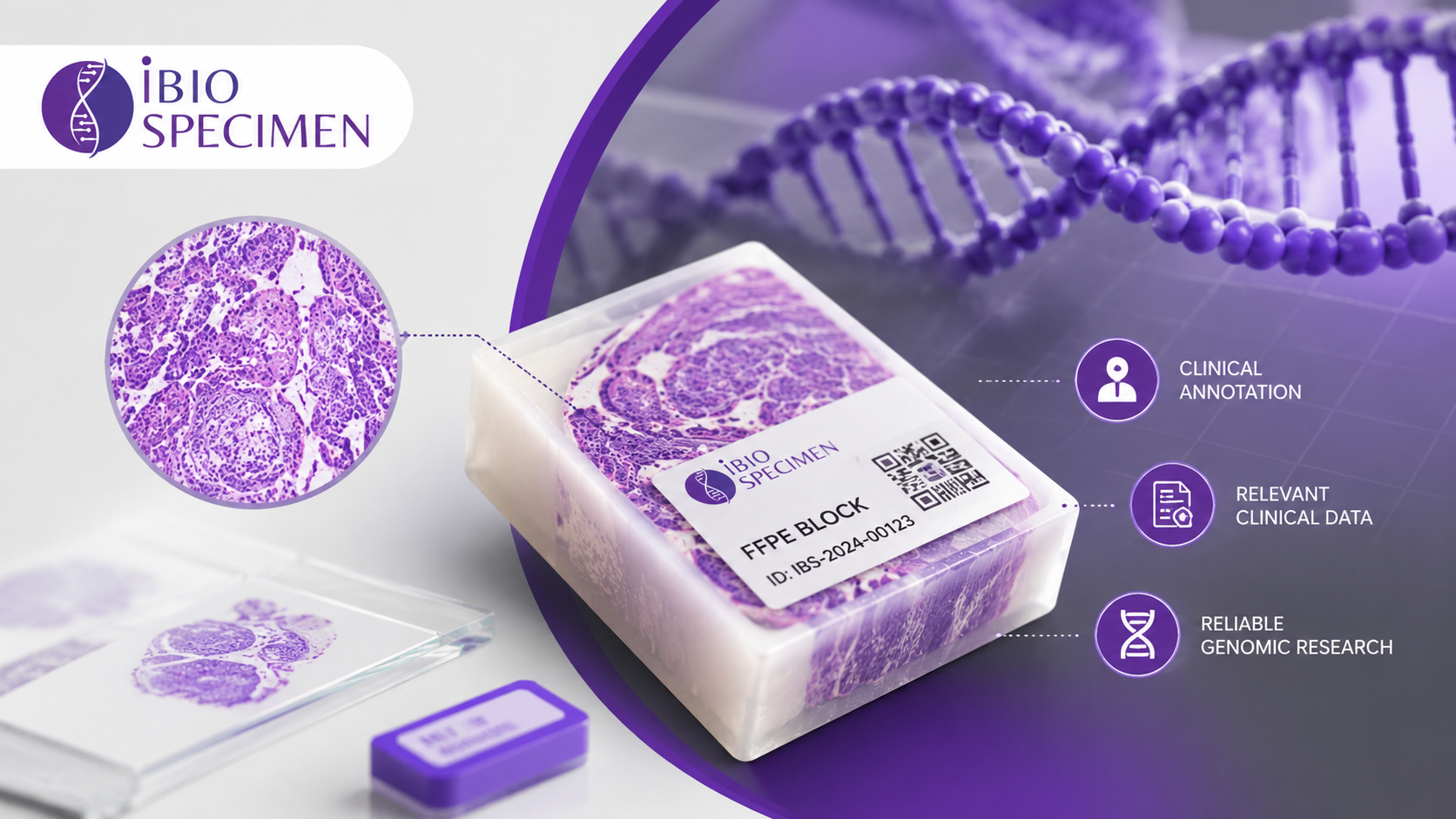
Clinically Annotated Tissue Samples
FFPE blocks supplied with relevant clinical details for reliable genomic research.

Comprehensive Pathology Data Included
Each sample includes diagnosis, grade, stage, tumor content, and pathology information.

Optimized for Genomic Analysis
Samples are suitable for DNA, RNA, NGS, mutation analysis, and molecular profiling.

Reliable Samples for NGS
Quality-controlled FFPE blocks support accurate sequencing and reproducible genomic results.
Source Quality -Controlled FFPE Blocks With Genomic Data
Quality-controlled FFPE blocks with genomic data should be selected through a documented process that evaluates tissue integrity, pathological suitability and data reliability. Initial quality control may include review of an H&E section by a qualified pathologist, confirmation of diagnosis, estimation of tumour content and assessment of necrosis, fibrosis or tissue damage. The remaining block material should also be evaluated to ensure that sufficient tissue is available for the proposed analyses. Genomic results should be reviewed for the testing platform, assay type, genes analysed, quality metrics and interpretation criteria.
Where required, selected alterations can be confirmed through an orthogonal method such as PCR, IHC, FISH or repeat sequencing. Preanalytical variables—including fixation duration, fixative type, block age and storage conditions—should be recorded whenever available. Researchers should also request documentation covering informed consent, ethics approval, de-identification and permitted research use. A structured sourcing and quality-control workflow helps minimise unsuitable specimens and improves confidence that the FFPE tissue and associated genomic information meet the project’s scientific requirements.
FFPE Blocks With Genomic Data for Precision Medicine
FFPE blocks with genomic data can contribute to precision-medicine research by enabling investigators to study molecular differences among tumours that appear similar under routine histopathology. Researchers can use these specimens to investigate actionable mutations, resistance mechanisms, pathway activation and potential predictors of therapeutic response. The tissue may support additional analyses such as immunohistochemistry, in situ hybridisation, targeted sequencing, transcriptomics or spatial profiling. Existing genomic results provide a reference point for selecting molecularly defined cohorts and comparing biomarker-positive and biomarker-negative cases.
For example, researchers may request FFPE blocks with specific mutations, amplifications, fusions or genomic signatures relevant to a particular therapeutic programme. Reliable interpretation requires careful consideration of tumour content, assay sensitivity, specimen age and the quality of the associated molecular data. Clinical annotations can further strengthen the cohort when they include treatment and outcome information. Ethically sourced and carefully curated FFPE blocks with genomic data can help accelerate hypothesis generation, assay development and retrospective precision-oncology investigations.
Order Genomically Profiled FFPE Tumor Blocks for Research
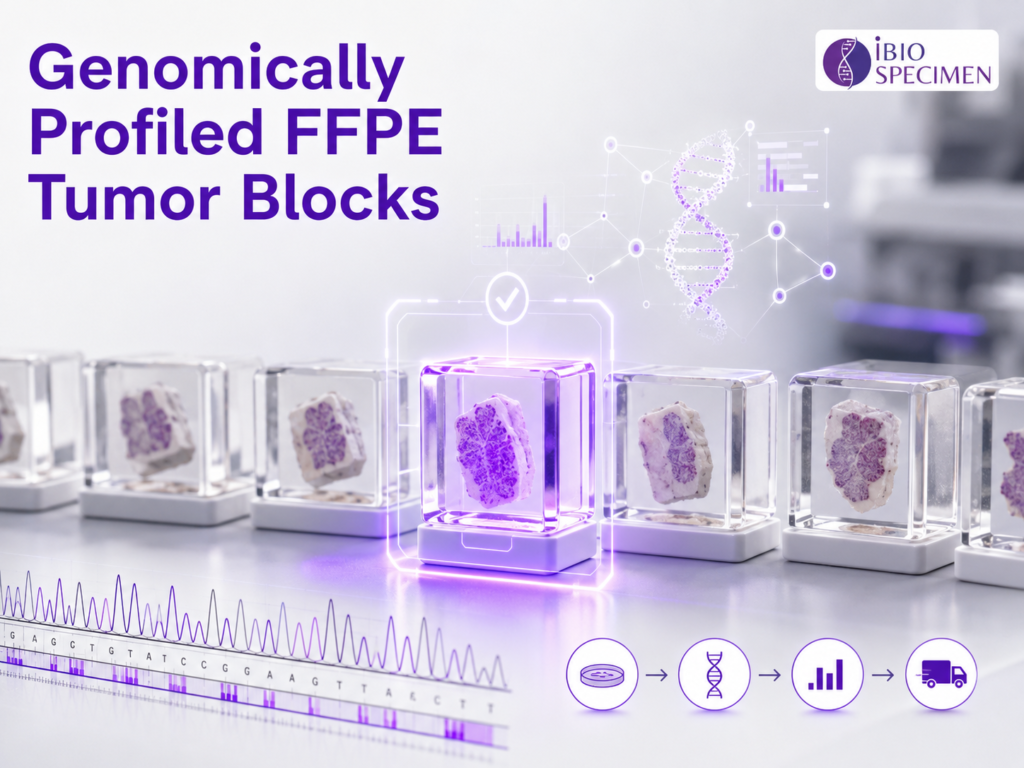
Genomically profiled FFPE tumour blocks can be supplied according to disease indication, histological subtype, tumour stage, biomarker status and required molecular alteration. A detailed procurement request should specify the acceptable specimen type, tissue quantity, tumour percentage, maximum necrosis, testing platform and mandatory genomic data fields. Researchers should also indicate whether they require primary or metastatic tissue, treatment-naive or post-treatment specimens and matched normal material. Available molecular information may include targeted NGS, WES, WGS, copy-number analysis, fusion testing or comprehensive genomic profiling. Before an order is finalised, a specimen manifest can be reviewed to confirm diagnosis, pathology findings, available tissue and genomic results.
Supporting materials may include de-identified genomic reports, H&E images, pathology summaries and quality-control records. All specimens should be transferred under appropriate consent, ethical approval and contractual documentation. A custom sourcing approach allows research organisations to build focused cohorts without purchasing unsuitable inventory, while replacement terms can be defined for samples that fail agreed pathology or laboratory acceptance criteria.
General Questions
Frequent Asked Questions!!
FFPE blocks for genomics are formalin-fixed, paraffin-embedded tissue samples used for DNA, RNA, and biomarker analysis. They are widely used in cancer genomics, molecular pathology, translational research, and retrospective studies.
FFPE tissue blocks are valuable because they preserve tissue architecture and molecular material for long-term storage. Researchers can use them for sequencing, mutation analysis, biomarker discovery, and validation studies.
Yes. DNA can be extracted from FFPE blocks using validated extraction kits and optimized laboratory protocols. DNA quality depends on fixation time, block age, tissue type, tumor content, and storage conditions.
Yes. RNA can be extracted from FFPE tissue, although it is often fragmented because of formalin fixation. Specialized FFPE RNA extraction methods can provide material suitable for targeted RNA sequencing, gene expression studies, and fusion analysis.
Yes. High-quality FFPE blocks are commonly used for next-generation sequencing, including targeted sequencing panels, whole-exome sequencing, RNA sequencing, and selected whole-genome applications.
Tumor content requirements depend on the study design and testing method. Many molecular and NGS studies require at least 20% tumor content, while some projects may require 30%, 50%, or higher tumor percentage. Pathologist review can be performed to confirm tumor content before shipment
FFPE blocks can support mutation testing, copy number analysis, gene fusion detection, microsatellite instability testing, tumor mutational burden analysis, methylation studies, and targeted DNA or RNA sequencing.
Yes. FFPE cancer tissue blocks are extensively used to study genomic alterations in lung, breast, colorectal, prostate, ovarian, pancreatic, liver, kidney, and other tumor types.
Researchers can purchase FFPE blocks from qualified biospecimen suppliers, biobanks, pathology laboratories, hospitals, and research networks that provide ethically sourced and clinically annotated human tissue samples.
Researchers should confirm diagnosis, tissue type, tumor percentage, necrosis percentage, fixation details, block age, specimen size, available clinical data, pathology review, consent status, and intended research-use permissions.
Yes. Clinically annotated FFPE blocks may include donor age, sex, diagnosis, grade, stage, TNM classification, treatment history, pathology report, mutation status, and clinical outcome data.