
Introduction to
FFPE Blocks with Fusion Detection Data
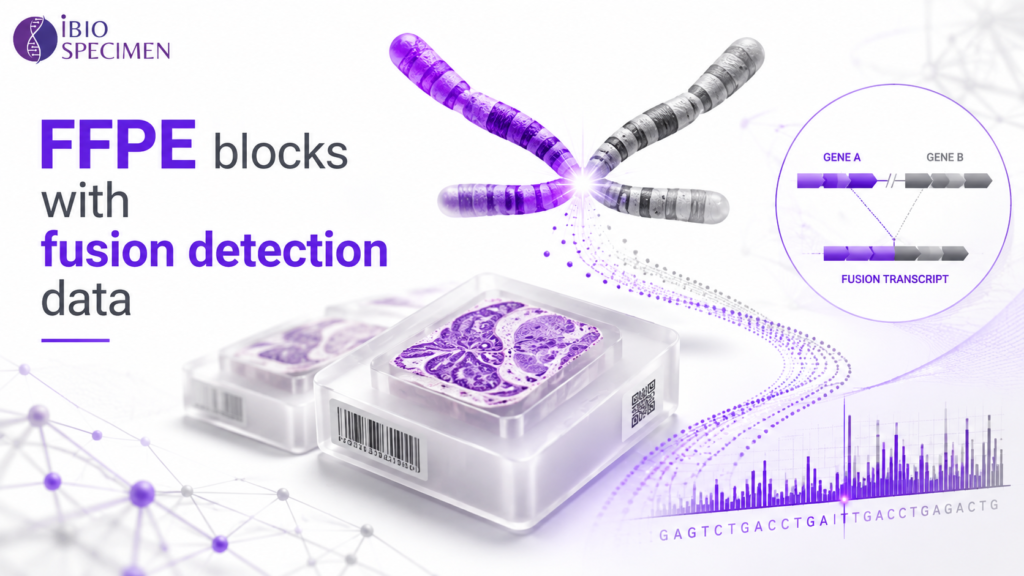
Fusion-Characterized FFPE Tumor Blocks for Oncology Research
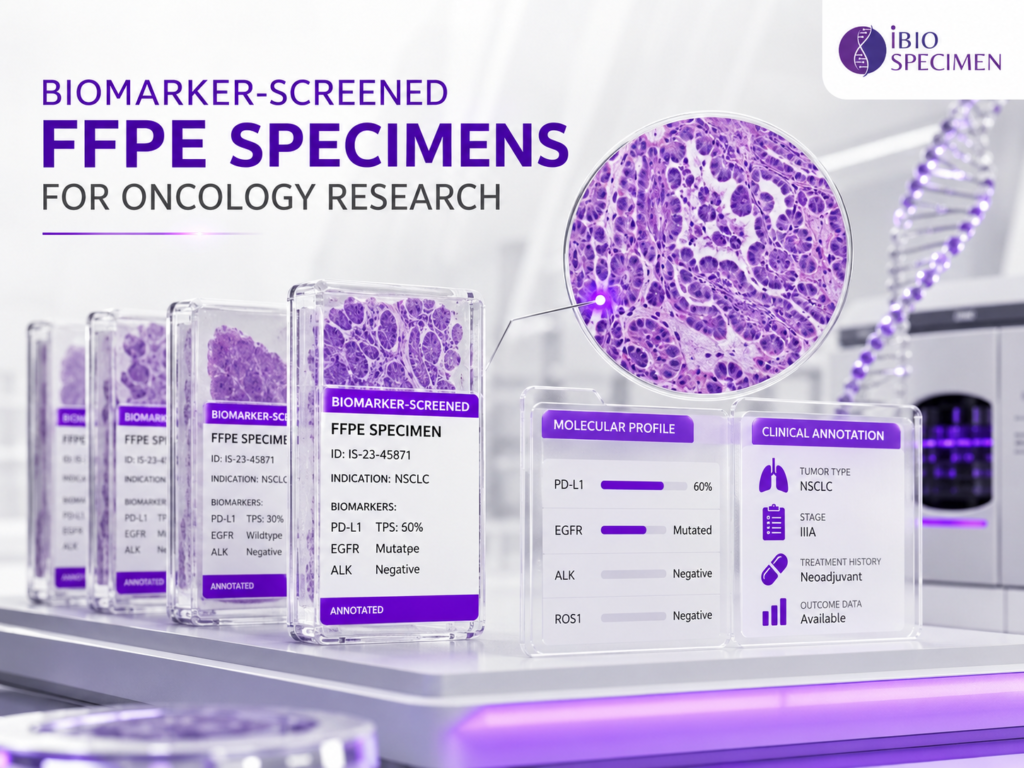
Gene fusions represent important oncogenic drivers and therapeutic biomarkers across multiple cancer types. FFPE tumor blocks with known fusion-detection results can provide researchers with valuable specimens for studying these alterations in biologically relevant tissue. Fusion information may originate from RNA-based sequencing, DNA-based NGS, FISH, RT-PCR or other validated methods depending on the target and available data.
These specimens can support research involving ALK, ROS1, RET, NTRK and other clinically or biologically relevant fusion events. Researchers can select fusion-positive and fusion-negative samples to develop comparative cohorts for assay development, biomarker research and translational studies. Because the original FFPE tissue is available, investigators can perform additional histological, molecular or protein-level analysis to explore how gene fusions influence tumor morphology and downstream biological signaling.
FFPE Samples for Fusion Assay Development and Validation
Developing reliable fusion-detection technologies requires access to specimens containing known fusion events as well as negative controls. FFPE samples with existing fusion data can support development of RNA sequencing assays, targeted NGS panels, RT-PCR methods, FISH probes and other diagnostic technologies. Researchers can evaluate sensitivity across different tumor contents, RNA qualities and biological backgrounds. Tissue-based reference samples also provide realistic analytical challenges that may not be captured by synthetic controls.
When multiple testing methods are available, investigators can assess concordance and investigate potential false-positive or false-negative results. Fusion-characterized FFPE specimens can therefore help developers optimize assay performance and build representative analytical validation sets before larger clinical studies are initiated.
Fusion-Positive FFPE Blocks for Targeted Therapy Research
Several oncogenic gene fusions are associated with targeted therapeutic strategies. Fusion-positive FFPE blocks can help pharmaceutical and biotechnology researchers investigate molecular pathways, histological characteristics and potential therapeutic response in tumors carrying these alterations. Specimens may be selected according to cancer type, fusion partner, stage, histology, tumor percentage and other available clinical variables.
This allows investigators to build focused cohorts around specific molecular targets rather than screening large archival collections. Fusion-positive material can also support research into resistance mechanisms, alternative signaling pathways and co-occurring molecular alterations. When matched with broader genomic or clinical information, these FFPE specimens can provide a more comprehensive understanding of fusion-driven tumors and contribute to development of precision-oncology strategies.
Gene Fusion Data for FISH, NGS and Molecular Diagnostics Research
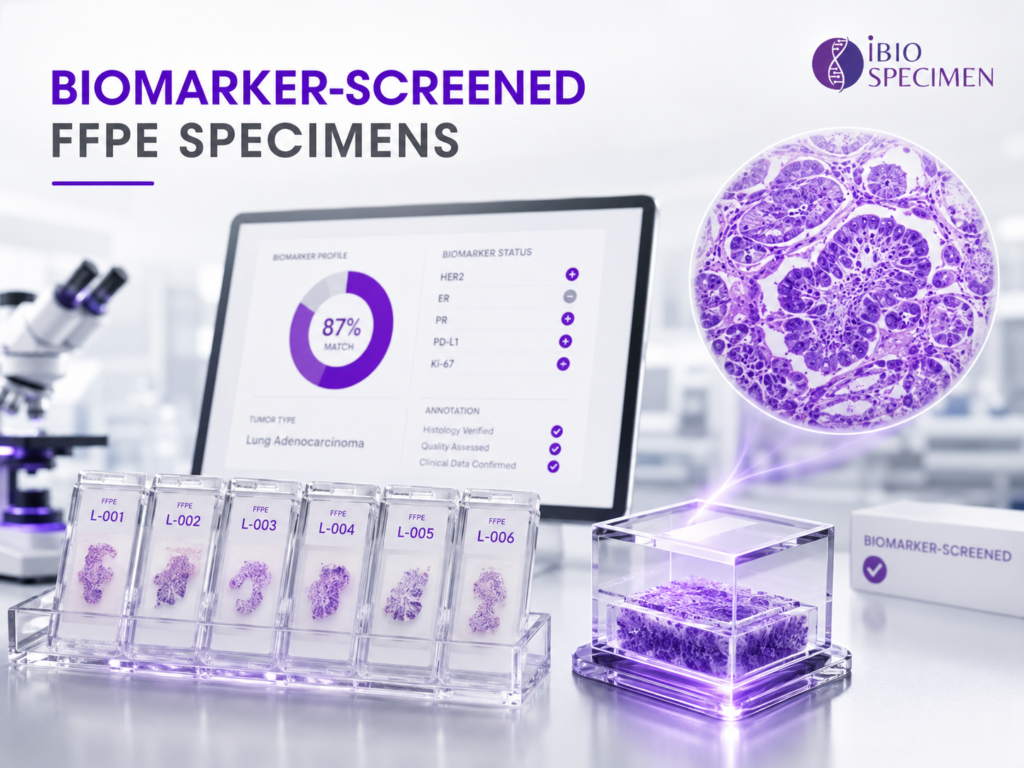
FFPE blocks with known fusion status are especially valuable for researchers comparing different diagnostic platforms. A fusion detected by RNA sequencing may be evaluated using FISH, RT-PCR or another sequencing method to understand assay concordance and technical limitations. Conversely, FISH-positive material can be used to evaluate emerging NGS-based fusion detection technologies. These cross-platform comparisons can help diagnostic developers determine analytical sensitivity, specificity and robustness across different specimen qualities. Researchers can also study how fixation, RNA degradation and tumor cellularity affect fusion detection in FFPE tissue. Access to characterized material therefore supports both technology development and biological research. By combining gene fusion data with histopathology and available clinical annotations, investigators can create highly informative reference cohorts for precision diagnostics.
General Questions
Frequent Asked Questions!!
FFPE blocks for genomics are formalin-fixed, paraffin-embedded tissue samples used for DNA, RNA, and biomarker analysis. They are widely used in cancer genomics, molecular pathology, translational research, and retrospective studies.
FFPE tissue blocks are valuable because they preserve tissue architecture and molecular material for long-term storage. Researchers can use them for sequencing, mutation analysis, biomarker discovery, and validation studies.
Yes. DNA can be extracted from FFPE blocks using validated extraction kits and optimized laboratory protocols. DNA quality depends on fixation time, block age, tissue type, tumor content, and storage conditions.
Yes. RNA can be extracted from FFPE tissue, although it is often fragmented because of formalin fixation. Specialized FFPE RNA extraction methods can provide material suitable for targeted RNA sequencing, gene expression studies, and fusion analysis.
Yes. High-quality FFPE blocks are commonly used for next-generation sequencing, including targeted sequencing panels, whole-exome sequencing, RNA sequencing, and selected whole-genome applications.
Tumor content requirements depend on the study design and testing method. Many molecular and NGS studies require at least 20% tumor content, while some projects may require 30%, 50%, or higher tumor percentage. Pathologist review can be performed to confirm tumor content before shipment
FFPE blocks can support mutation testing, copy number analysis, gene fusion detection, microsatellite instability testing, tumor mutational burden analysis, methylation studies, and targeted DNA or RNA sequencing.
Yes. FFPE cancer tissue blocks are extensively used to study genomic alterations in lung, breast, colorectal, prostate, ovarian, pancreatic, liver, kidney, and other tumor types.
Researchers can purchase FFPE blocks from qualified biospecimen suppliers, biobanks, pathology laboratories, hospitals, and research networks that provide ethically sourced and clinically annotated human tissue samples.
Researchers should confirm diagnosis, tissue type, tumor percentage, necrosis percentage, fixation details, block age, specimen size, available clinical data, pathology review, consent status, and intended research-use permissions.
Yes. Clinically annotated FFPE blocks may include donor age, sex, diagnosis, grade, stage, TNM classification, treatment history, pathology report, mutation status, and clinical outcome data.