
Precision Oncology Data Platform
Introduction to
Precision Oncology Data Platform for Advanced Cancer Research and Drug Development
A Precision Oncology Data Platform is a critical resource for accelerating cancer research, biomarker identification, and targeted drug development. By integrating genomic, transcriptomic, proteomic, clinical, and pathology datasets into a unified environment, researchers gain access to comprehensive insights into tumor biology and disease progression. These platforms support translational research by enabling scientists to explore molecular signatures, identify actionable mutations, and evaluate patient-specific treatment responses. High-quality precision oncology data helps pharmaceutical companies, biotechnology organizations, academic institutions, and contract research organizations streamline oncology studies while reducing the time required for data collection and analysis.
Advanced precision oncology data platforms are designed to support the growing demand for personalized cancer medicine and AI-driven healthcare innovation. Researchers can leverage curated cancer datasets to develop predictive models, validate therapeutic targets, and optimize clinical trial design. Integrated data resources improve patient stratification, support companion diagnostic development, and enhance understanding of treatment resistance mechanisms. By providing secure access to standardized and well-annotated oncology data, these platforms empower organizations to drive breakthroughs in immuno-oncology, precision therapeutics, and next-generation cancer diagnostics. The availability of comprehensive oncology datasets ultimately contributes to faster drug discovery and improved outcomes for cancer patients worldwide.
Integrated Precision Oncology Data Solutions for Biomarker Discovery
Integrated Precision Oncology Data Solutions provide researchers with access to multi-dimensional cancer datasets that are essential for identifying and validating novel biomarkers. These solutions combine genomic sequencing data, pathology images, clinical outcomes, treatment histories, and molecular profiling information into a centralized framework. By analyzing diverse data sources together, scientists can uncover biomarkers associated with disease progression, therapeutic response, and patient prognosis. Such integrated datasets enable pharmaceutical and biotechnology companies to make informed decisions during drug development and translational research initiatives.
The growing complexity of cancer biology requires comprehensive data solutions that facilitate advanced analytics and biomarker-driven research. Precision oncology data resources support the discovery of predictive, prognostic, and diagnostic biomarkers that can improve patient selection and treatment planning. Researchers can utilize integrated datasets to evaluate gene expression patterns, identify molecular pathways, and explore tumor microenvironment interactions. These insights contribute to the development of targeted therapies, companion diagnostics, and personalized treatment strategies. With access to high-quality, curated oncology data, organizations can accelerate biomarker discovery programs and enhance the success rate of oncology research and clinical development projects.
High-Quality Precision Oncology Data Resources for Personalized Cancer Medicine
High-quality Precision Oncology Data Resources are fundamental to advancing personalized cancer medicine and improving patient care. These resources include clinically annotated cancer datasets, genomic profiles, pathology data, biomarker information, and treatment response records that help researchers understand individual variations in cancer biology. Access to reliable and standardized oncology data enables scientists to identify patient-specific molecular characteristics and develop tailored therapeutic approaches. Pharmaceutical companies and research institutions rely on precision oncology datasets to support biomarker research, validate drug targets, and optimize precision medicine programs.
Personalized cancer medicine depends on accurate and comprehensive data that can reveal how different patients respond to specific treatments. High-quality precision oncology resources facilitate patient stratification, companion diagnostic development, and predictive modeling for treatment outcomes. Researchers can analyze genomic alterations, tumor heterogeneity, and clinical outcomes to design more effective therapies and improve clinical trial success rates. These data resources also support innovations in immunotherapy, targeted therapy, and combination treatment strategies. By providing access to well-curated oncology datasets, organizations can advance precision medicine initiatives and contribute to more effective, patient-centered cancer care solutions.
AI-Ready Precision Oncology Data for Machine Learning Models
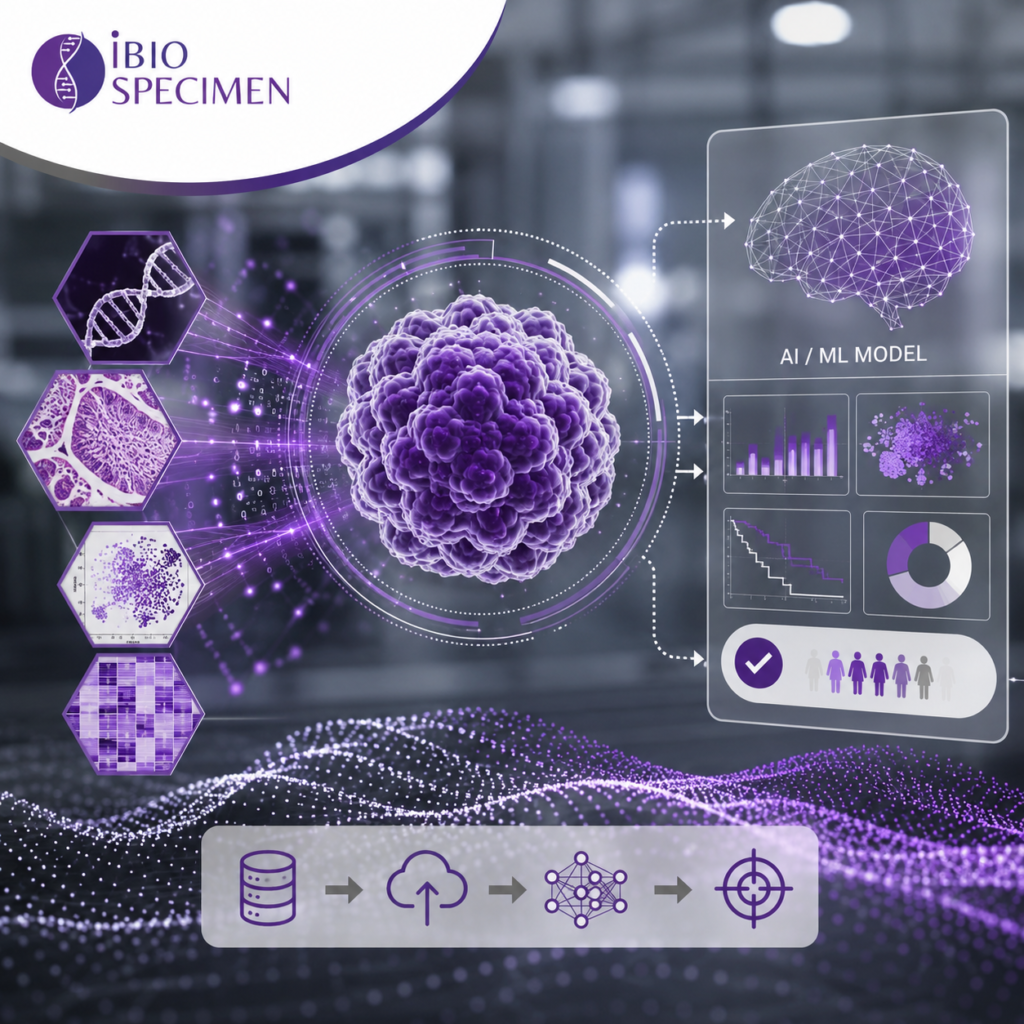
AI-ready Precision Oncology Data is specifically curated and standardized to support machine learning, deep learning, and artificial intelligence applications in cancer research. These datasets include structured genomic information, pathology images, clinical records, molecular profiles, and treatment outcomes that can be directly utilized for algorithm development and predictive analytics. High-quality AI-ready oncology data reduces preprocessing requirements and enables data scientists to build robust models for cancer detection, prognosis prediction, biomarker identification, and therapeutic response assessment. The availability of well-annotated oncology datasets significantly enhances the performance and reliability of machine learning models.
As artificial intelligence becomes increasingly important in oncology, researchers require large-scale, diverse, and accurately labeled datasets to train advanced algorithms. AI-ready precision oncology data supports the development of computer-aided diagnostics, digital pathology solutions, patient risk assessment tools, and precision treatment recommendations. Machine learning models trained on comprehensive oncology datasets can uncover hidden patterns, improve clinical decision-making, and accelerate drug discovery processes. By leveraging standardized and research-grade oncology data, pharmaceutical companies, biotech organizations, and healthcare innovators can develop next-generation AI solutions that drive efficiency, accuracy, and innovation in cancer research and personalized medicine.
The rapid advancement of precision medicine has transformed the way cancer is studied, diagnosed, and treated. Researchers, pharmaceutical companies, biotechnology organizations, and healthcare institutions increasingly rely on comprehensive data resources to accelerate discoveries and improve patient outcomes. A robust precision oncology data platform provides access to integrated genomic, clinical, molecular, and real-world data that supports oncology research, biomarker identification, drug development, and personalized treatment strategies.
Modern oncology research demands high-quality datasets that combine molecular profiling information with clinical outcomes. By leveraging advanced analytics and artificial intelligence, researchers can uncover meaningful insights into cancer biology, therapeutic response, and disease progression. A comprehensive data ecosystem enables investigators to make informed decisions and develop targeted therapies for various cancer indications
An advanced oncology data platform serves as a centralized environment where researchers can access diverse cancer-related datasets from multiple sources. These platforms integrate clinical records, genomic sequencing data, pathology information, treatment histories, and patient outcomes into a unified framework.
By consolidating large-scale oncology data, researchers can conduct translational studies more efficiently and identify patterns that may not be apparent within isolated datasets. The ability to access standardized and harmonized information helps improve reproducibility and accelerates scientific discovery.
The growing complexity of cancer research requires platforms capable of managing vast amounts of multidimensional information. A modern oncology data platform facilitates collaboration among scientists, clinicians, and data analysts, enabling a more comprehensive understanding of tumor biology and treatment response.
A sophisticated cancer genomics data platform provides access to genomic sequencing information that reveals the molecular mechanisms driving cancer development. Genomic datasets include whole genome sequencing, whole exome sequencing, RNA sequencing, copy number variations, mutation profiles, and gene expression data.
Cancer genomics plays a critical role in identifying actionable mutations and therapeutic targets. Researchers use genomic oncology datasets to investigate disease pathways, evaluate resistance mechanisms, and discover novel biomarkers for precision medicine applications.
Through comprehensive genomic analysis, scientists can better understand tumor heterogeneity and develop personalized treatment strategies tailored to individual patients. A cancer genomics data platform helps accelerate these discoveries by providing access to curated and research-ready datasets.
The availability of high-quality precision medicine oncology data has become essential for advancing personalized cancer care. Precision medicine relies on understanding the unique genetic and molecular characteristics of each patient's tumor to guide treatment decisions.
Researchers use precision medicine datasets to investigate treatment efficacy, predict patient response, and identify potential therapeutic opportunities. Integrating genomic information with clinical outcomes creates a powerful resource for understanding disease progression and improving treatment selection.
These data resources support a wide range of applications, including biomarker discovery, companion diagnostic development, patient stratification, and targeted therapy research. As precision medicine continues to evolve, access to reliable oncology datasets remains critical for innovation.
A comprehensive oncology research data platform supports the development of new cancer therapies by providing researchers with access to large-scale datasets and advanced analytical tools. These platforms facilitate hypothesis generation, target identification, and clinical validation.
Drug developers can use integrated oncology datasets to evaluate therapeutic efficacy, assess patient populations, and identify biomarkers associated with treatment response. The availability of structured and curated data helps reduce research timelines and improve decision-making throughout the drug development process.
By enabling data-driven research, oncology platforms contribute to faster therapeutic innovation and improved outcomes for cancer patients worldwide.
Reliable cancer biomarker datasets are essential for identifying molecular indicators that can predict disease progression, therapeutic response, and patient prognosis. Biomarkers play a crucial role in personalized medicine by helping clinicians select the most appropriate treatments for individual patients.
Researchers utilize biomarker datasets to investigate genomic alterations, protein expression patterns, immune signatures, and molecular pathways associated with specific cancer types. These datasets support translational research and facilitate the development of targeted therapies and companion diagnostics.
Comprehensive biomarker resources can significantly enhance oncology research by enabling the validation of predictive and prognostic markers across diverse patient populations.
The use of oncology real world data has become increasingly important in cancer research and healthcare decision-making. Real-world data includes information collected from electronic health records, patient registries, insurance claims, treatment records, and observational studies.
Unlike traditional clinical trial data, real-world evidence provides insights into how therapies perform in routine clinical practice. Researchers can evaluate treatment effectiveness, safety profiles, patient outcomes, and healthcare utilization across broader patient populations.
Integrating real-world data with genomic and molecular information creates a powerful resource for generating actionable evidence that supports clinical and commercial decision-making.
High-quality genomic oncology datasets provide researchers with comprehensive information about genetic alterations associated with cancer development and progression. These datasets often include sequencing results, mutational profiles, transcriptomic data, and molecular annotations.
Scientists use genomic datasets to investigate tumor evolution, identify therapeutic targets, and understand resistance mechanisms. Access to large-scale genomic resources enables researchers to uncover novel biological insights and accelerate precision oncology initiatives.
As sequencing technologies continue to evolve, genomic oncology datasets will remain a foundational component of cancer research and personalized medicine development.
An advanced oncology AI data platform enables researchers to leverage artificial intelligence and machine learning technologies for cancer research applications. AI-powered analytics can process vast amounts of genomic, molecular, imaging, and clinical data to identify patterns and predictive signals.
Machine learning models trained on high-quality oncology datasets can support biomarker discovery, patient stratification, treatment optimization, and disease prediction. These technologies help researchers generate insights more rapidly than traditional analytical methods.
By combining AI capabilities with comprehensive oncology datasets, organizations can accelerate innovation and improve research productivity across multiple therapeutic areas.
Access to detailed cancer molecular profiling data allows researchers to characterize tumors at the genomic, transcriptomic, proteomic, and epigenetic levels. Molecular profiling provides valuable insights into tumor biology and supports precision medicine initiatives.
Comprehensive molecular datasets enable scientists to identify disease-driving mechanisms, investigate therapeutic targets, and understand patient-specific variations. Molecular profiling is increasingly used in clinical research, biomarker discovery, and drug development programs.
The integration of molecular data with clinical outcomes enhances researchers' ability to develop more effective and personalized cancer treatments.
A centralized precision oncology database serves as a critical resource for researchers seeking access to structured cancer-related information. These databases consolidate genomic, clinical, molecular, and real-world datasets into a searchable and analyzable environment.
Researchers can use precision oncology databases to identify patient cohorts, explore biomarker associations, and evaluate therapeutic outcomes. Standardized data organization improves accessibility and supports efficient research workflows.
As cancer research becomes increasingly data-intensive, precision oncology databases provide the infrastructure necessary to support large-scale scientific investigations.
Comprehensive oncology clinical datasets contain detailed information about patient demographics, diagnoses, treatments, outcomes, and adverse events. These datasets are essential for evaluating therapeutic effectiveness and understanding disease progression.
Clinical datasets support a wide range of applications, including observational research, comparative effectiveness studies, clinical trial planning, and healthcare outcomes research. Researchers can use these resources to generate evidence that informs clinical practice and policy decisions.
The integration of clinical and molecular data creates a richer research environment that supports precision oncology initiatives.
Modern cancer research data solutions provide organizations with the resources needed to conduct complex oncology studies efficiently. These solutions combine high-quality datasets, analytical tools, and data management capabilities to support research objectives.
Pharmaceutical companies use cancer research data solutions to identify therapeutic targets, evaluate biomarkers, optimize clinical trials, and assess treatment outcomes. Biotechnology organizations leverage these resources to accelerate innovation and improve product development.
Comprehensive data solutions help organizations navigate the growing complexity of cancer research while maximizing scientific and commercial value.
An integrated oncology bioinformatics platform provides researchers with powerful computational tools for analyzing complex cancer datasets. Bioinformatics technologies enable the interpretation of genomic, transcriptomic, proteomic, and molecular information.
Researchers use bioinformatics platforms to perform data processing, variant analysis, pathway enrichment studies, and predictive modeling. These capabilities support the discovery of novel therapeutic targets and enhance understanding of cancer biology.
The growing volume of oncology data makes bioinformatics platforms increasingly important for extracting meaningful insights from large-scale datasets.
A trusted precision medicine data provider plays a vital role in supporting oncology research by delivering high-quality, well-annotated datasets. Data providers collect, curate, standardize, and validate information to ensure research readiness and reliability.
Researchers depend on precision medicine data providers for access to genomic datasets, clinical information, biomarker resources, molecular profiling data, and real-world evidence. High-quality data resources enable organizations to conduct research with confidence and generate reproducible results.
As precision oncology continues to evolve, reliable data providers will remain essential partners in advancing cancer research, therapeutic development, and personalized medicine initiatives.